
Mold, flooding, and barely functioning heaters have plagued a Berkeley building housing low-income students, and owners are scrambling to sell or find a way to manage $9 million in repairs the apartment complex needs.
City inspections confirm tenants’ complaints that living in Evans Manor, owned by the Berkeley Student Cooperative, the largest student housing cooperative nationwide, presents a host of health concerns. This summer, a private inspection report found multiple mold strains, including black mold, in the units and common spaces.
RELATED: Berkeley apartment complex is foreclosed at sharply discounted value
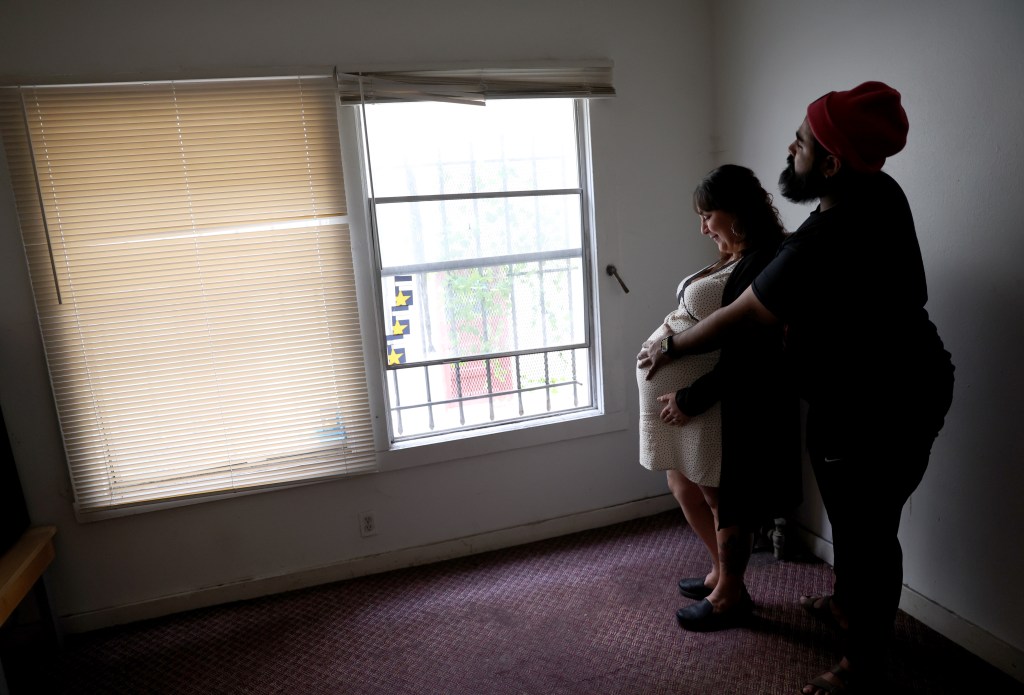
Housed in one of the units with the highest mold counts, Brenda Arjona, 39, a San Francisco State professor, was several months pregnant when the report was released.
“I’ve been really anxious. It really takes away my sleep at night to not know what’s going to happen,” said Arjona. She was moved to a temporary space, unsure when she can return to her unit. “So it worked out that we’re not over there, but it was a very stressful situation.”
She is one of approximately 50 tenants in the building, many of whom are students attending various Bay Area colleges.
The Berkeley Student Cooperative, a nonprofit housing 1,300 students in 17 houses and three apartment buildings, including Evans Manor, near UC Berkeley, regained control of the building after a 35-year sublease ended in April. The group that held the lease, Victoria Associates, failed to maintain the building, leading to the current problems, and didn’t respond to requests for comment.
Potential buyers have said it would cost $9 million to address the issues – a price the collective cannot afford. The nonprofit tried to sell the building to a real estate company, but announced in December that negotiations fell through during escrow.
“The building is becoming a big liability. We are managing tenants’ issues daily and spending thousands of dollars on the building each month, effectively erasing any income we might otherwise be generating from rents,” Yoshi Fenton, the cooperative’s executive director, said during a board meeting.
Fenton said the cooperative hopes to address some of the maintenance issues and relist the property this winter.
That leaves some tenants worried about their housing. Students’ concerns about housing are heightened by the ongoing housing shortage near UC Berkeley, which is working to build more units. The university provides housing for only 23% of its students, the lowest rate in the University of California system.
“The uncertainty when you have your affordable housing at stake is really, really alarming for these tenants. The bad conditions are something that no one should have to live with,” said Peter Selawsky, a lawyer from the Eviction Defence Center, a non-profit law firm, who is representing three Evans Manor tenants.
The group that attempted to buy the building last year, Mason Equity Partners, wanted to expand housing at the site but was unable to obtain city approvals for its plans to build another apartment complex on an existing Evans Manor parking lot, co-founder Shane Mason said in an email statement.
With the deal tabled, the cooperative is addressing issues such as damaged ceilings, peeling paint, and malfunctioning heaters before relisting the property. Berkeley Council Member Cecilia Lunaparra said she’s been working with the tenants and is committed to helping the cooperative find a buyer that will keep the site affordable.
Tenants said the current problems have been years in the making.
In 1985, a series of incidents, including heroin overdoses and drug-related hospitalizations, led the association managing the cooperative’s properties to shutter the building by 1988. A year later, it leased the building to Victoria Associates.
“The building had been left in a severely dilapidated state. Years of deferred maintenance, unaddressed code violations, and general neglect had eroded the property’s condition far beyond what we had anticipated,” the cooperative property report read.