
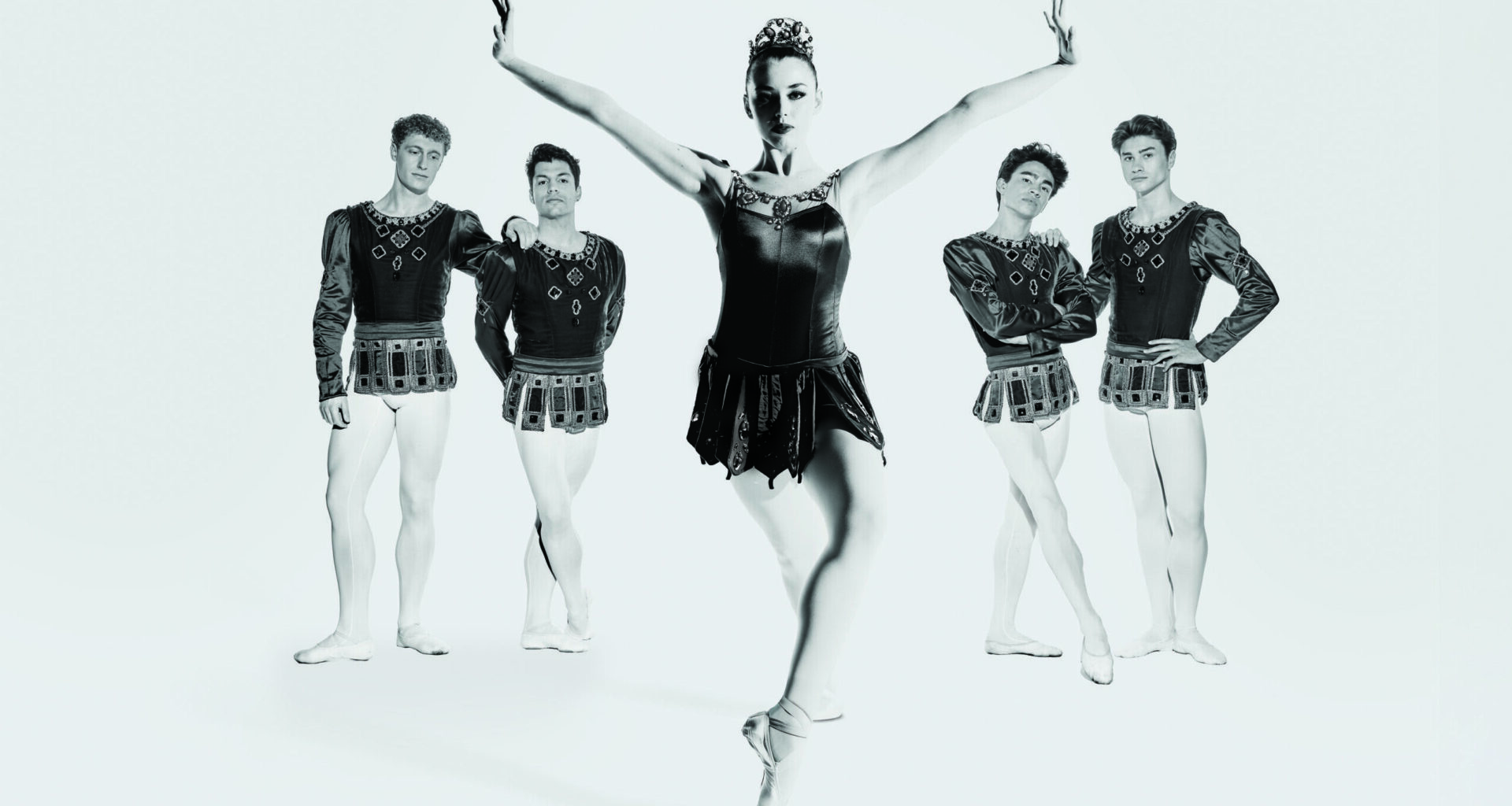
Los Angeles is a notoriously difficult city for classical ballet companies. Unlike other major cities, L.A. presents a tough ecosystem for organizations trying to get off the ground. For Los Angeles Ballet, which is celebrating its 20th anniversary this year, the milestone proves that the company has the longevity to make it in the City of Angels.
Los Angeles Ballet was co-founded in 2004 by Thordal Christensen, a former dancer and artistic director of the Royal Danish Ballet, and Colleen Neary, a former New York City Ballet soloist and répétiteur for The George Balanchine Trust. The married couple directed the company until another NYCB alumna, Melissa Barak, took the helm in 2022. Under her leadership, the company underwent a visual rebrand and expanded its performance venues. It currently consists of 28 dancers, 1 apprentice, and 4 trainees.
To celebrate its two decades, Los Angeles Ballet will be performing a triple bill highlighting the company’s past, present, and future at The Wallis Annenberg Center for the Performing Arts from January 29–31. It features George Balanchine’s “Rubies,” Hans van Manen’s Frank Bridge Variations (which had its U.S. premiere at Los Angeles Ballet), and a world premiere by Barak. “Rubies” was the second work Los Angeles Ballet ever performed, with Barak in the debuting cast, and it set the stage for the company’s Balanchine-heavy repertoire since then.
Pointe spoke with Barak and executive director Julia Rivera about the significance of this anniversary, as well as their goals for the company’s future.
How does it feel to achieve 20 years of Los Angeles Ballet?
Julia Rivera: This company reaching 20 years is significant not just for the company itself but for the city of Los Angeles, because there has never been a professional classical ballet company to survive longer than nine years. When we celebrated our 10th anniversary, we thought: This is quite a milestone. Now another decade has passed. We’re proud to have been able to survive and thrive this long. We survived the pandemic and a recession, and we continue to improve and to grow our audiences and our programming.
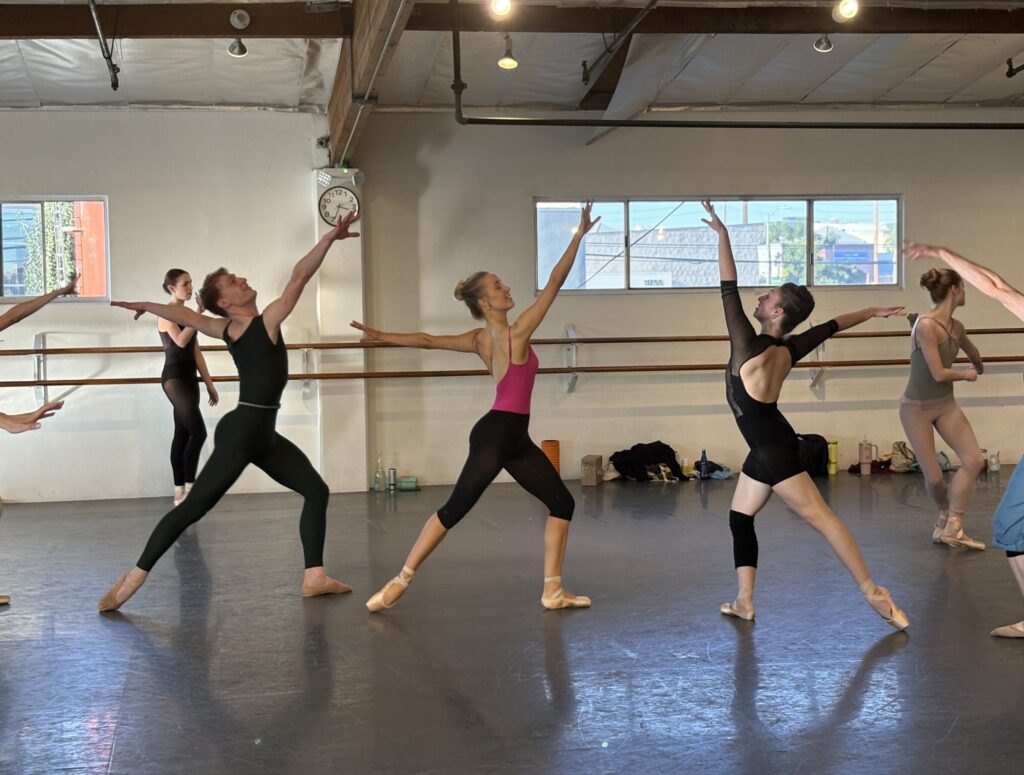 From left: Marco Biella, Poppy Coleman, and Cleo Taneja rehearsing Melissa Barak’s world premiere. Photo by Barak, courtesy Los Angeles Ballet.
Why do you think classical ballet companies tend to struggle in Southern California?
Melissa Barak: Culturally, ballet never really took a foothold in this part of the country. The film industry is what took root here early on. That’s the culture and identity of the town.
JR: Los Angeles is a unique city among metropolitan environments in this country. We have unique challenges and we have unique strengths. But we have an adult audience that has access to some of the most incredible entertainment in the world, so a more traditional art form really must make the case for why someone should spend their time on, or take a chance on, that kind of experience. Our audience continues to grow year after year, even if our programming season isn’t larger, so we know there is an appetite and interest in the performing arts.
What would you say to a ballet dancer from Los Angeles to encourage them to pursue their career locally?
MB: What’s exciting for me is that ballet is still a growing scene here in L.A. In other cities where there is a very strong history, the precedent has been set—there’s a mold to be filled, more or less. In L.A., there’s still a lot of possibility. The ballet scene, what ballet is, what ballet could be can still be defined here.
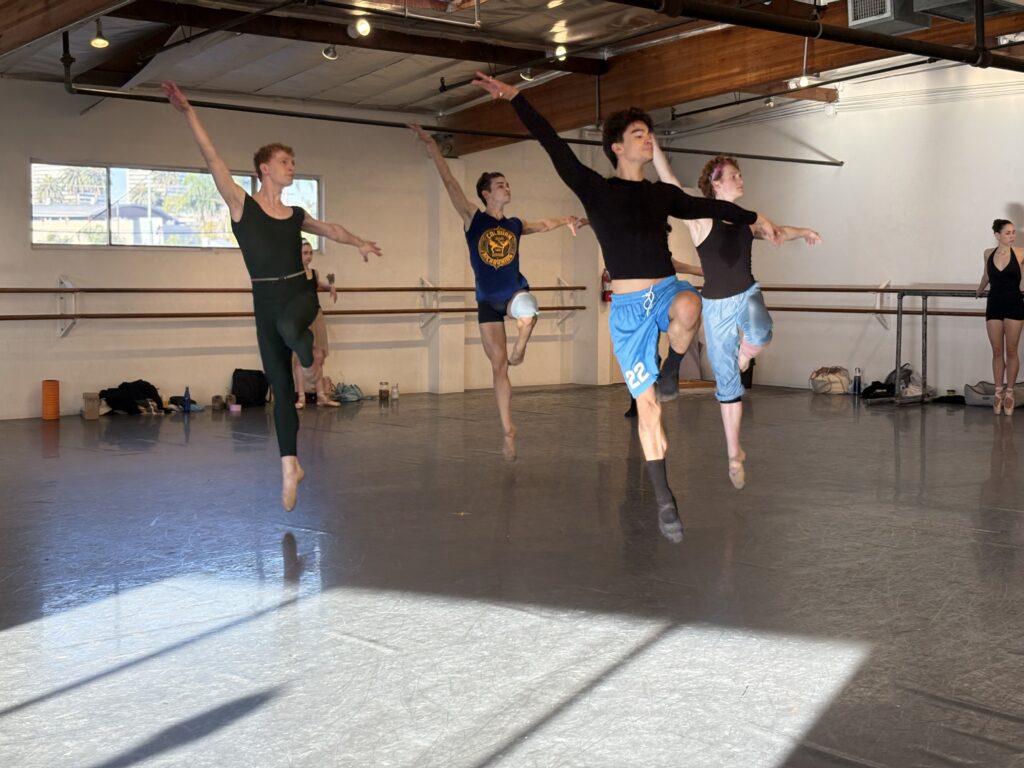 From left: Marco Biella, Theodore Swank, Jacob Soltero, and Bryce Broedell rehearsing Melissa Barak’s world premiere. Photo by Barak, courtesy Los Angeles Ballet.
Melissa, what can you tell us about your new ballet?
MB: It’s an abstract work. I worked with a longtime collaborator, composer David Lawrence, and it’s a very music-driven piece. It’s 14 dancers and one long piece of music with various ebbs and flows. We also worked with the Italian fashion house Etro, which was exciting because the identity of their brand is bold colors and patterns. We let the lighting design really play off of the costume design.
What are your aspirations for the future of Los Angeles Ballet?
MB: I would love for us to be an innovator of new works, to discover new choreographic talent, and to build the company closer to 50 dancers. But to have a home theater eventually would be crucial. It’s always a challenge when you’re at the mercy of venues and their scheduling and programming needs. We’ve had strong partnerships with The Wallis in Beverly Hills, and the Dolby Theatre for our Nutcracker. In April we’ll be doing our Giselle at The [Los Angeles] Music Center’s Ahmanson Theatre, which is the start of a new relationship we really hope to grow. But to have if not a home theater then a residency in one of the main venues in L.A. is key.