
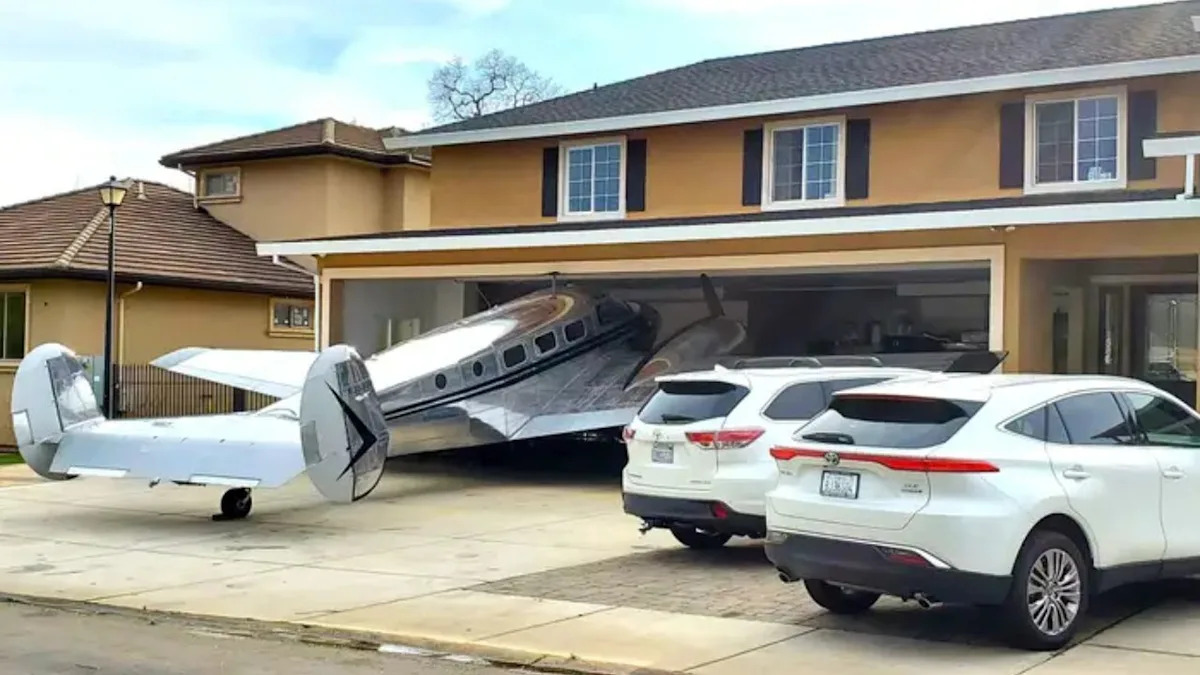
Cameron Park in Northern California looks like the kind of suburb you could drop anywhere in America. Neat houses. Wide streets. Quiet mornings.
Then you turn onto Boeing Road and everything changes. Instead of trash cans and basketball hoops, there are airplanes parked in driveways. Real ones. Wings stretching across lawns. Tail numbers instead of license plates. Welcome to Air Park, a neighborhood where aviation is not a hobby tucked away in a hangar, but a daily way of life.
For car enthusiasts, Air Park feels like the ultimate “what if” scenario. What if your garage opened not onto a cul-de-sac, but onto a runway? What if your weekend toy did not idle at a stoplight, but taxied past your neighbor’s mailbox?
Established in the 1960s, Air Park is a real place that was purpose-built for pilots, with oversized lots and roads wide enough for aircraft to roll comfortably from house to airstrip. Here, planes technically have the right of way. Cars wait.
Julie Clark Lives Here
There are about 128 homes in Air Park and roughly 100 aircraft among them. Some residents commute to the Bay Area by air, turning what would be a grinding freeway slog into a pre-coffee flight. Others simply enjoy the freedom of stepping out of their back door, firing up an engine, and taking to the sky on a whim.
It is the kind of lifestyle that sounds wildly impractical until you realize how intentional the entire community is.
One of Air Park’s most notable residents is Julie Clark, a pioneer in American aviation. She was among the first female commercial airline pilots in the United States before becoming a legend in aerobatics.
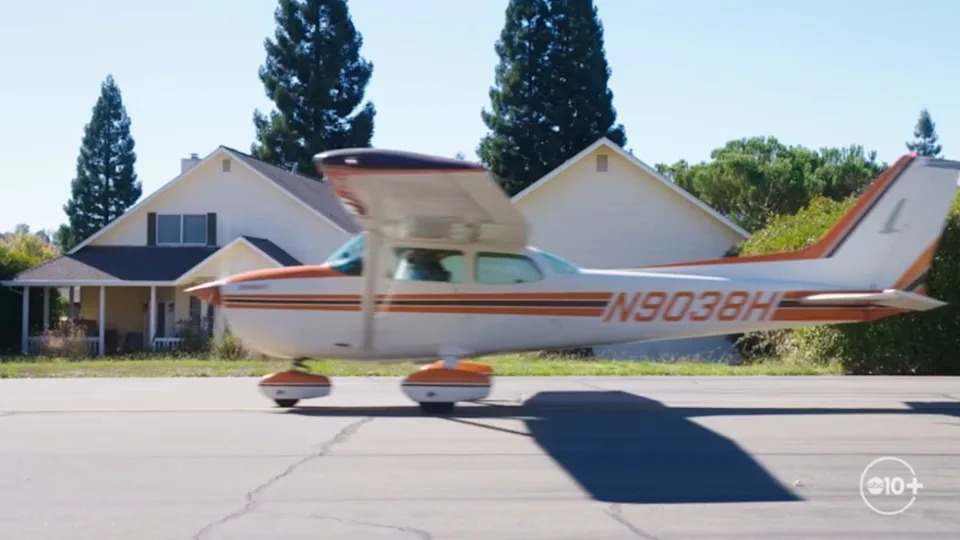
Image Credit: ABC10/YouTube.
More than 40 years ago, Clark founded her own air show company and made Air Park her home base. Her house, like many others in the neighborhood, includes a hangar integrated into the property. The airplane is not stored somewhere else. It lives with you.
For longtime residents like Logan Peterson, aviation is not a late-life passion but a childhood norm. Peterson grew up in Air Park, started flying at 12, and earned his pilot’s license at 17. He was flying before he was driving, a reversal that would sound absurd anywhere else. In Air Park, it barely raises an eyebrow.
Neighbors All In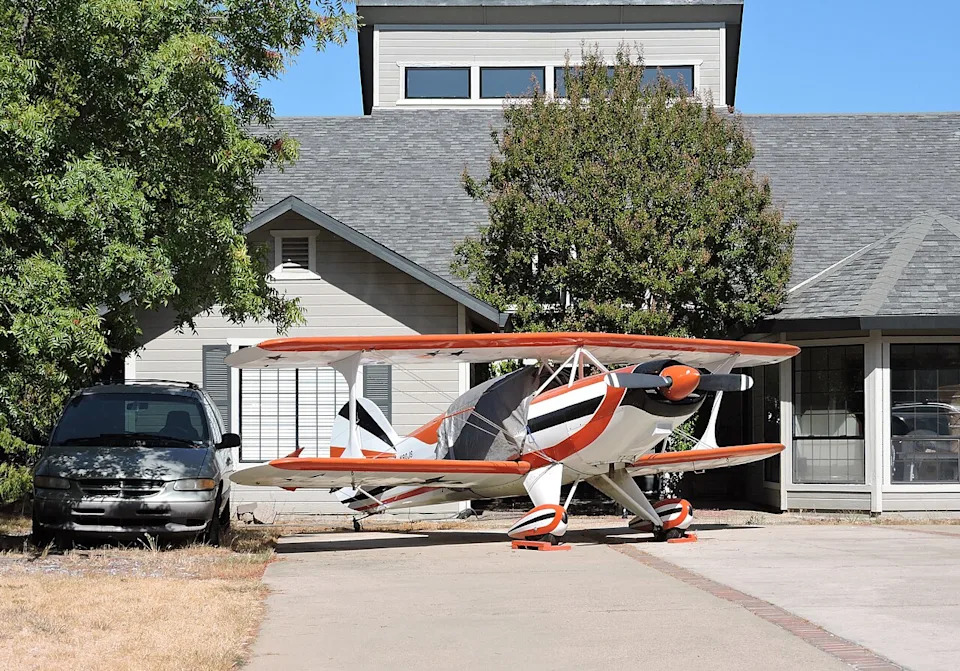
Image Credit: Finetooth – Own work, CC BY-SA 3.0, Wikimedia.
Noise complaints are a nonissue here, which is another detail that will make car people smile. You don’t have neighbors complaining about noise pollution here. They’re all in. Former Air Force squadron commander Carl Gremlick, who once flew massive B-52 bombers, sums it up best.
While most communities near airports fight the sound of engines, Air Park residents pay a premium for it. The noise is part of the deal, part of the charm, and part of the shared culture.
That culture extends beyond the residents. At the edge of the runway sits a viewing area where locals and visitors can watch impromptu air shows. On any given day, a handful of planes might lift off or buzz past in loose formation. For spectators, it is a free show. For pilots, it is just another afternoon at home.
The catch, as always, is scarcity. There is limited space, and there will never be many more homes than there are now. According to local realtors, Air Park properties typically command a 30 to 35 percent premium over comparable homes nearby. You are not just buying a house. You are buying access to a runway and membership in a very specific club.
Birds of a Feather Flock Together
Air Park is fascinating because it flips familiar ideas on their head. It treats aircraft the way car culture treats project builds and weekend cruisers. They are visible. They are shared. They are social. It proves enthusiast communities thrive when infrastructure matches passion. Swap wings for wheels, and the idea does not feel so far-fetched.
Air Park is not just a quirky California neighborhood. It’s probably the last place in America where the sound of engines is a welcome noise. It reminds us that transportation can shape lifestyle in unexpected ways. Sometimes, the dream garage is not about horsepower or torque. Sometimes, it is about lift.