
Home
Web First
Should California create its own bar exam?…
Legal Education
Should California create its own bar exam? Bar leaders weigh in
January 23, 2026, 1:20 pm CST
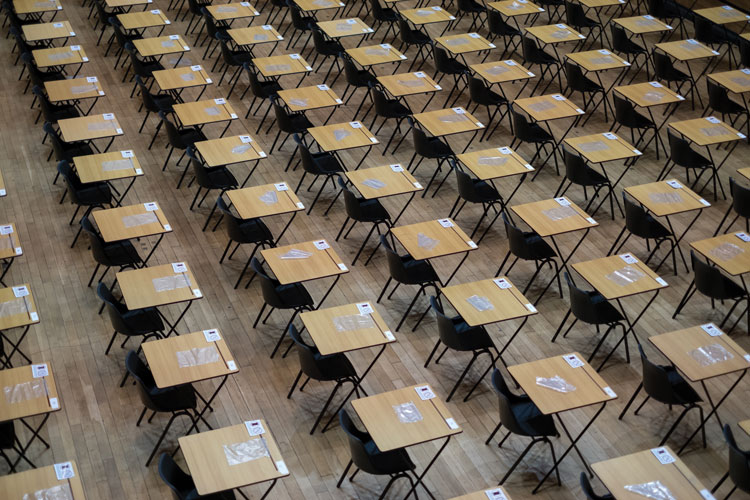
Despite California’s troubled attempt at launching its own bar exam last February, about half of the state’s bar leaders prefer a plan to create a California-specific test in the long term and use Kaplan to develop a “bridge” exam in the short term over administering the new exam created by the National Conference of Bar Examiners. (Image from Shutterstock)
Despite California’s troubled attempt at launching its own bar exam last February, about half of the state’s bar leaders prefer a plan to create a California-specific test in the long term and use Kaplan to develop a “bridge” exam in the short term over administering the new exam created by the National Conference of Bar Examiners, a new survey shows.
This stands in contrast to the 71% of deans of California’s ABA-accredited law schools surveyed who prefer using the NCBE’s new NextGen Uniform Bar Examination.
The results of the surveys of were posted as part of the agenda for a joint meeting of the state bar’s board of trustees and bar examiners committee, scheduled for Jan. 23.
The state is forced to make a decision about which exam to use—and soon. After the disastrous administration of the state’s new hybrid exam last year, the California Supreme Court ordered a return to the Multistate Bar Examination until the NCBE sunsets the UBE in 2028, and a California law requires giving a notice of two years before making substantial changes to how the exam is given.
Seven options were presented, including a proposal would create something similar to the Nevada plan, a new three-pronged system that includes a multiple-choice test, a one-day performance exam and supervised practice.
“To be fair, there are pluses and minuses to all of the options,” says Mary Basick, the assistant dean for academic skills at the University of California at Irvine School of Law.
Though she is not in favor of the Kaplan bridge plans, she says the NextGen exam would increase costs for candidates, and the Nevada-style plan might have challenges scaling up the supervised practice component.
California tests the second-highest number of candidates, with 7,362 examinees for the July 2025 administration, according to the NCBE, while Nevada tested 303 graduates at the same administration.
“It’s not an easy call,” Basick says.
In 2024, the cash-strapped state signed an $8.25 million, five-year contract with Kaplan to write California’s exams that could be administered remotely. But after February 2025’s troubled administration of the new exam, including technical glitches and revelations that some questions written by artificial intelligence with help from nonlawyers, some called into question the abilities of Kaplan, traditionally a bar prep company, to write an exam.
“I’m a big believer that sunk costs should not drive this decision, and continuing to pour money into the most expensive, highest risk option makes no sense,” says Susan Smith Bakshian, the director of bar programs at the Loyola Law School at Loyola Marymount University in Los Angeles. “And that is what the Kaplan option is. It is the highest risk, and it is the most expensive.”
In August, the deans of California’s ABA-accredited law schools wrote the state bar in support of the NextGen UBE, which aims to emphasize practical skills over memorization. Forty-eight U.S. jurisdictions have committed to the NCBE’s new test and will begin using it sometime between this July and in 2028. The deans cited the ability to transfer NextGen scores to most other jurisdiction as a benefit.
One survey was emailed to 30 members of the two California state committees on Dec. 6. Nine of 13 the board of trustees and 13 of 17 of the bar examiners committee responded to the survey by Dec. 19.
A similar survey was sent on Jan. 5 with a Jan. 16 deadline to current licensees, applicants along with California bar associations and disability rights groups, asking for input on the state’s future testing protocols. All responses were anonymous.
Law.com also had coverage.
Write a letter to the editor, share a story tip or update, or report an error.