
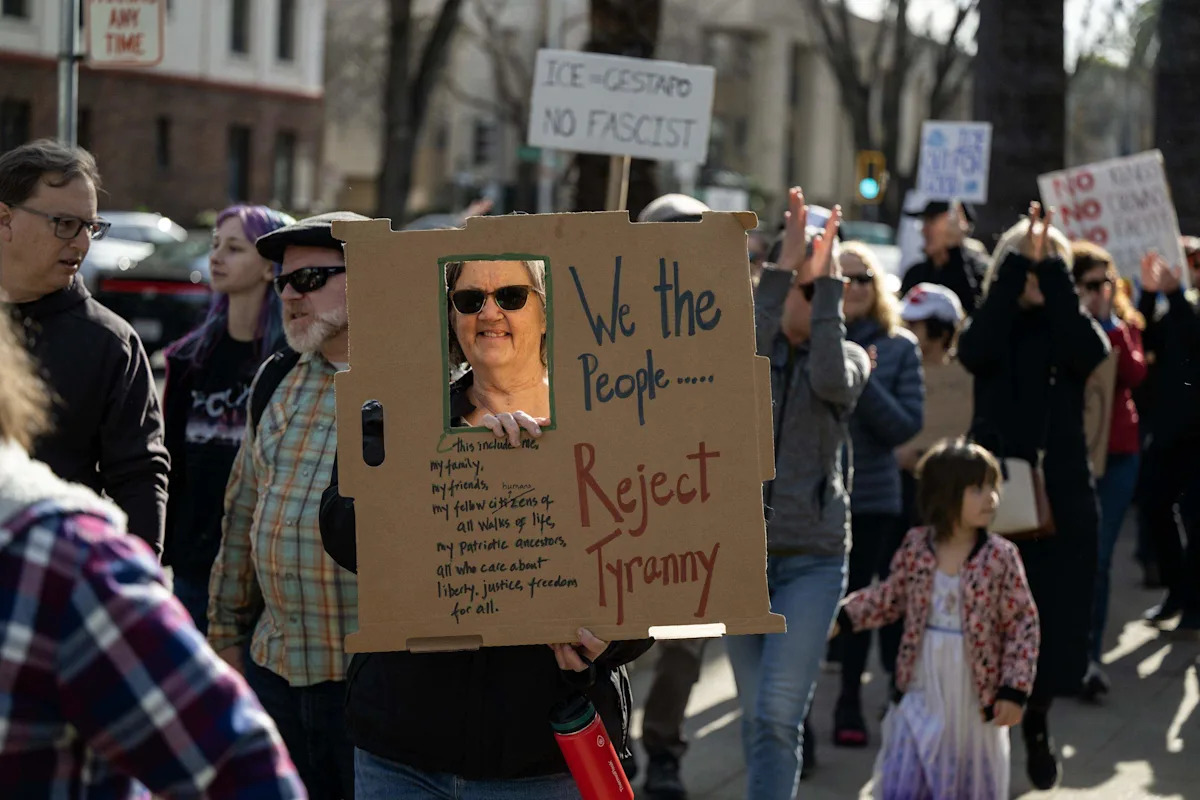
The Jan. 7 killing of Minnesota woman Renee Good and the arrest of a 5-year-old child seeking asylum by Immigration and Custom Enforcement agents has drawn outrage and protests across the country.
Since those protests started, the Trump administration has escalated immigration raids in cities including Los Angeles, Chicago, Minneapolis and Washington, D.C.
But how do you respond if you see ICE agents in your community engaging in questionable behavior? What are your rights? Whom should you call?
Here’s what to know:
What can I do if I see an ICE raid?
Bystanders who are witnessing an ICE raid can document what they are seeing and conduct of the ICE agents, according to Immigrant Justice. There are several organizations to report raids to, depending on the area.
The Sacramento Rapid Response Network is meant for emergencies only to report ICE activity and enforcement actions. The hotline is 916-382-0256.
This network covers the following areas:
Fresno, San Joaquin, Merced, Stanislaus and Kern counties have a dedicated hotline through the Central Valley Watch Rapid Response. The hotline is 559-206-0151.
Additionally, the California attorney general’s office has a dedicated portal to report “potentially unlawful activity” by federal agents, including “the use of excessive force, unlawful searches or arrests, wrongful detentions, interference with voting, or other civil-rights violations.”
The portal is at oag.ca.gov/reportmisconduct.
Can I record ICE activity?
The details of a raid can be useful for the non-citzen’s legal case.
Documenting a raid includes writing and video recording. It is important to remember that there are no states in which it is illegal to record law enforcement while they are engaged in their public duties.
In California, you cannot legally obstruct an officer’s ability to conduct police activities — though it is explicitly outlined in code that taking photos, video or audio recordings in a public space does not do that in and of itself.
Should I post about ICE sightings in my area?
Huy Tran is the executive director of Services, Immigrant Rights and Education Network (SIREN), an organization with offices in San José and Fresno that offers legal aid, trainings and leadership development to immigrant communities.
Tran told KQED that posting on social media can make it harder for communities to separate fact from fiction. “Anxiety, fear, it spreads incredibly quickly,” Tran told KQED. “When people send information out to these huge networks, it spreads far, wide and fast.”
He recommends alerting hotlines instead of posting on social media.
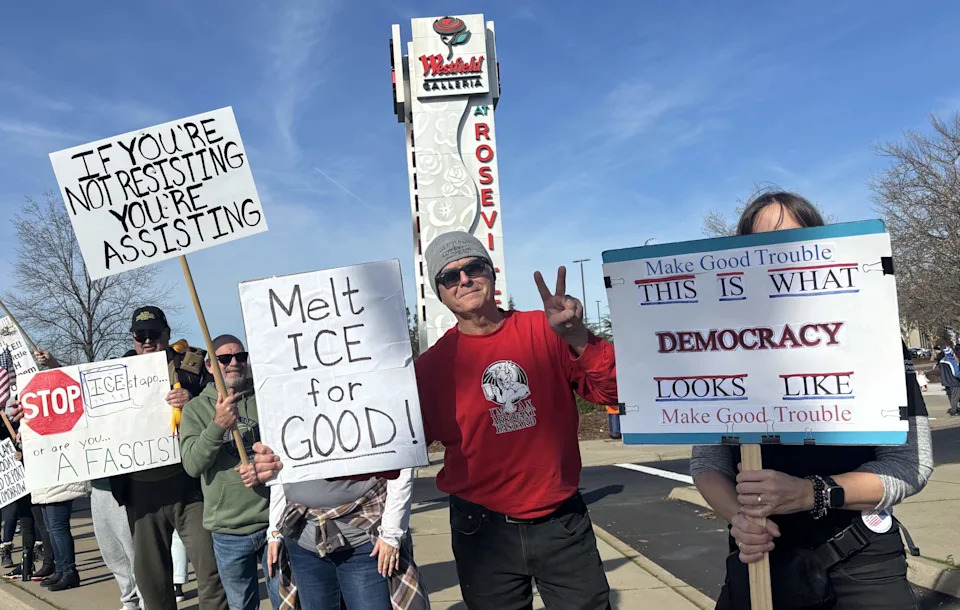
Protesters outside the Westfield Galleria mall in Roseville hold signs protesting U.S. Immigration and Customs Enforcement on Saturday, Jan. 10, 2026, after an ICE agent fatally shot a woman earlier in the week in Minneapolis.
(JOE RUBIN/jrubin@sacbee.com)How can I stay safe around ICE officials?
The ACLU of Northern California said it’s important to stay calm.
“Don’t run. Don’t argue, resist or obstruct the police, even if you are innocent or police are violating your rights. Keep your hands where police can see them,” the ACLU said.
The Fifth Amendment of the U.S. Constitution says every person in the United States has the right to remain silent regardless of immigration status, according to Amagda Pérez, attorney and co-director of the UC Davis Immigration Law Clinic.
“If you’re not sure why you’re being asked certain questions, you (should) exercise your right to remain silent until you have counsel available to advise you,” Pérez said.
If local police officers or sheriff’s deputies pull over your vehicle and ask for identification, she said, you can be required to provide your driver’s license and proof of insurance. However, you should not be asked for proof of immigration status, Pérez said.
“A police officer is not a federal agent that has the training to evaluate a person’s immigration status,” Pérez said. “In California … they’re prohibited from providing information to the (U.S.) Department of Homeland Security because, again, they’re not immigration agents.”
And if ICE comes to your home or business, you do not have to consent to a search without a judicial warrant. The ACLU of Northern California said administrative warrants do not give ICE permission to search homes or businesses.
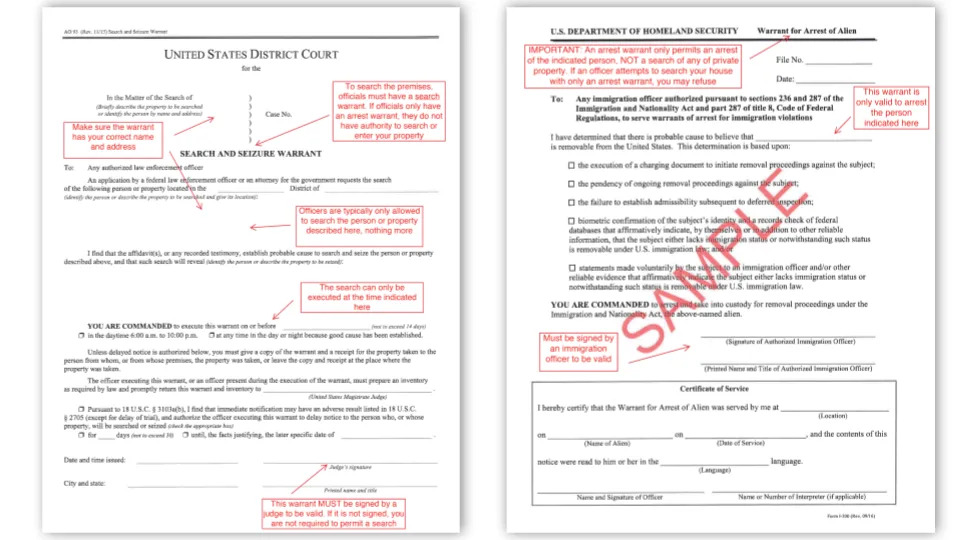
On the left is an image of a judicial warrant which allows a home or business to be searched. The right image is an administrative warrant — which lacks the same oversight. A recent ICE memo calls into question how much the agency is complying with the legal precedent.
(ACLU of Northern California)
However, the Associated Press obtained an internal ICE memo that authorizes agents to use force to enter a residence on the basis of administrative warrants. The Associated Press reports “the memo itself has not been widely shared within the agency, according to a whistleblower complaint, but its contents have been used to train new ICE officers who are being deployed into cities and towns to implement the president’s immigration crackdown.”
A valid judicial warrant includes the name of the person being searched for and the address that is allowed to be searched, Pérez said. An administrative warrant grants immigration officials the right to arrest someone the agency suspects is a non-citizen who does not have a lawful right to be in the country.
The Sacramento Bee’s Lauren Chapman contributed to this story.