
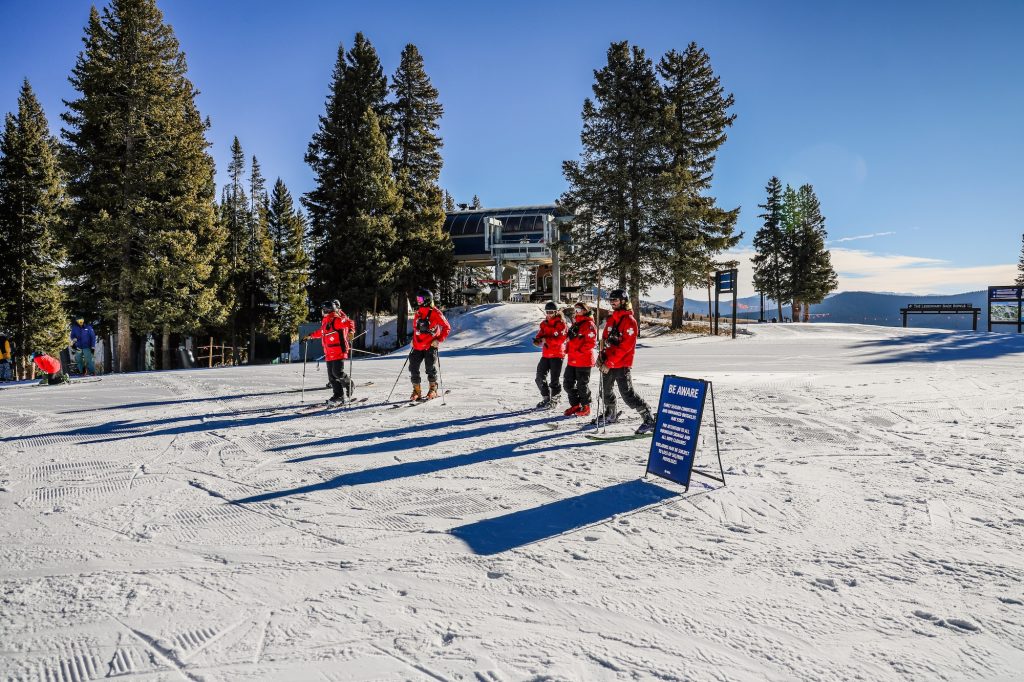
 Members of Vail Ski Patrol gather during Opening Day In November 2025.
Chris Dillmann/Vail Daily
Hundreds of current and former Vail Resorts employees who opted out of a California settlement over alleged wage-and-hour violations are still waiting for the opportunity they expect to come next: the chance to join a federal lawsuit against the company.
Objectors to the “pennies on the dollar” settlement in California state court were represented by an attorney who brought forth a similar case in federal court in Colorado, where Vail Resorts is headquartered and the place many feel is a more logical venue for the case.
Their objection proved successful, and the California settlement was thrown out, but the formal step that would allow those workers to join the Colorado suit instead has not yet happened.
A tentative court schedule filed Nov. 26 indicated that notice to eligible workers could go out Jan. 19. That date has since been pushed back to Jan. 26, leaving many of the employees who declined the California settlement still waiting for the official notification that would allow them to opt into the Colorado case.
‘Sham settlement’
The original lawsuit, filed in California state court, alleged Vail Resorts violated the Fair Labor Standards Act by failing to pay employees for all hours worked, denying overtime and breaks, and failing to reimburse required work expenses. The case grew to include workers from 17 states.

Support Local JournalismDonate
In 2022, plaintiffs reached a settlement with Vail Resorts, but when employees saw how much they would receive, many concluded the payout would amount to only a small fraction of what they believed they were owed.
A number of workers chose to opt out.
An attorney who objected to the settlement argued it undervalued the claims and improperly attempted to resolve wage claims nationwide in a California court, and an appeals court agreed, throwing out the settlement and sending the case back to the trial court.
But by then, many employees had already chosen not to participate in the settlement — expecting instead to pursue their claims in the federal case in Colorado.
The federal court in Colorado, in learning of the California appellate district’s decision, requested the plaintiffs file a brief further explaining why the federal court would be a more appropriate venue for the class action claim.
That brief was filed in November of 2024 and said that the California settlement and the circumstances surrounding it “are precisely those against which courts and commentators alike have cautioned are indicia of a ‘reverse auction’ and ‘collusive’ or ‘sham’ settlement,” defining a reverse action as occurring when “a defendant in a series of class actions picks the most ineffectual lawyers to negotiate a settlement in the hope that the district court will approve a weak settlement that will preclude other claims against the defendant.”
The federal court in Colorado, in December, ordered Vail Resorts to produce a list of employees who could make up the class in the new FLSA collective action. That list was provided on Dec. 22, and if it’s deemed adequate, those employees will be notified that they are eligible to participate in the lawsuit.
It’s unclear at this point whether those involved in the case have deemed the list provided by Vail Resorts to be complete, but a tentative schedule filed Nov. 26 indicated that notice would go out Jan. 19, and that date has since been pushed back to Jan. 26.
While the California case included all workers, the judge has indicated the new class in the federal suit should be made up solely of ski instructors. But one of the named plaintiffs in the federal suit is a lift ticket scanner, so it’s also unclear at this point who will be allowed to join the class.
Until the notice is approved and sent out to the class, the employees who opted out in California are not yet able — and not yet sure if they will be able — to join the other case against the company in Colorado.
Intervening interests
On Dec. 19, plaintiffs from the California litigation filed a motion to intervene in the Colorado case, arguing they want input into what the notice to employees will say.
It’s a reverse scenario from what had previously transpired in California, in which the plaintiffs from the federal case intervened in the state court case. The federal plaintiffs were initially denied that opportunity, but California’s Third Appellate District overruled, granting their motion to intervene during the same ruling that threw out the settlement.
“We cannot say that defendants are essentially at home in California, as required for general jurisdiction,” California’s Third Appellate District wrote. “Nor can we say on this record that the out-of-state claims had a sufficient link to California to warrant specific jurisdiction. So absent defendants’ consent to suit, California courts would appear to lack personal jurisdiction over these claims.
“That is potentially problematic for California Plaintiffs,” the appeals court added.
The plaintiffs leading the Colorado case have since opposed the request from the California plaintiffs to intervene in their case.