
The annual count shapes funding and policy, but advocates warn it fails to capture families experiencing homelessness
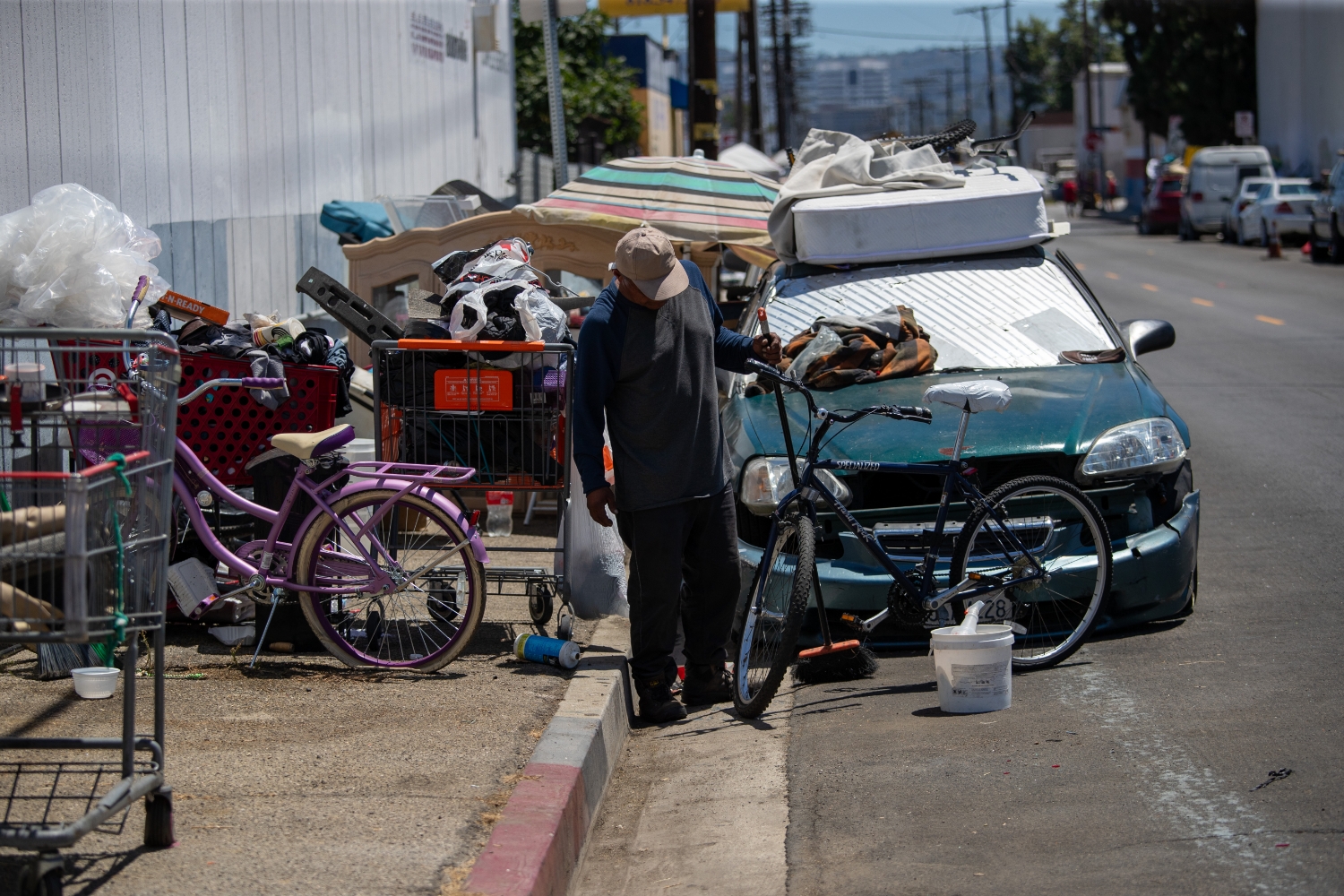
The annual homeless count is underway, but families remain largely unseen. Volunteers in the LA County community are spread out across the region for the annual homeless count, which aims to count the unhoused population.
Volunteers count those whom they can physically see on the streets. They have covered more than 4,000 square miles in under three days, with small groups assigned to specific areas, tallying the people, tents, and vehicles they see on the streets. These results often get released in late spring or early summer.
The Los Angeles Homeless Services Authority, which leads the count, says the data collected is essential for understanding homelessness in the greater Los Angeles region and for directing resources to those who need them most.
But, homeless services cannot directly count families who are unhoused as easily, stating, “ We know they’re there. They’re our clients. We see them when they come, and they are referred [to us] by the schools, by 211, by the faith community. We see them but not through the count,” said Constanza Pachon, CEO of The Whole Child.
Families don’t usually experience homelessness on the streets, but are more likely to be living discreetly in their cars or in motels.
Why Are Unhoused Families So Hard to Count in Los Angeles?
The data showed that last year, homelessness declined in the region, but not for families, especially with children, says LAist. Service providers have concluded that it may have been an undercount. Where Pachon serves, the count was estimated to be 265 families experiencing homelessness.
Their study states, “A margin of error is the difference between an estimate and its upper or lower confidence bounds. Margins of error presented here are based on a 95 percent confidence level. This year, we introduced a precision scale to help the public understand the likelihood of the presented statistical estimate reflecting the state of homelessness on the night of the 2025 Homeless Count. The scale has four levels: Very Precise (VP), Moderately Precise (MP), Moderately Imprecise (MI), and Very Imprecise (VI). To determine the level of uncertainty, multiply the margin of error by 2. That number is then compared to the original unsheltered estimate to determine the precision level the estimate falls into.”
Providers worry they will encounter more families struggling with homelessness, especially with funding cuts.
Scroll to continue reading
The LAist stated in a recent article, “The recent cuts include a 71% reduction in state funds that have been a key source of funding, specifically for families experiencing homelessness. State funding overall for the agency declined from $145.4 million last year to $88.3 million as money that was available throughout the pandemic has sunsetted. Funding from the city, county and federal government has also been reduced, as governments have faced financial headwinds.”
Even with funding, providers have had to contend with challenges in serving families. Motels have many occupancy limits, which make it harder for larger families to stay together, and there is a lack of affordable housing for larger units.
Both cities and counties are facing funding losses that are expected to affect homeless services, including more than 4,000 unhoused individuals in Los Angeles who are at risk of losing housing vouchers.
Mark Hood, CEO of Union Rescue Mission, volunteered his time on Tuesday night, walking over 9 miles through Downtown Los Angeles. He stated that he did not encounter any families, but his agency, which runs shelters, has seen a rise in families in need of housing.