
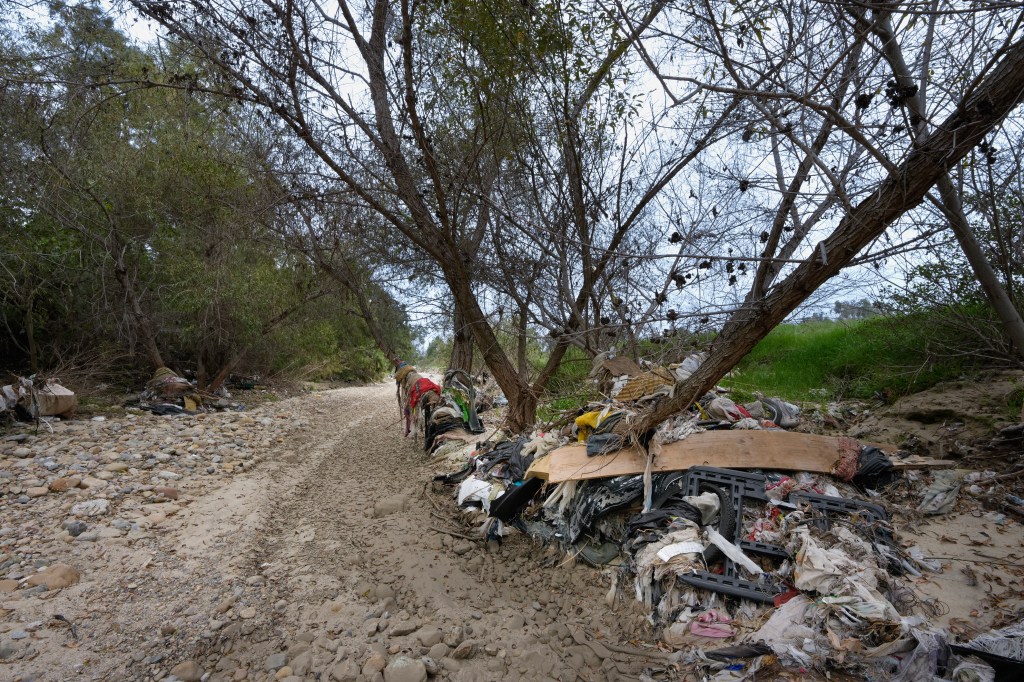
The federal government awarded a $1.1 million contract to an Ohio company to conduct a pilot project deploying a technology to kill bacteria and eliminate odors in the sewage-tainted Tijuana River. It failed, in large part because the company had never used the technology in an environment with such a large amount of solid waste pollution and with unpredictable changes in water flow.
The company, Greenwater Services, uses a nanobubble ozone technology (NBOT) primarily to attack harmful algae blooms in slow-moving or still water, such as lakes and ponds. The project at the international border showed the company’s equipment was ill-prepared for the conditions that plague the region.
The Tijuana River has faced severe water quality challenges for years as untreated or partially treated wastewater, stormwater runoff and industrial discharge cross the border from Mexico, contributing to coastal pollution, beach closures and degraded habitat. The chronic contamination has created significant public health, environmental and economic impacts for communities in San Diego County and officials at all levels of government have sought ways to mitigate the crisis.
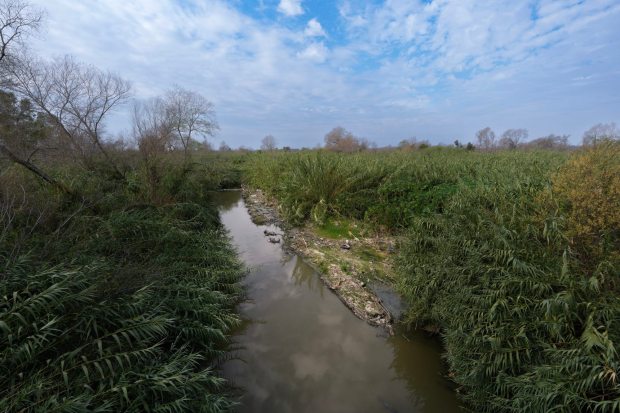 One of the streams in the Tijuana River Valley that flows beneath the bridge on Dairy Mart Road, located along the U.S.-Mexico border in San Diego, CA. (Nelvin C. Cepeda / The San Diego Union-Tribune)
The U.S. International Boundary and Water Commission (IBWC), which oversaw the project, said in its contract award that it did not put it out to bid because of “the urgent need to assess the effectiveness of this technology in addressing the public health threat posed by airborne contaminants in the Tijuana River flows. Given the unique capabilities of Greenwater Services’ technology and the immediate need for a solution, it is in the public interest to proceed with this pilot program to validate the technology’s performance.”
IBWC Commissioner Chad McIntosh declined to answer questions about the pilot program, nanobubble ozone technology or its implementation at the Tijuana River.
Al George, CEO of Greenwater Services, said the company approached San Diego officials first, then contacted IBWC about the technology.
“We were able to obtain the pilot because there’s no other company that does what we do at the capacity that we do it,” he said.
IBWC conducted the pilot project from Sept. 9 to Oct. 15, 2025, just downstream of the international boundary. Operational challenges severely limited the project’s effectiveness. Debris and trash from Mexico repeatedly clogged equipment inputs and output nozzles, forcing operators to restrict treatment to daytime hours only when river flow was lower. The equipment, which has a record of success with stillwater and algae blooms, struggled with the Tijuana River’s fluctuating flows and mixture of sewage effluent, trash and silt.
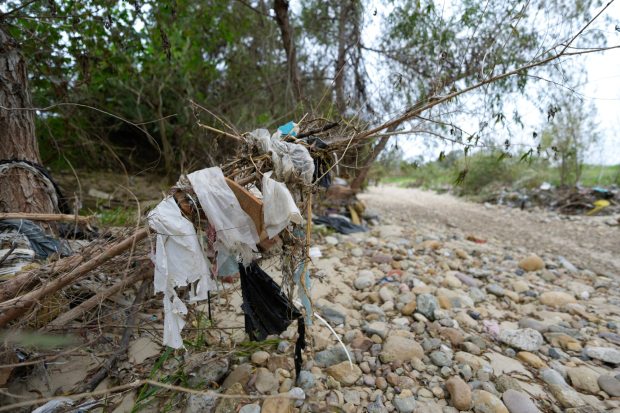 The riverbed is dry and littered with garbage from the recent rains. During the rainy season, the steady flowing stream and trash debris feed into the Tijuana River Valley. (Nelvin C. Cepeda / The San Diego Union-Tribune)
“We had trouble keeping the machines running because of all the trash,” said Chas Antinone, president and chief operating officer of Greenwater Services.
On the night of Oct. 14, an unexpected flood surge increased river flow from approximately 40 million cubic meters per second to 247 million cubic meters per second, according to the report. The flooding destroyed NBOT units and auxiliary equipment, caused a 5-gallon diesel spill requiring professional environmental remediation, and forced termination of the project.
Antinone said the company has not done extensive wastewater treatment work.
“We have not done a lot of that, but we’re tiptoeing in that,” he said, adding most of the company’s testing has been in small bodies of water under 100 acres.
Greenwater also used NBOT in 2024 at the Trump National Golf Club Bedminster in New Jersey during a free demo, Antinone said. He said Greenwater wasn’t hired to do any further work at the course, but he expressed interest in pursuing similar opportunities at other golf courses in the future.
In terms of its practicality on larger, more dynamic bodies of water such as the Tijuana River, George said the “technology is scalable and we can make it bigger or smaller depending on the type of water body that we’re working with.”
While the technology’s infrastructure fell short, its application showed some promise, according to a technical report prepared after the project by the IBWC and Greenwater.
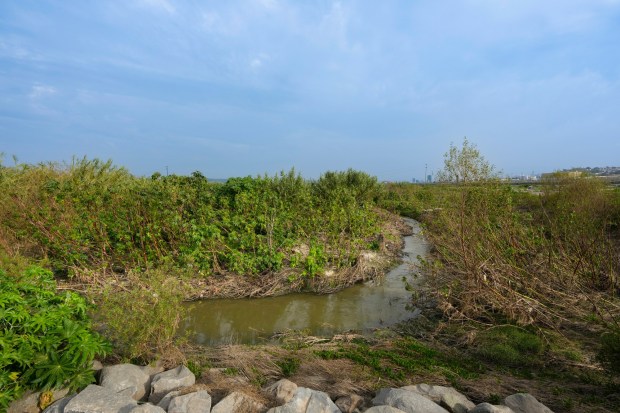 One of the streams in the Tijuana River Valley that flows beneath the bridge on Dairy Mart Road. (Nelvin C. Cepeda / The San Diego Union-Tribune)
The Science Behind the Technology
The technology demonstrated bacterial reduction during operation, including coliforms and E. coli. Anecdotal reports included in the technical report cited a reduction in odors around the site as well, though The San Diego Union-Tribune could not independently verify that information.
“We averaged 93% reduction in bacteria on the days that we treated, which is quite remarkable,” George said.
Peter Moeller, a research chemist at the National Oceanic and Atmospheric Administration who has worked on nanobubble ozone technology for more than a decade, said the approach addresses a fundamental problem with traditional water treatment methods.
“A lot of the things you can treat your reflecting pond with, for example, you can go get copper powder and you can use clay and a bunch of other things to kill algae, but you’re not really taking care of the problem as a whole,” Moeller said in an interview. “If you kill algae, but they’ve spilled their guts, you’ve got toxins in the water. What are you going to do about that?”
Moeller, who has collaborated with Greenwater Solutions on multiple projects and helped the company on the science behind the technology, said ozone’s power as an oxidant allows it to simultaneously attack living organisms — like bacteria — and dissolved contaminants.
The technology uses self-contained units that require only electrical power to operate. The machines bring in air, remove nitrogen to create 95% pure oxygen, then feed that oxygen into an ozone generator. The ozonated water passes through a patented nanobubble generator that creates the microscopic bubbles as water is drawn in and expelled back out.
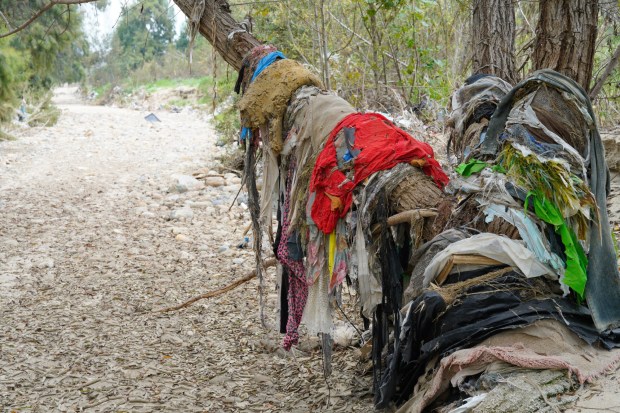 Trash debris left from the last rain storm in San Diego. At the moment the riverbed is dry and littered with garbage from the recent rains. During the rainy season, the steady flowing stream and trash debris feed into the Tijuana River Valley. (Nelvin C. Cepeda / The San Diego Union-Tribune)
“Ozone doesn’t care if the chemical is part of the living system. It doesn’t care if it’s dissolved in the solution as a contaminant, it’s going to attack them and then destroy them, oxidize them, take them out of the picture in one way or another,” Moeller said. “And the beauty is, when we walk away, all we’ve left is oxygen behind.”
The nanobubble delivery system addresses a longstanding concern about ozone treatment. “Ozone shouldn’t be played with, it’s toxic,” Moeller acknowledged. But nanobubbles — which are invisible to the naked eye and don’t float — provide controlled release over time rather than shocking water with large excess amounts.
“When (nanobubbles) implode, they release the hydroxyl radicals and ozone and do their job, imploding over a steady period of time,” Moeller said. “And that means you’ve got this time release ability to clean up water. You’re not just shocking it.”
Moeller said testing has shown the technology doesn’t harm non-target aquatic species when operated at low concentrations, and research at Youngstown State University found increased survivability rates for human skin, liver and lung cells in post-treatment water compared to pre-treatment water.
George emphasized the safety profile. “None of the ozone goes into the air,” he said. “The byproduct of our treatment is that we actually leave the water more oxygenated.”
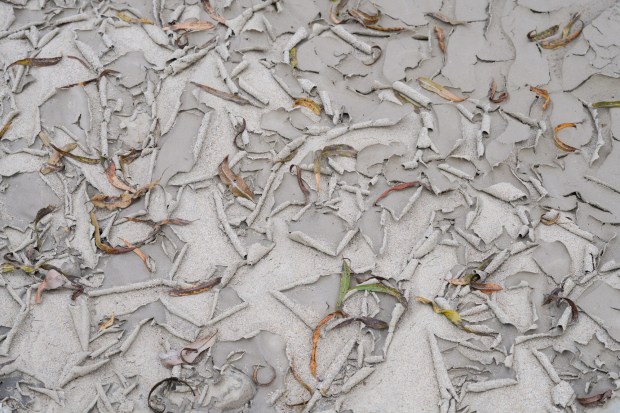 At the moment the riverbed is dry. However, during the rainy season, the stream flows steadily with trash debris that feeds into the Tijuana River Valley. (Nelvin C. Cepeda / The San Diego Union-Tribune)
Equipment Limitations and Adaptability
Despite the technology’s promise, the Tijuana River application revealed significant equipment limitations. The contractor’s report noted that four NBOT units were deployed with the intention of operating continuously, but debris-related clogging made overnight operation impractical. Daily trash removal was required following debris-filled discharges from Mexico.
Antinone said the modifications needed are primarily filtration-related rather than fundamental technology changes. “You need a screen of some type where you’re having the inputs and the outputs protected from the garbage that’s coming,” he said.
Moeller said the equipment can be adapted for different applications but acknowledged challenges with moving water.
“Moving water has historically been the biggest” limitation, Moeller said. “But I think we can overcome that.”
He said full-scale implementation in the Tijuana River would require a different configuration. “If we were to actually go full time rather than a pilot study in the Tijuana River, we would come up with a different format, probably a floating format,” Moeller said.
The equipment’s modular design allows for customization, according to Moeller. “There’s only one piece of intellectual property in the entire machine. Everything else comes off the shelf. So it can be re-engineered, retooled, reconfigured to suit,” he said.
However, redesigning equipment for specific applications requires capital investment, he noted.
Despite the equipment challenges, the company reported that the pilot project demonstrated significant bacterial reductions when operational.
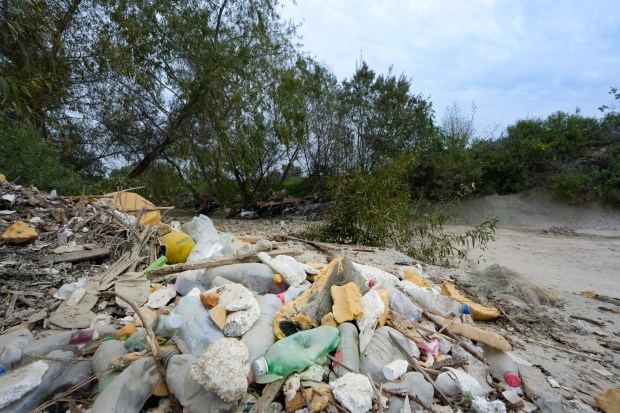 Trash debris left from the last rain storm in San Diego. (Nelvin C. Cepeda / The San Diego Union-Tribune)
Water Quality Results and Community Response
Pre-treatment water samples showed severe bacterial contamination, such as E. Coli and coliforms. Post-treatment samples showed substantially lower concentrations, though levels still remained far above standards for human contact.
All water samples were analyzed by Environmental Lab Network, a San Diego-area laboratory. “This is all third-party data,” Antinone said. “We grabbed the samples. However, the lab came out on two separate occasions and took samples as well and corroborated what our testing was.”
Odor levels around the site were shown to have reduced, according to the report. The rotten egg smell reported by residents is produced by hydrogen sulfide, a toxic gas that is a byproduct of the sewage.
Moeller attributed the reduction to ozone’s ability to oxidize odor-causing compounds. “Hydrogen sulfide goes right to sulfate, no odor,” he said.
A well-known university researcher disputes the data.
Kimberly Prather, an atmospheric chemist at the University of California San Diego who monitored hydrogen sulfide levels in the air during the pilot project, said the technology didn’t reduce hydrogen sulfide (H2S) emissions from the river.
“I will tell you that we were measuring H2S that whole time and it didn’t change in the air,” Prather said.
Prather, who has conducted extensive measurements of compounds in the Tijuana River, expressed concerns about the pilot project’s limited scope and potential risks to the community.
“If you bubble a highly reactive species through water, one that has probably thousands of different chemicals that you don’t know what they are, in the middle of a community, and you don’t look at what’s being released in the air, then that’s dangerous and reckless,” she said.
No adverse environmental or public health effects were observed or reported during the pilot, according to the contractor’s report.
Prather emphasized that the Tijuana River presents unique challenges compared to typical wastewater.
“It is not just sewage,” she said. “It is sewage, which is what you get in wastewater treatment plants, plus this unknown cocktail of industrial dumping from the factories. Those are the chemicals I’m most worried about.”
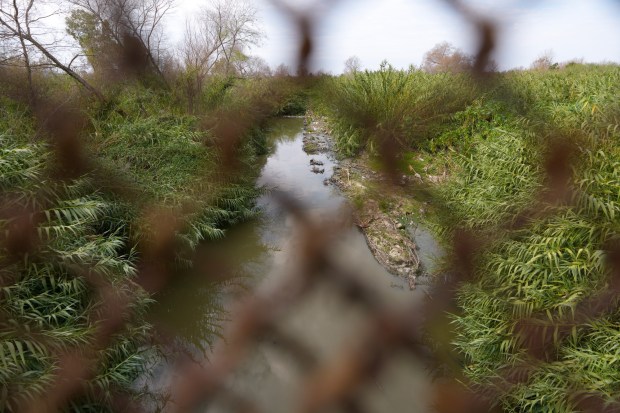 One of the streams in the Tijuana River Valley that flows beneath the bridge on Dairy Mart Road, located along the U.S.-Mexico border in San Diego, CA. (Nelvin C. Cepeda / The San Diego Union-Tribune)
Procurement and Future Plans
The IBWC stated it will continue to investigate and evaluate technologies that can provide relief to U.S. citizens in the region and remains “interested in potential funding and application partnerships that can demonstrate cost and operationally large-scale effectiveness.”
“We hope that we can do more work (at the Tijuana River), but we don’t know at this point in time where it’s going to go,” Greenwater’s George said.
Prather said she wouldn’t rule out the technology entirely, but had concerns about its implementation.
“I didn’t have much confidence in the way they were implementing the technology,” she said. “I just don’t think you should take a highly reactive gas and mix it with a thousand unknown chemicals and pray. I just don’t think that’s a good idea.”
Moeller called the technology “the best I’ve seen for water mitigation in my career,” though he acknowledged bias due to his close collaboration with Greenwater Solutions.
“I know I’m biased,” Moeller said. “But this concept of ‘no legacy residues’ is huge — that we’re not adding a bigger problem to the water than we’re treating. That’s a big deal.”