
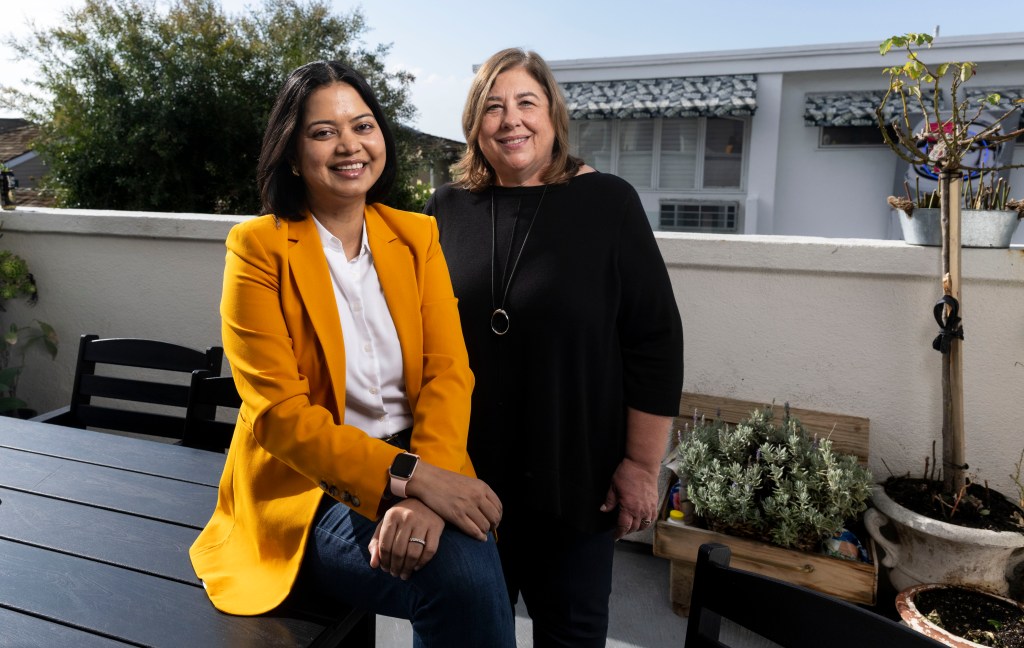
For Dawn Price and Nishtha Mohendra – who are, respectively, the outgoing and incoming leaders of Friendship Shelter, a nonprofit that helps homeless people in south Orange County – a race is on.
For Becks Heyhoe-Khalil, executive director of United to End Homelessness, and for Doug Becht, director of the county Office of Care Coordination, a race is on.
And for thousands of people in Orange County living on the streets, or in subsidized apartments, or in their own homes but with lower-income jobs, the same race is on.
The race boils down to this: Local homelessness advocates have a few months, maybe less, to figure out how to respond to new rules proposed by the Trump administration’s Department of Housing and Urban Development (HUD) in a way that meets the new guidelines while still keeping needy people living in the subsidized housing they currently use.
If they come up with an answer – or possibly multiple answers – the difficult but persistent struggle to reduce homelessness in Orange County will continue apace. Last year, according to county official Becht, an estimated 7,300 previously homeless people got housing in the county, a number viewed as successful even if it didn’t do much to shorten the official list of local people seeking shelter or related services.
But if they whiff; if, by the end of this year (or possibly earlier if a court ruling doesn’t go their way) Orange County housing advocates can’t come up with ways to replace roughly $33 million in HUD money that could disappear as new rules kick in, then an estimated 1,400 formerly homeless people living in subsidized apartments – people who are generally older than 60 and most of whom are disabled – could wind up back on the street.
Each of those re-entries into homelessness would be an individual tragedy. But last week, as they geared up for the start of this year’s local Point in Time Count (a federally mandated, every-other-year census of homeless people) in shelters Monday and on the county’s streets Tuesday-Thursday, local advocates also described a broader trend and suggested the prospect of recycling humans – from homeless to housed and, perhaps, back into homelessness – would be part of a flood of new misery.
That’s partly because the squeeze isn’t just about housing. Federal money that pays for a range of necessities – things like food and medical care and mental health – also is shrinking. And, advocates say, the era of reduced safety-net spending is pushing economically vulnerable people closer to an abyss that could, in some way, touch everyone, poor or otherwise.
“We’re going to see a real bottleneck (of homeless people) in our shelters and in our streets,” Becht said.
“When you change the use of the (housing) funds, it takes help away from current families being housed and goes to other programs,” Becht added.
“It’s really technical, but it’s critical.”
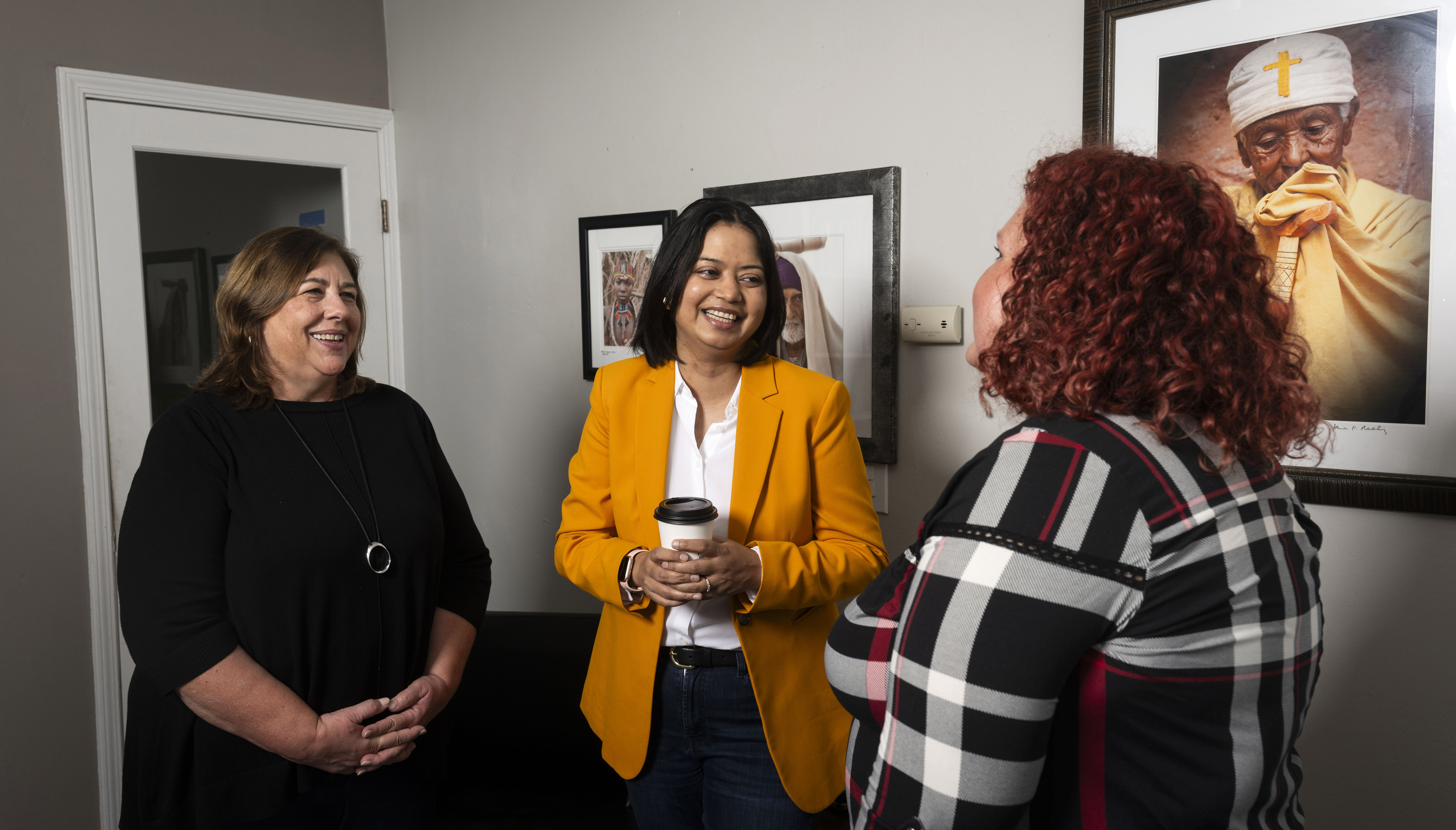
Dawn Price and incoming CEO Nishtha Mohendra, from left, talk with Friendship Shelter resident Michelle Williams at the shelter in Laguna Beach, CA. Williams has been at the shelter for 1 1/2 years. (Photo by Paul Bersebach, Orange County Register/SCNG)
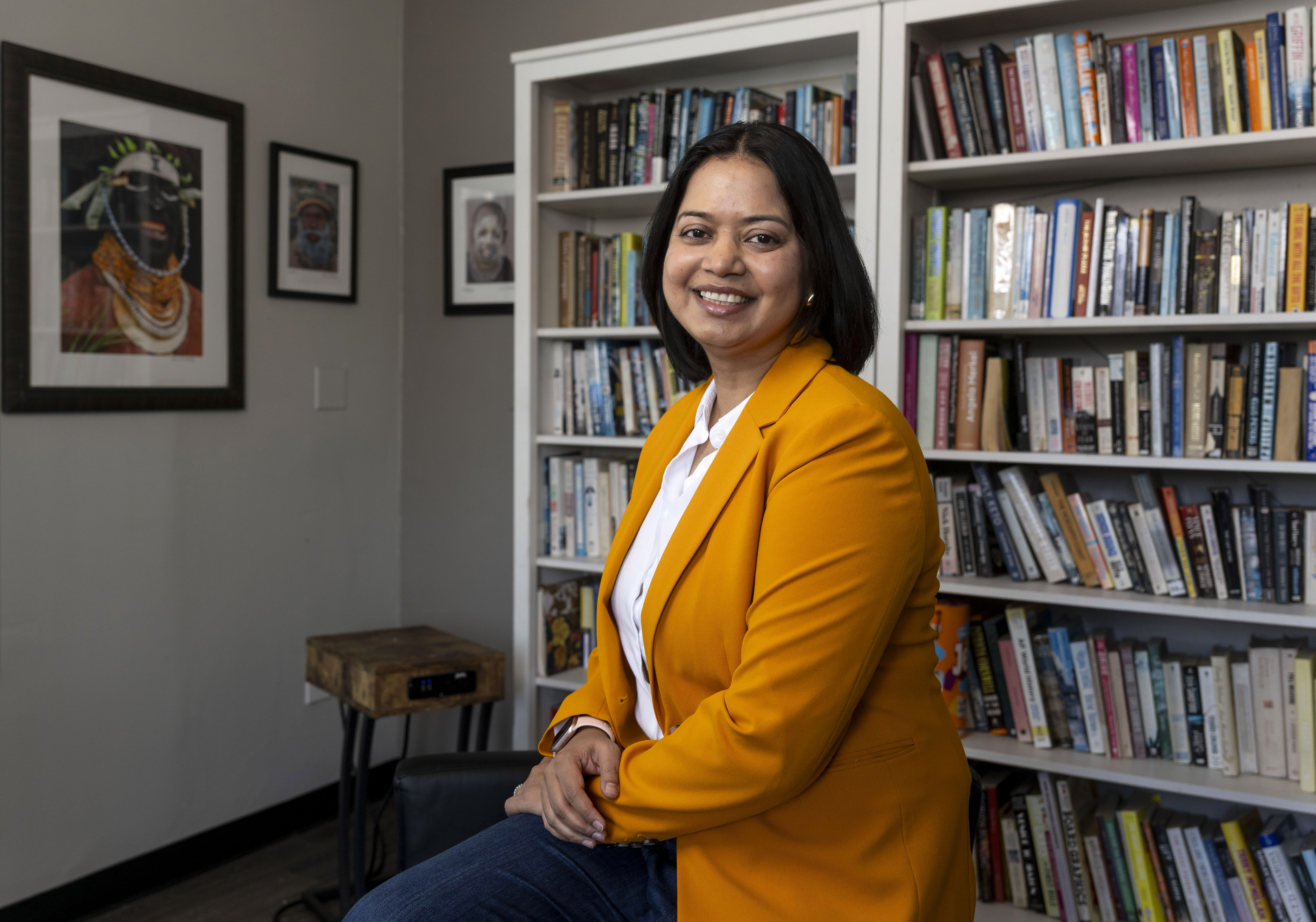
Nishtha Mohendra is the incoming CEO of Friendship Shelter in Laguna Beach, CA. The organization provides housing and support for the homeless. (Photo by Paul Bersebach, Orange County Register/SCNG)
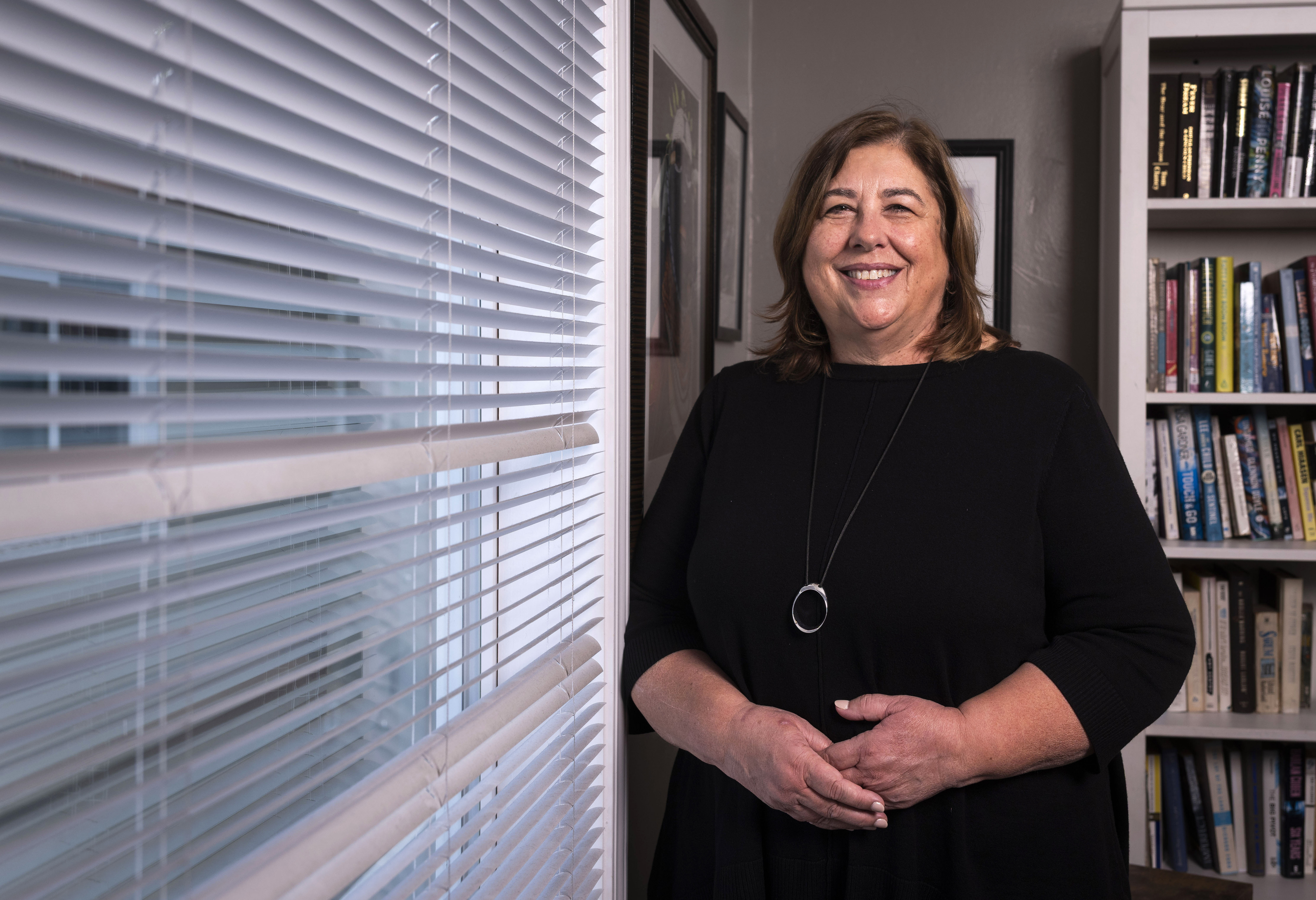
Dawn Price is retiing as the exective director of Friendship Shelter in Laguna Beach, CA. The shelter provides housing and support for the homeless. (Photo by Paul Bersebach, Orange County Register/SCNG)
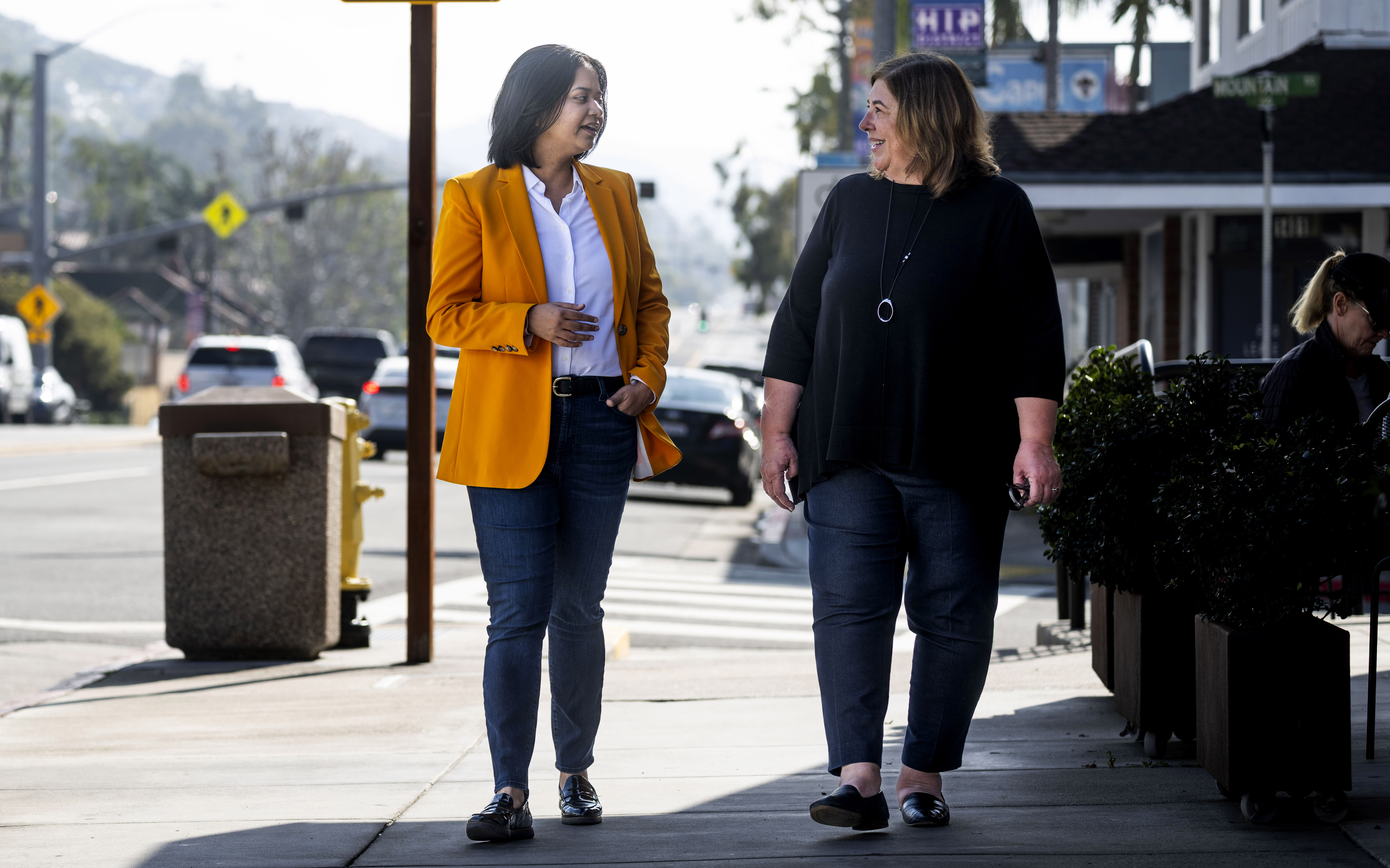
Nishtha Mohendra, incoming CEO of Friendship Shelter, left, is replacing Dawn Price at the shelter in Laguna Beach, CA. The organization provides housing and support for the homeless. (Photo by Paul Bersebach, Orange County Register/SCNG)
Show Caption
1 of 4
Dawn Price and incoming CEO Nishtha Mohendra, from left, talk with Friendship Shelter resident Michelle Williams at the shelter in Laguna Beach, CA. Williams has been at the shelter for 1 1/2 years. (Photo by Paul Bersebach, Orange County Register/SCNG)
Expand
Year of the Pivot
At the 2026 State of Homelessness Event – an online and in-person gathering of Orange County nonprofit leaders and county officials held Thursday, Jan. 22 to discuss the current state of play in the fight to get people into housing – the unofficial theme was “transition.”
“This year is all about a smart, strategic response to what we saw last year,” said Mohendra, who in addition to her role as incoming chief executive at Friendship Shelter is also a member of the local Continuum of Care Board, which implements homelessness strategies in the county’s 34 cities and unincorporated areas.
What advocates saw last year, was, in their view, rough.
Not only did HUD pitch new rules that could pull $33 million away from so-called “housing first” programs that, in Orange County, are widely used to help elderly and permanently disabled people stay off the streets, but the agency also pulled some 1,000 local housing vouchers and it withheld other money that was to help build some smaller projects and could have taken small bites out of homelessness in Orange County.
For now, HUD’s proposal connected to “housing first” remains tied up in courts. While most advocates say they hope the legal battle delays HUD’s push long enough for them to figure out how to relabel their clients so they qualify for future assistance, United Way’s Heyhoe-Khalil suggested the fight might produce a win for her side.
“The lawsuit is still underway,” she said. “We still need to see how this will all unfold.”
Still, regardless of how the legal battle over housing first plays out, the speed and scope of changes proposed by HUD has caught advocates and local elected officials off guard.
“In 2025, I would say we didn’t have to pivot. That’s coming in ’26,” said Supervisor Katrina Foley, who said she spent part of her childhood living in tenuous housing situations.
“When we found out that voucher programs were going to be cut; when emergency vouchers were cut. When we saw money for Costa Mesa senior housing cut, in 2025, that’s when we learned what we were dealing with,” she added. “Now, it’s about response.”
Others say the new federal rules might reflect different ideas about how to solve homelessness.
“Before last year, I’d say we were generally operating in a place that was pretty free of politics and driven by data and evidence,” said Price, who will retire from Friendship Shelter next month after 17 years as the nonprofit’s leader.
“But we’re just not there anymore.”
The proposal from HUD is to cut back on housing-first funding and replace it with funding that will go toward “transitional” housing, meaning clients would need to be enrolled in sobriety or mental health programs, or seeking work, as a condition of receiving help.
Nearly 100 Friendship Shelter clients could be affected if they don’t have some kind of alternative assistance lined before HUD’s proposed changes kick in. Price and Mohendra, in an interview earlier this month, said most of those clients are older and not in a position to rejoin the workforce. Many also have been living in their subsidized apartments – where they pay 30% of their federal assistance toward rent – for many years. Over the past year, none of the Friendship Shelter clients slipped out of the program.
“They’re succeeding,” Mohendra said. “The program is working. It’s a proven solution.”
Mohendra, who has worked for five years at Families Forward, an Irvine-based nonprofit, that provides affordable housing and food and financial literacy for working people struggling to stay out of homelessness, is confident they’ll come up with solutions for each Friendship Shelter client.
But, in the new era of homeless funding, even success can present a new set of problems.
Whatever federal programs Mohendra and Price find for people currently in subsidized housing figures to result in less money for other programs that help people in other situations; mothers and children seeking shelter because of spousal abuse; job seekers who’ve run out of rent money; recent school or foster system graduates who are struggling with temporary homelessness because of a tight job market and lack of resources.
“The size of the pie is shrinking,” Mohendra said.
Price added: “Last year, when the voucher system ended, nobody lost their housing directly. … But housing opportunities were lost.”
“As we help long-term (clients), we’re not going to be able to help people on the list who still need help, people who are waiting but in other situations. We can’t help them because the help has been used up to replace lost resources.”
Dark times, normal times
For Price, the current crisis offers something of a bookend to her career at Friendship Shelter.
The long-time nonprofit executive started at the organization in September 2008 – the month that the U.S. economy teetered on the brink of depression.
Back then, private donors jumped in to bridge funding gaps that they feared would come as the federal government retrenched. Price was also around during the pandemic, when fear and chaos – particularly early in the pandemic – threatened to cut funding for homelessness programs. During that period, private donors and, later, the federal government, redoubled spending to bolster social programs, including housing.
“I think, in times of uncertainty, the private side is going to lean in to help the nonprofit sector,” Price said.
But Price and Mohendra both said they don’t expect philanthropy to make up the $33 million that could go away from housing-first programs in Orange County next year.
“Even though we’re well-resourced, there aren’t resources to replace $33 million on an annual basis,” Mohendra said.
And in future years – as an aging population translates into a bigger pool of older, disabled people who will need help to pay the rent – demand for such programs only figures to expand. The fastest growing segment of newly homeless people is age 60 and older, a trend that most experts predict will gain velocity over the next decade.
“The difference, in homelessness and housing, in our sector, is that the strongest and most reliable partner has been the federal government,” Price said. “But that’s been pulled out from us this year.
“That’s been a sea change.”
Still, optimism isn’t off the table.
“(Homelessness) is a solvable problem,” said Supervisor Vicente Sarmiento during the State of Homelessness Event.
And Price, when asked if there will be more or fewer homeless people in Orange County a year from now, offered a nuanced response.
“That is the question, right? My gut answer is it depends on how resilient our system can be and what happens at the federal level to stop these abrupt and chaotic changes,” she said.
“But, by nature, I’m an optimistic person. And I would point out that our sector, when faced with what we’ve been dealing with, has come together without a sense of competition. We’re all imagining what we will do together when, if, resources go away.
“A less healthy system would have a lot more competition. But I’d say we’re all looking to solve the larger problem,” she added.
“There are talented people in Orange County working (to help homeless people). It’s a very encouraging place, despite all the stuff that’s going on.”