
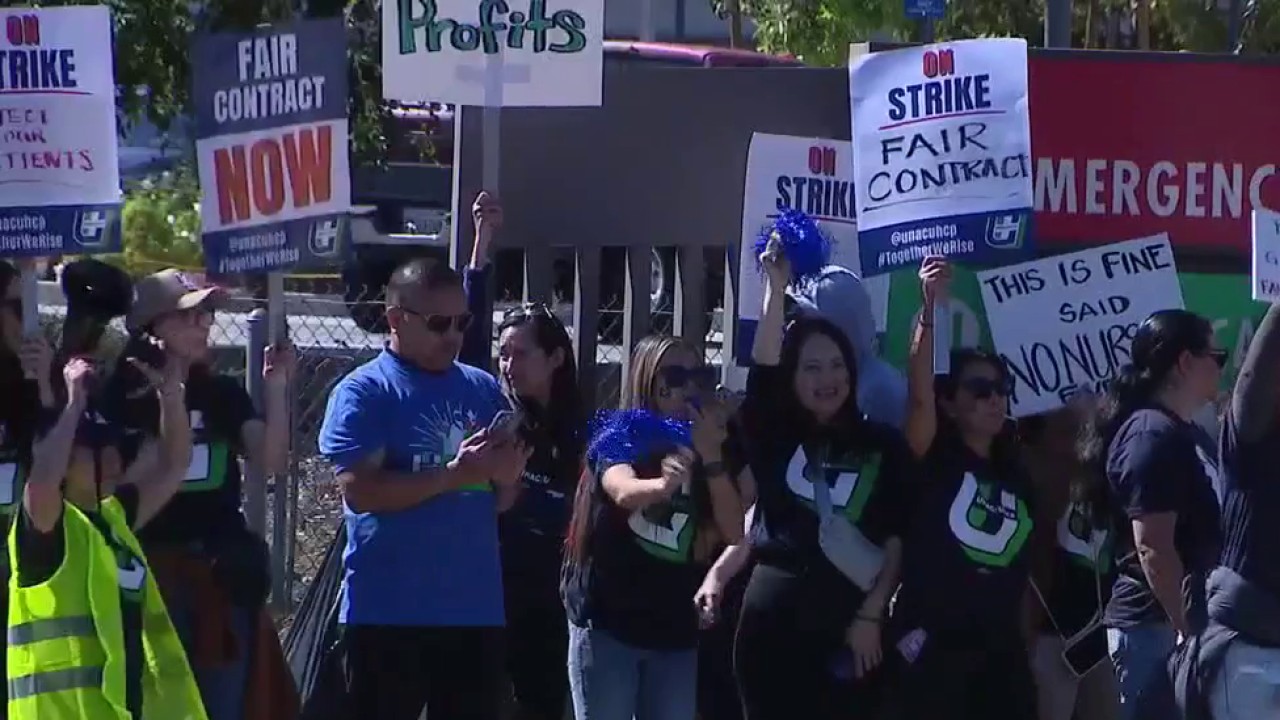
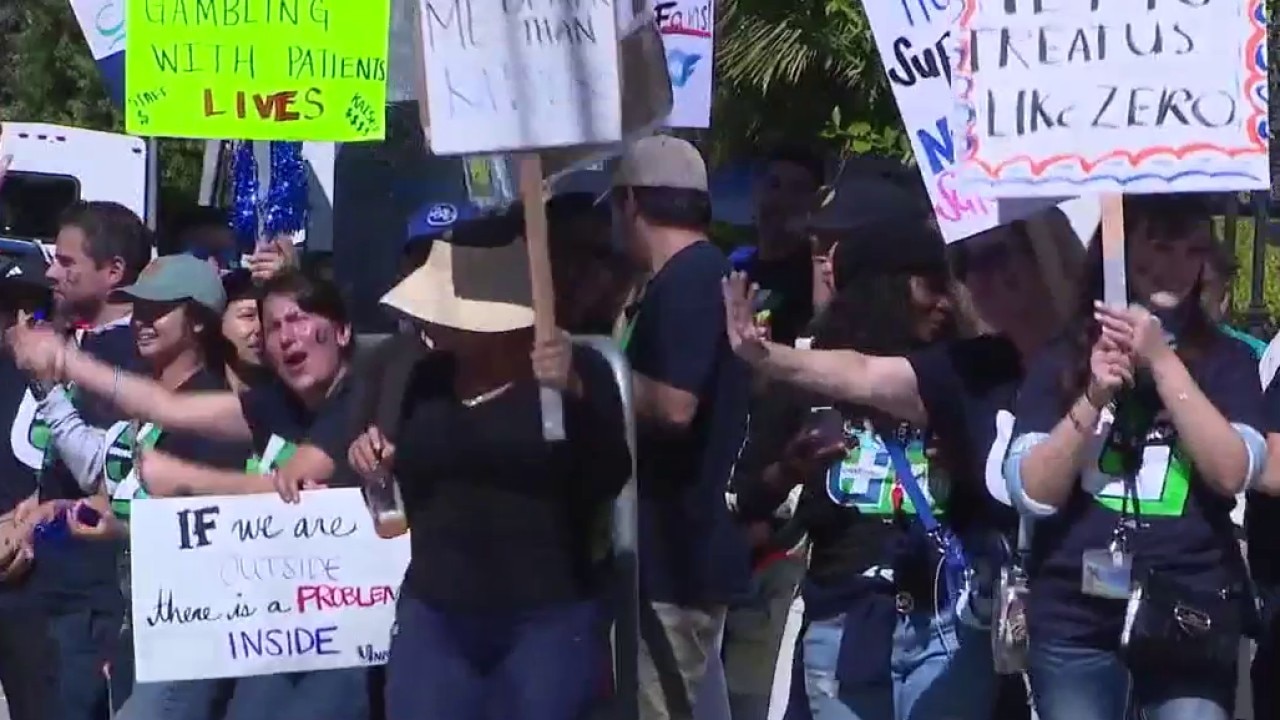
 Kaiser health care workers to go on strike
Workers on the picket lines will focus on the what they say is a growing crisis caused by Kaiser’s failure to invest in safe staffing levels, timely access to quality care and fair wages for frontline caregivers.
LOS ANGELES – Thousands of Kaiser Permanente nurses and health care workers began an unfair labor practices strike Monday morning, affecting facilities across California and Hawaii.
The 31,000-person walkout includes a wide range of medical professionals who intend to remain on strike until a fair contract agreement is reached regarding staffing levels, wages, and patient safety.
What we know:
The strike begn at 7 a.m. Monday, local time. Members of the United Nurses Associations of California/Union of Health Care Professionals (UNAC/UHCP) participating in the action include registered nurses, pharmacists, nurse practitioners, midwives, physician assistants, and various therapists and specialists.
Picket lines are being established at Kaiser hospitals and clinics in Northern, Central, and Southern California—including major centers in Los Angeles and Orange counties—as well as in Hawaii.
The backstory:
According to the union, they have been bargaining with Kaiser since last May. However, the union filed an unfair labor practice charge with the National Labor Relations Board, alleging that Kaiser walked away from negotiations in December.
The union further claims the company attempted to bypass the established national bargaining process.
According to union leadership, the strike is a response to Kaiser’s failure to invest in safe staffing levels and timely access to quality care.
What they’re saying:
“We’re not going on strike to make noise,” said Charmaine S. Morales, RN, president of UNAC/UHCP. “We’re striking because Kaiser has committed serious unfair labor practices and because Kaiser refuses to bargain in good faith over staffing that protects patients, workload standards that stop moral injury and the respect and dignity that Kaiser caregivers have been denied for far too long.”
Morales added, “Striking is the lawful power of working people, and we are prepared to use it on behalf of our profession and patients.”
The other side:
Kaiser Permanente maintains that it has made a fair and competitive offer to the union.
Camille Applin-Jones, senior vice president at Kaiser Permanente Southern California, released the following statement in response:
“We have been informed that United Nurses Associations of California/Union of Health Care Professionals have agreed to return to local bargaining where we look forward to being able to finalize new contracts for our employees and their families.
Kaiser Permanente has been bargaining with UNAC/UHCP and the Alliance of Health Care Unions for more than 7 months, the longest negotiations in national bargaining history, to reach agreement on a new set of national and local contracts.
These negotiations come at a time when health care costs are rising, and millions of Americans are at risk of losing access to health coverage. This underscores our responsibility to deliver fair, competitive pay for employees while protecting access and affordability for our members. We’re doing both
Our Alliance employees already earn, on average, about 16% more than similar roles at other health care organizations, and in some markets, they earn 24% more. Our current proposal builds on that, keeping Kaiser Permanente among the best-paying employers in health care. It includes the strongest compensation package in our national bargaining history: a 21.5% wage increase over the life of the contract, with 16% within the first 2 years. When step increases and local adjustments are factored in, the total average increase is approximately 30% — one of the strongest nursing contract offers in California this year.
Unfortunately, despite the recent agreement to return to local bargaining, UNAC/UHCP intends an open-ended strike beginning at 7 a.m. local time on Jan. 26 at some of our California and Hawaii facilities.
Importantly, not all of the Alliance unions currently in negotiations will be taking part in the strike — the striking unions represent nearly 30,000 of our health care professionals across our California and Hawaii facilities — including registered nurses, lab professionals, and other skilled employees. In Southern California, this includes UNAC/UHCP representing nearly 27,000 health care workers.
Despite the union’s claims, this strike is about wages. This open-ended strike by UNAC/UHCP is unnecessary when such a generous offer is on the table. The strike is designed to disrupt the lives of our patients — the very people we are all here to serve.
We take any potential disruption to services seriously, and our patients remain our priority. For months, we’ve been preparing contingency plans to ensure our members will continue to receive safe, high-quality care. During the strike, our hospitals and nearly all of our medical offices will remain open. Members also have 24/7 access to same-day care through Get Care Now on kp.org and our mobile app.
In some cases, we’re shifting appointments to virtual care (phone, video, or e-chat) and may need to reschedule certain appointments, elective surgeries, and procedures.
Our facilities will be staffed by physicians, experienced managers, and trained staff, with added licensed contract professionals as needed. We’re onboarding nurses, clinicians, and other staff to work during the strike, the majority of whom have worked at Kaiser Permanente before. In addition, many of our employees have volunteered to be reassigned to work in strike locations.
Members can find the latest updates on care impacts at kp.org.
We hope our UNAC/UHCP union-represented employees will choose not to strike so we can resolve our differences at the bargaining table and remain focused on providing exceptional care to our members and patients.
Our focus remains on reaching agreements that recognize the vital contributions of our employees while ensuring high-quality, affordable care. We have proposed 21.5% wage increases — our strongest national bargaining offer ever — and we are prepared to close agreements at local tables now. Employees deserve their raises, and patients deserve our full attention, not prolonged disputes.”
Big picture view:
While the strike involves tens of thousands of workers, Kaiser Permanente stated that hospitals and medical offices will remain open.
However, the company noted that some pharmacies may close and certain non-urgent appointments or elective surgeries might need to be rescheduled.
Patients are advised not to cancel their appointments unless contacted directly by Kaiser.
The Source: This report is based on formal statements and direct testimony from both parties involved in the labor dispute, including official strike guidance from Kaiser Permanente and legal filings with the National Labor Relations Board. Additionally, this report includes on-the-record quotes from union leadership at UNAC/UHCP and senior executives at Kaiser Permanente, including Camille Applin-Jones, senior vice president at Kaiser Permanente Southern California.
KaiserHealth CareHealthLos Angeles CountyOrange CountyHawaiiCalifornia