
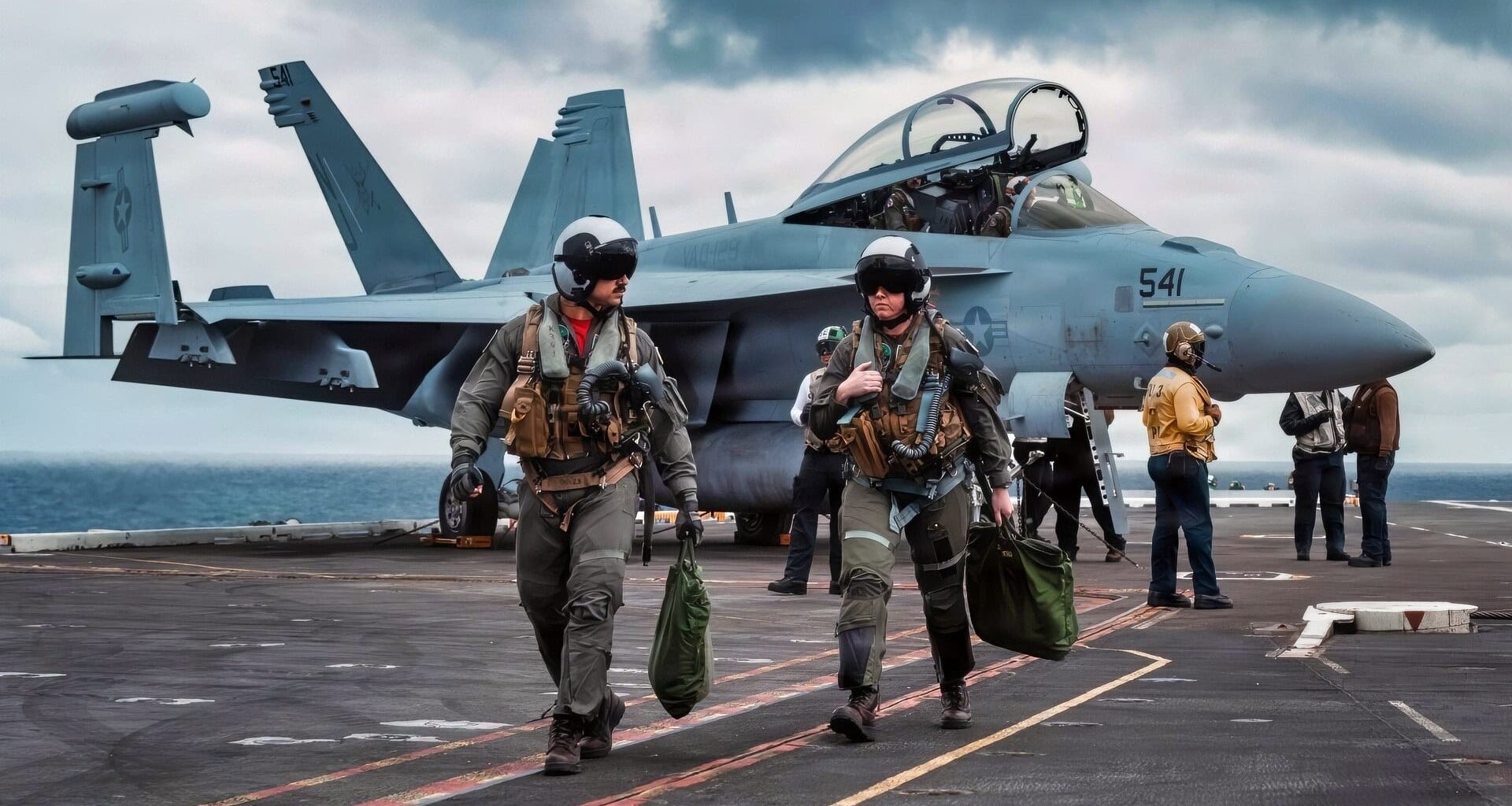
U.S. Navy Deploys Supercarrier Theodore Roosevelt After Maintenance As Aircraft Carrier Stresses Mount
On January 21, 2026, the U.S. Navy’s nuclear-powered aircraft carrier USS Theodore Roosevelt (CVN-71) departed Naval Air Station North Island in San Diego and returned to sea to begin a new operational deployment in the Pacific Ocean after completing an extended period of maintenance and training.
The decision to move this key naval asset – one of the United States’ 11 active aircraft carriers – is the result of ongoing operational strain and demands that are pushing carrier deployments longer and thereby increasing pressure on the service’s readiness and maintenance cycles.
The deployment, which follows several months of preparation ashore, is expected to last well into autumn 2026 and comes amid persistent strategic demands across multiple regions, from great-power competition in the Indo-Pacific to crisis contingencies in the Middle East.
To understand why this carrier is moving now, however, requires context surrounding its recent history and the structural pressures currently facing the fleet.
Theodore Roosevelt Returns to Operational Duty
The Theodore Roosevelt is a Nimitz-class aircraft carrier, a class of large, nuclear-powered warships designed to serve as mobile airbases capable of launching and recovering fighter jets, surveillance aircraft, and support helicopters anywhere in the world without requiring any agreements with host nations.
After completing a demanding 9-month deployment that ended in October 2024, in which it operated across the U.S. 3rd Fleet (Pacific), U.S. 5th Fleet (Middle East), and U.S. 7th Fleet (Indo-Pacific) areas of responsibility, Theodore Roosevelt returned to its San Diego homeport for an extended maintenance and training cycle.
The scope of that 2023–2024 deployment, which lasted 278 consecutive days at sea, far exceeded the traditional six-month typical carrier tour. And that pattern is becoming increasingly common today due to competing global demands.
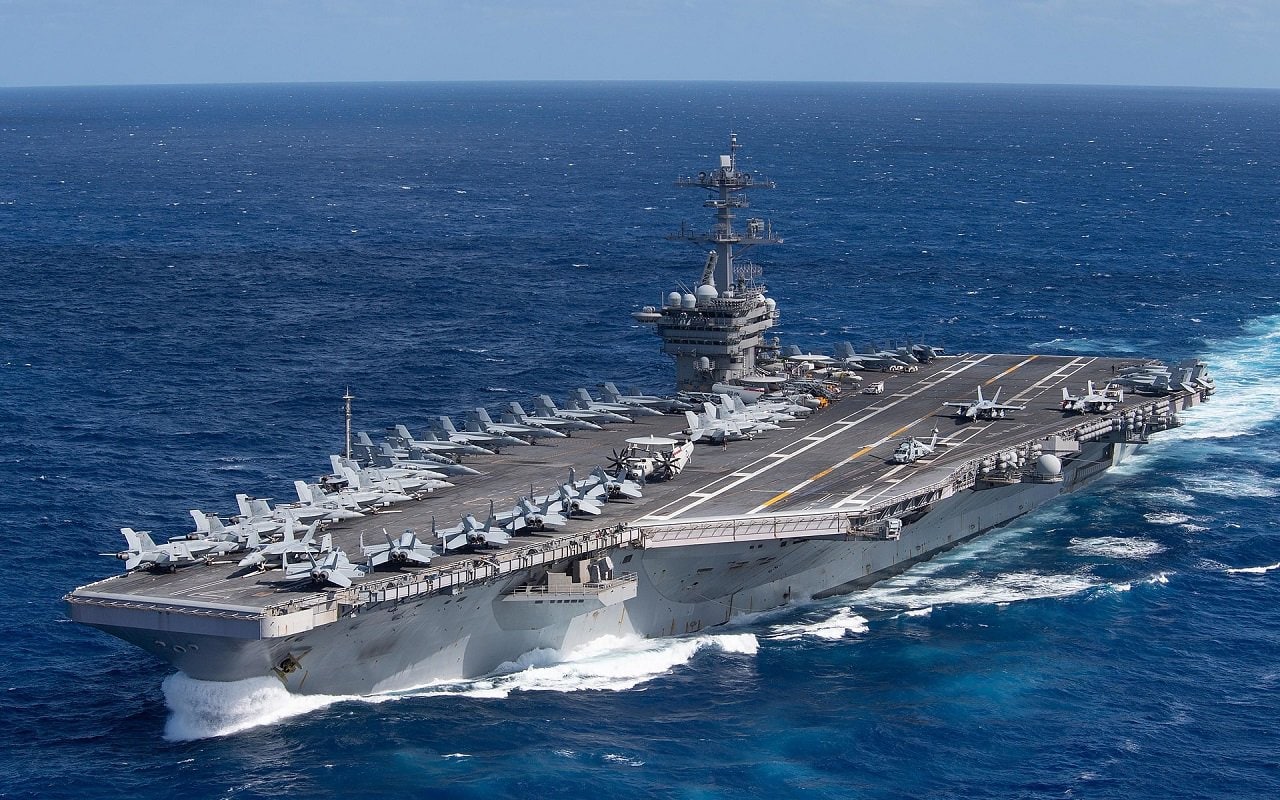
(Jan. 25, 2020) The aircraft carrier USS Theodore Roosevelt (CVN 71) transits the Pacific Ocean Jan. 25, 2020. The Theodore Roosevelt Carrier Strike Group is on a scheduled deployment to the Indo-Pacific. (U.S. Navy photo by Mass Communication Specialist Seaman Kaylianna Genier)
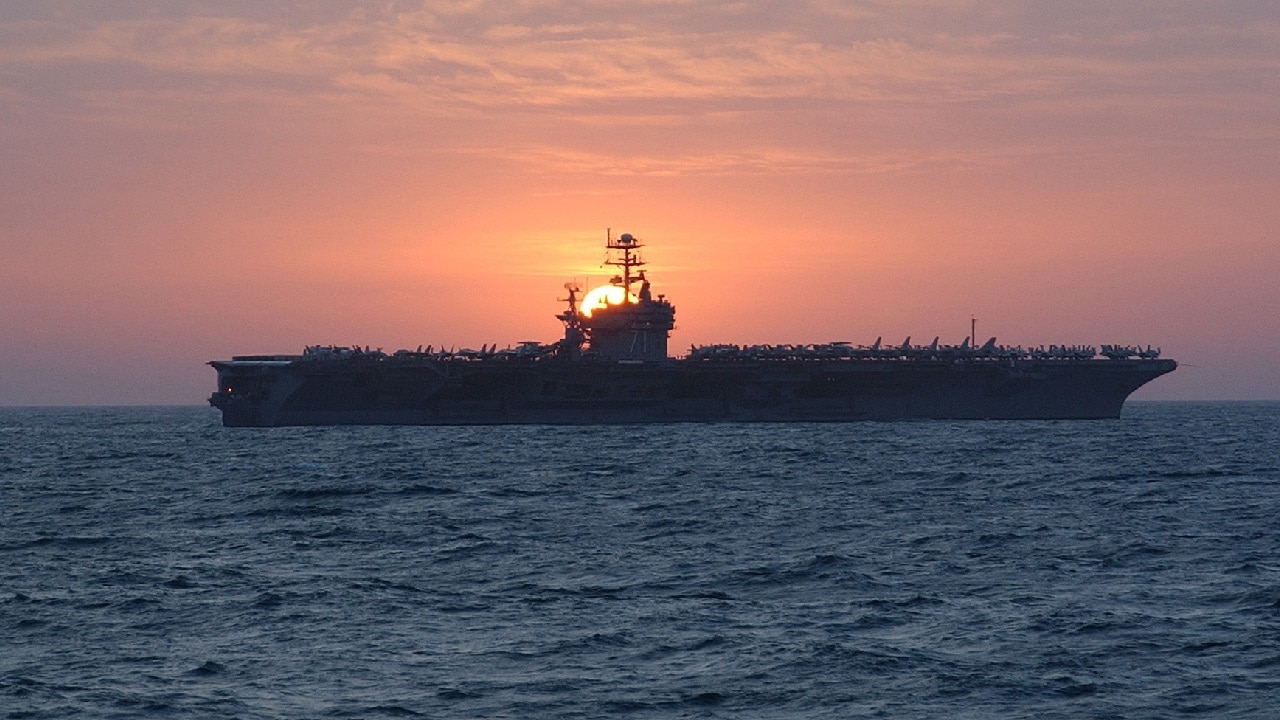
020306-N-6492H-510
At sea aboard USS John F. Kennedy (CV 67) Mar. 6, 2002 — The sun rises behind USS Theodore Roosevelt (CVN 71), as it prepares to turn over operations to the John F. Kennedy Battle Group. The Kennedy and her embarked Carrier Air Wing (CVW) are relieving the Roosevelt to conduct missions in support of Operation Enduring Freedom. U.S. Navy photo by PhotographerÕs Mate 1st Class Jim Hampshire. (RELEASED)
Once back in port, the carrier entered a Planned Incremental Availability (PIA) – a scheduled maintenance period designed to address wear and tear after months of high-tempo operations – and undertook shipboard training and certification activities aimed at restoring readiness.
These steps are standard procedure for major warships following extensive deployment.
Aircraft Carrier Readiness Under Pressure
The Theodore Roosevelt’s departure in January 2026 came after months of maintenance and training, including exercises designed to bolster the skills of its sailors and onboard aviators. According to official imagery and press releases, the carrier was underway in the U.S. 3rd Fleet area of operations, conducting flight deck operations with helicopters and fighter aircraft as part of strike group readiness activities.
Movements like this are essential to prepare before an operational deployment, ensuring that ship systems and embarked aircraft are fully capable of responding to potential contingencies.
However, this cycle of extended deployments followed by deep maintenance is not unique to Theodore Roosevelt.
Alongside other supercarriers, there is a wider trend in the U.S. fleet: fewer carriers are available for forward presence at any given time because many are in port undergoing maintenance or upgrades or being prepared for future missions.
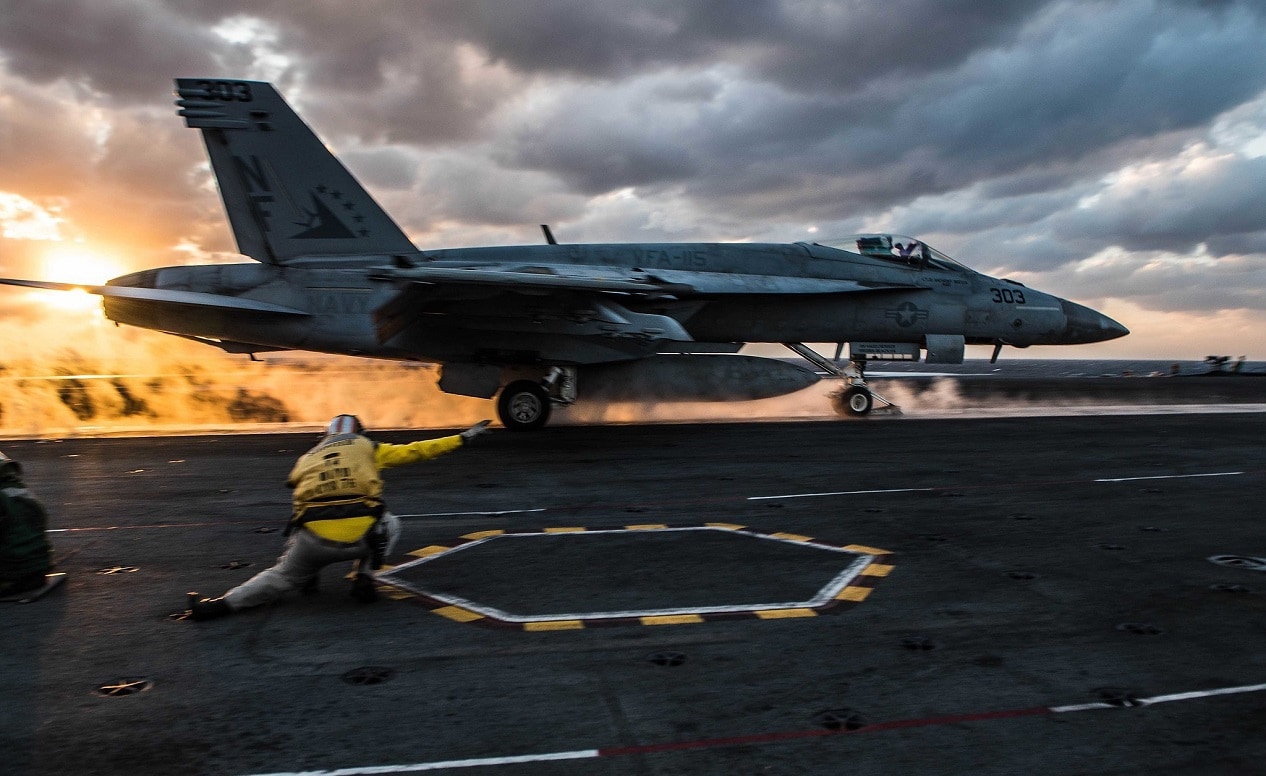
A U.S. Navy F/A-18E Super Hornet of Strike Fighter Squadron (VFA) 115 launches from the flight deck of the aircraft carrier USS Ronald Reagan (CVN 76) in the western Pacific Ocean Nov. 11, 2017. The Ronald Reagan, Theodore Roosevelt and Nimitz strike groups are underway conducting flight operations in international waters as part of a three-carrier strike force exercise. The U.S. Pacific Fleet has patrolled the Indo-Pacific region routinely for more than 70 years promoting regional security, stability and prosperity.
Despite the United States having more carriers than the navies of China, Britain, India, France, Italy, and Spain combined, only a portion are typically deployed at once.
Why Longer Deployments Are Not Ideal – Or Common
Historically, U.S. carrier deployments have lasted about six months – a length of time that allowed for regular crew rest, maintenance, and training cycles.
Over the past decade, however, carriers have stayed at sea longer due to simultaneous demands in the Indo-Pacific, the Middle East, and other global hotspots. The Theodore Roosevelt’s nearly nine-month deployment in 2023-2024 is just the latest example of this.
Extended deployments, which are typically the result of operational necessity, place strain on many aspects. First, they put pressure on crews who spend more time away from home. It also delays scheduled maintenance, which can, in turn, extend the time ships spend in port under repair and overhaul, thereby creating a bottleneck that reduces the number of carriers ready for rapid deployment.
That’s worrying because this cycle causes cascading effects on long-term readiness, potentially diminishing the fleet’s ability to surge forces in response to a sudden crisis without affecting other theaters.
Why Theodore Roosevelt Is in the Pacific
The Theodore Roosevelt is moving in response to the rapidly shifting security environment in the Indo-Pacific region. In late 2025, China staged large-scale live-fire drills and joint naval-air exercises around Taiwan – including simulated blockages, using multiple aircraft and ships, and even firing rockets into the Taiwan Strait – in what Beijing described as a “stern warning” against external forces making themselves present in the region.
These drills, some of the most extensive near Taiwan in years, have repeatedly pushed Chinese military aircraft into Taiwan’s airspace and seen surface combatants deployed beyond the first island chain.
Sending Theodore Roosevelt back to sea reflects the reality that deterrence in the Pacific cannot pause under these circumstances – even if maintenance is due.
About the Author: Jack Buckby
Jack Buckby is a British researcher and analyst specialising in defence and national security, based in New York. His work focuses on military capability, procurement, and strategic competition, producing and editing analysis for policy and defence audiences. He brings extensive editorial experience, with a career output spanning over 1,000 articles at 19FortyFive and National Security Journal, and has previously authored books and papers on extremism and deradicalisation.