
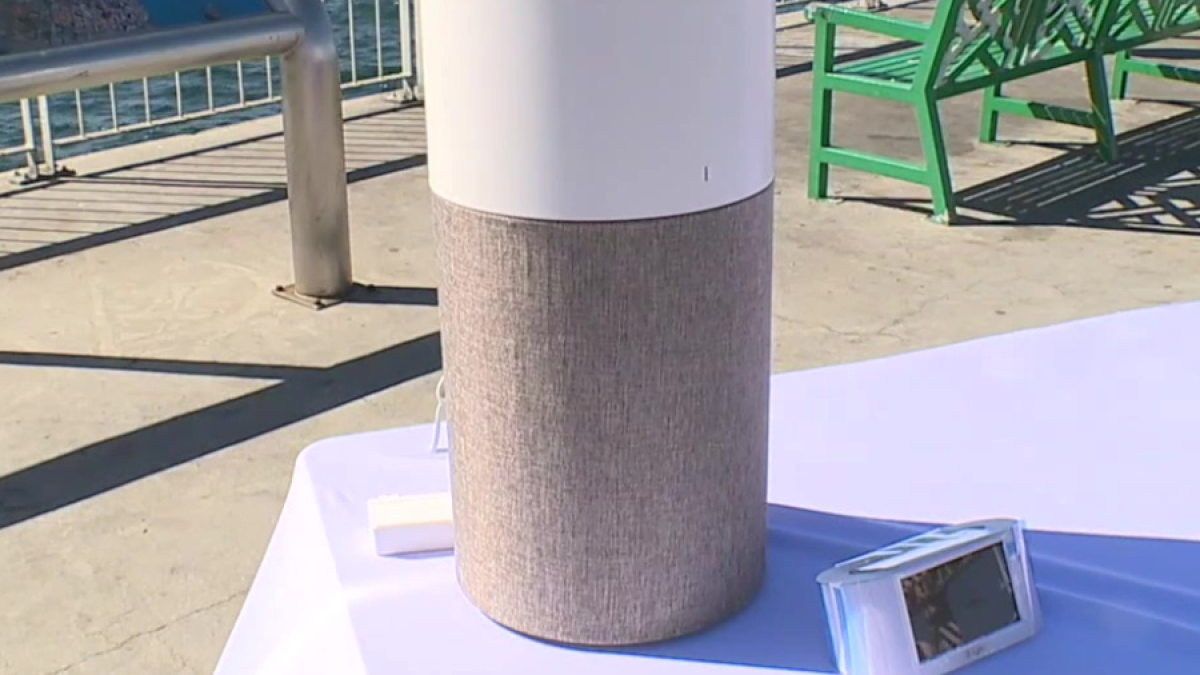
In a little less than a year, an air purifier program to protect the health of South Bay residents has distributed more than 10,000 devices to mitigate the effects of hydrogen sulfide odors.
The San Diego County Air Pollution Control District began the Air Improvement Relief Effort Program in February 2025 and this week reached the 10,000 milestone for homes in San Diego and Imperial Beach. The program provides a free air purifier and up to two replacement filters containing activated carbon and potassium permanganate — intended to reduce compounds such as hydrogen sulfide from the indoor air.
“This milestone represents a significant accomplishment in our efforts to help South Bay residents whose quality of life has been impacted by hydrogen sulfide in the ambient air,” said Paula Forbis, SDAPCD air pollution control officer. “It was a major undertaking for an agency of our size, but SDAPCD wants the community to know that we are doing everything we can to help improve air quality conditions for South Bay communities.”
The district conducted a survey last summer of households who had received the purifiers and most said they had helped with odors.
SDAPCD leaders said Monday they will allocate an additional $1 million to continue providing the purifiers to eligible households. The additional funding will cover around 3,500 new purifiers.
The odors of hydrogen sulfide and other toxic gases are not new to the southern part of the county near the Tijuana River.
In research published last year, scientists from UC San Diego’s Scripps Institution of Oceanography, UC Riverside, San Diego State University and the National Science Foundation’s National Center for Atmospheric Research found that extremely high levels of the toxic gas hydrogen sulfide — among others — are making its way into the homes and lungs of many in the county.
“This study reveals a direct airborne pollutant exposure pathway — from contaminated rivers into the air we breathe,” said Kimberly Prather, the lead investigator of the study, a UCSD professor and director of the Center for Aerosol Impacts on Chemistry of the Environment. “For the first time, we’ve shown that poor water quality can profoundly degrade air quality, exposing entire communities to toxic gases and other pollutants.
“These findings validate the experiences of residents who have endured this crisis for decades, and also underscore the urgent need for action to protect public health in San Diego and in vulnerable communities worldwide.”
(photo: ABC 10)