
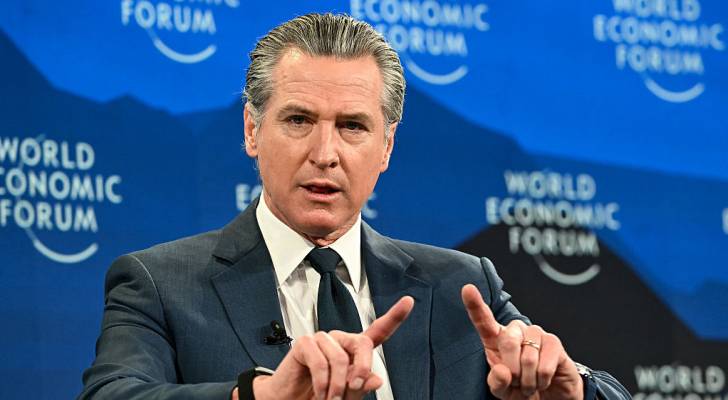
California Governor Gavin Newsom wasted no time in announcing his state’s collaboration with a World Health Organization (WHO)-related global response network, one day after the United States officially withdrew from the WHO.
Newsom’s office called the Trump administration’s decision to exit the international public health agency, which helps coordinate information and responses to global health emergencies, “a reckless decision that will hurt all Californians and Americans,” adding that “California will not bear witness to the chaos this decision will bring” (1).
California became the first state to join the WHO’s Global Outbreak Alert and Response Network (GOARN), a network of hundreds of institutions like labs, universities and public health agencies around the world. They work together to monitor, prevent and respond to disease outbreaks and public health emergencies (2). In a press release, Illinois officials also announced plans to join GOARN to ensure that the state remains connected to “essential” resources to protect the state’s residents (3).
This follows the United States’ official withdrawal from the WHO — a United Nations agency the country helped establish nearly 78 years ago — on Jan. 22 via orders from the Trump administration. The government alleged a “mishandling of the COVID-19 pandemic,” “inappropriate political influence of WHO member states,” “failure to adopt urgently needed reforms” and “unfairly onerous payments.” The only specific complaint in the executive order announcing the withdrawal is that the U.S. pays more to the WHO relative to the more populous China (4).
Public health expert Lawrence Gostin explained that this exit could negatively affect everything from medical and vaccine advancements to global response to future outbreaks.
“It’s the most ruinous presidential decision in my lifetime,” he told the Associated Press (5).
And the WHO’s Director-General, Dr. Tedros Adhanom Ghebreyesus, called the U.S. allegations “untrue” (6) and described the move as a loss to both the U.S. and the global community — one that could carry severe humanitarian and economic consequences (7).
The United States did, in fact, pay more into the WHO than any other nation. According to the Kaiser Family Foundation, in the decade spanning 2015-2024, the U.S.’s payments to the WHO, both assessed and voluntary, ranged from $163 million to $816 million each year (8). (The United States also has the largest economy of any nation, with a Gross Domestic Product (GDP) of $28.8 billion USD per year. China is the next highest at $18.7 billion) (9).
And the country reportedly still owes $280 million for 2024 and 2025, though it’s unclear if and when that payment will be made now that the U.S. no longer belongs to the organization (5).
Michael Osterholm, who directs the Center for Infectious Disease Research and Policy, a public-health institution within the University of Minnesota, called the exit “one of the most penny-wise and billion-dollar-foolish moves.” He said the lack of U.S. participation in WHO research and intelligence could affect everything from the country’s ability to develop vaccines for annual flu strains to America’s access to early warning systems for major disease outbreaks like COVID-19 (7).
Others criticised the Trump administration’s claim that they plan to replace the public health information coordination of the WHO with their own personal relationships with various nations. Gostin, for one, questioned whether nations would share health data with the U.S. “Are the countries Trump has slapped with a huge tariff going to send us their data?” he asked. “The claim is almost laughable.”
Dr. Judd Walson, of the Johns Hopkins Bloomberg School of Public Health, also suggested that, by stepping away from the WHO, the country would cede its spot at the table to other nations like China, Russia and Saudi Arabia. He added that the fallout of this U.S. decision would present like a “a slow bleed” on the global stage when it comes to public health at home and abroad, and that “The impacts will be difficult to reverse once they happen” (5).
To that end, California joining GOARN, with other states possibly following its lead, doesn’t offset all of the concerns related to the U.S. leaving WHO, or replace being a national member. But Newsom’s office claims it will help the state remain prepared, and alleviate the economic fallout of a major health crisis.
Read More: The average net worth of Americans is a surprising $620,654. But it almost means nothing. Here’s the number that counts (and how to make it skyrocket)
In October 2020, the WHO’s Global Preparedness Monitoring board estimated the global cost of the COVID-19 pandemic at the time at $11 trillion, with trillions more in future earnings losses. It suggested that “investments in preparedness,” by contrast, would only run around $39 billion annually (10).
That illustrates the very real cost of cheaping out on early warning tools for public health.
For example, with the U.S. leaving the WHO, some experts worry about how losing the organization’s data on seasonal flu strains will affect the country’s ability to develop effective flu shots each year (7).
Prior government estimates show that influenza can cost the U.S. upwards of $360 billion annually in hospitalizations and economic disruptions. And that was with the availability of WHO data to aid scientists in developing a flu shot (11).
Similarly, the WHO monitors for early signs of measles outbreaks. In addition to being painful and dangerous, a study from the Johns Hopkins Bloomberg School of Public Health that has not yet been peer reviewed found each case of measles between 2000 and 2025 generated an average of $33,415.75 in medical costs, with additional costs being incurred for public health responses (12).
Last year, thanks to the prevalence of anti-vaccine messaging, the U.S. had 2,225 confirmed measles cases according to the Centers for Disease Control and Prevention (CDC) (13), the most since 1991 (14).
But perhaps the most obvious case of the toll a public health crisis can take remains the COVID-19 pandemic. A study out of the University of Southern California put the drain of the pandemic on the U.S. GDP at $12.2 trillion by the end of 2022, with one of the co-authors adding that COVID’s impact on GDP was an estimated 100 times worse than the previous largest disaster: 9/11 (15).
It’s a staggering number. The U.S. also spent more than $4 trillion on relief funds and recovery efforts during COVID-19 (16).
And that’s not to mention the increase in frequency, severity and scale of disease pandemics around the world in the first quarter of the century. The reasons for this include everything from increased global expansion to extreme weather, according to a study in BMJ Global Health (17).
Cutting costs when it comes to readiness and early warning systems could increase the costs down the line — potentially beyond what this country has ever experienced.
Plus, the loss of the United States’ financial support means the WHO, which already warned of a $1-billion budget shortfall, will have fewer resources to combat outbreaks worldwide, creating global ripple effects that could also impact the U.S (18).
As Dr. Walson of Johns Hopkins warned to TIME, “As countries experience worse health — more mortality and morbidity — economic conditions worsen as sick populations can’t work, and the economic situation of already poor countries deteriorates further.”
“Political instability follows, with mass migration, war, and conflict, and now things start spilling over borders” (7).
Join 200,000+ readers and get Moneywise’s best stories and exclusive interviews first — clear insights curated and delivered weekly. Subscribe now.
We rely only on vetted sources and credible third-party reporting. For details, see our editorial ethics and guidelines.
The Hill (1); GOARN (2); Illinois (3); The White House (4); The Associated Press (5); Tedros Adhanom Ghebreyesus On X (6); TIME (7); Kaiser Family Foundation (8); World Bank (9); World Economic Forum (10); United States Department of Health & Human Services (11); Salin Sriudomporn and Bryan Patenaude (12); Centers for Disease Control and Prevention (13); American Academy of Pediatrics (14); University of Southern California (15); U.S. Government Accountability Office (U.S. GAO) (16); BMJ Global Health (17); Barron’s (18)
This article provides information only and should not be construed as advice. It is provided without warranty of any kind.