
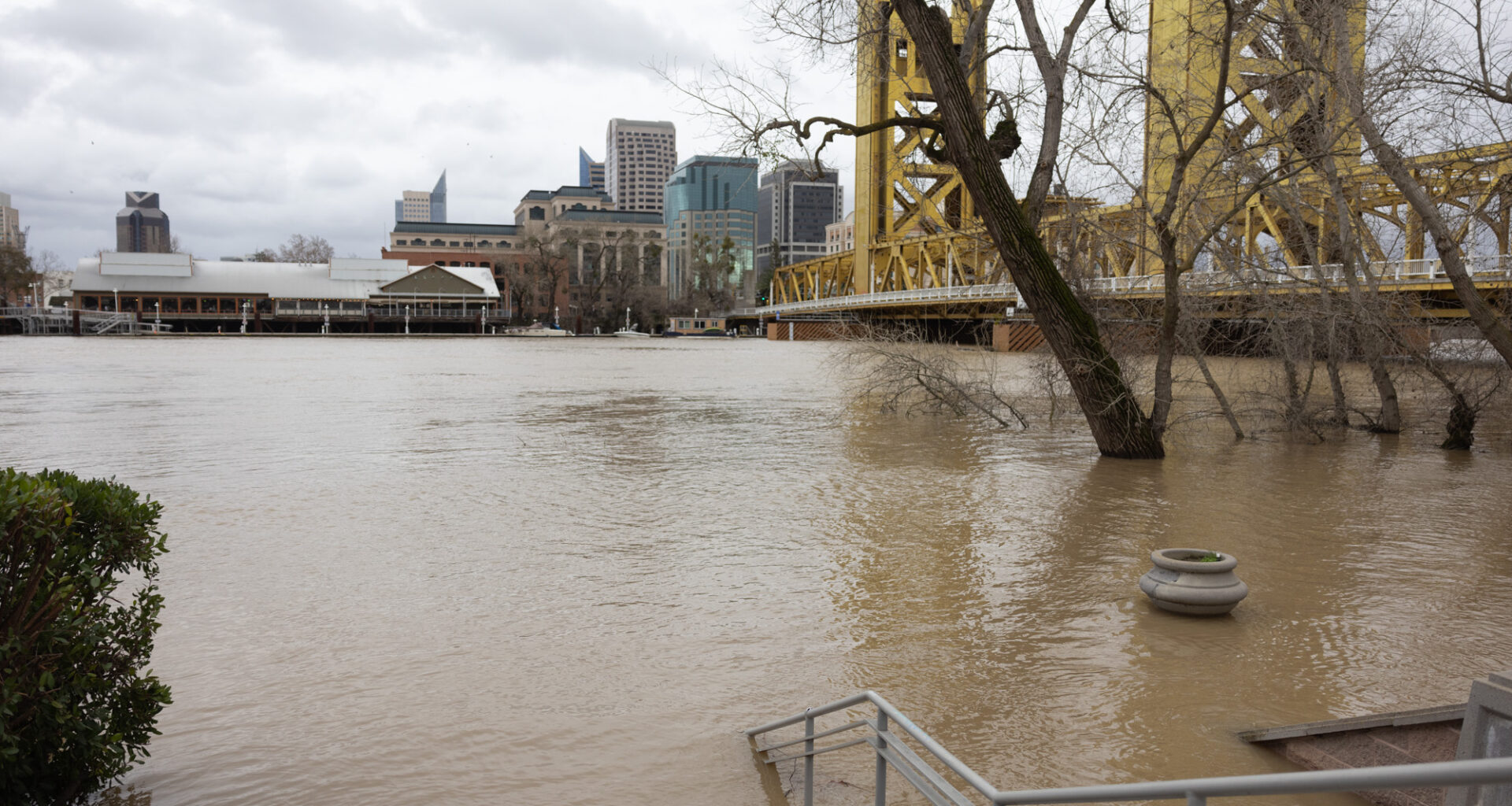
Sacramento remains one of the most flood-prone areas in the country, with significant development and construction taking place in historic floodplains despite ongoing efforts to shore up protections.
For decades, many people living in these high-risk areas in California and across the country have turned to a federal program for coverage in case of disaster — the National Flood Insurance Program (NFIP), managed by the Federal Emergency Management Agency (FEMA).
The program has provided policies to millions, but faces a looming deadline amid a potential government shutdown. Without Congressional reauthorization or amendments the NFIP could lapse at the end of the month, putting the brakes on new insurance contracts and reducing the NFIP’s authority to borrow funds from the U.S. Treasury.
This would not be the first time the federal program has lapsed. Since the end of the 2017 fiscal year the NFIP has undergone 34 short-term reauthorizations and lapsed four times, most recently for more than 40 days during the federal shutdown in October and November.
But this potential expiration also comes as some call for the national program to be privatized, with one company in particular — Neptune Flood — pushing for the private sector to take over.
Nicholas Pinter is the Associate Director of the UC Davis Center for Watershed Sciences. He spoke with Insight Host Vicki Gonzalez about the role and impact of the NFIP, and the implications of potential privatization.
This interview has been edited for length and clarity.
Interview highlights
What sets flood insurance apart from other insurance types?
What every homeowner needs to know is if your house is damaged as a result of a flood, it’s like [an] earthquake. It is not covered by your homeowner’s insurance policy, and you’re on the hook unless you have a separate rider [or] policy. Those policies in the U.S., almost all of them are underwritten by the federal government through our National Flood Insurance Program.
Given that we live in a flood-prone area, how common is it for people to have flood insurance?
It’s estimated that seven million Californians live in areas at risk of flooding. There are FEMA maps of where that hazard exists but they are incomplete, they’re blind to climate change. Something like 75% of the total flood risk in the state is outside of the FEMA maps.
Through the end of last year there’s 4.8 [million] NFIP program policies nationwide, 174,000 of them in California… and interestingly about 28% of those, 48,000 policies, in Sacramento County. That’s the largest slice in California.
That doesn’t sound like a lot of people are taking this up. Why is that?
Many should, many have to by law. If you have a house in one of these FEMA-mapped areas, and have a federally-backed mortgage, you are required to have this insurance. If you want disaster aid, you must have a flood insurance policy. But again, 75% of people even in those mapped areas don’t carry it. For a variety of reasons, including that it’s gotten increasingly expensive, like all forms of insurance in California and elsewhere.
How long has the National Flood Insurance Program been around?
NFIP was established in 1968 after, essentially, the freezing up of flood insurance disaster and insurance markets in the country. Things had just gone completely dysfunctional, and the federal government was increasingly on the hook for losses on a nationwide basis, and they decided we needed to do something new, different and better.
We’ve gone into a new landscape where flood risk is managed under this partnership, any community that embraces floodplain development standards is allowed to access flood insurance and the growing role of FEMA — the federalization of management of flood risk. That’s where we are right now, but that may be changing.
The program is at risk of lapsing at the end of this month amid a looming government shutdown. What does its financial health look like?
This is like deja vu. We were in exactly the same position, with both a shutdown and reauthorization of the National Flood Insurance Program, as we were in the last week of September. Same situation, [but] arguably worse. The federal government did shut down, NFIP lapsed for 43 days last fall, and we’re facing the same thing next week.
In terms of the flood hazard… Congressional Research Service estimates that more than 1,000 home closings per day might be frozen during any lapse in NFIP. Congress could reauthorize [the program] yet again through a continuing resolution to get it moving again. Most likely it would wait until any shutdown is ended… which is now wrapped up, for example, in FEMA funding being part of [the] Department of Homeland Security. Lots of baggage going along.
Is the program in debt? And if so, how much?
The National Flood Insurance Program is something like $20 billion in debt, and that’s even after the Treasury forgave $18 billion of debt a couple of years ago. It has historically been a loss leader, paying out more than it took in, but not in California. That has changed somewhat and that is why rates have gone up so dramatically, which has led [partly] to these voices saying, “privatize this. This should not be part of the federal government.”
If you’re a policyholder, how would you be impacted if the NFIP lapses?
If you’re in the middle of buying or selling a home, it could have very tangible and immediate impacts on whether that sale goes through or not. Long term, what California leaders and experts recognize is that we want a viable flood risk management strategy on a nationwide basis. It was sort of chaos before this, the 1950s-1960s, we are still paying the price of poor management [and] planning back then.
There’s different reasons why there’s broad bipartisan support to reauthorize NFIP, to keep FEMA viable and strong and active. Both sides want it. A lot of the red states because they bear a disproportionate amount of the risk of natural disasters. In my experience, California has a smaller slice of that risk, significant but smaller. We just want sound, predictable policy.
There’s talk about privatizing flood insurance. Are private options currently available?
Right now there is a small but growing private flood insurance market. It remains a tiny fraction, but there have been some big developments. There was a stock market IPO [initial public offering], this company called Neptune [Flood] stepped into the market. And part of their market pitch was that they wanted to significantly expand the availability of private flood insurance in the U.S. That’s been taken up as a political rallying cry. A part of Project 2025 was to privatize NFIP, to downsize or even abolish FEMA itself. There’s been a lot of interest in that.
There has been pushback against Neptune. The rest of the insurance industry says, “absolutely not. We are not ready to accept the entire portfolio, trillions of dollars of assets insured through the NFIP.” Maybe slowly over time, but the market is almost certainly not ready for it in an instant.
Tell us more about this company, Neptune Flood. How does it operate?
I know that Neptune is involved in flood insurance policies being written right now in the Sacramento area, and additional options are a good thing. There are lots of advantages to having more options for coverage, options for expanded coverage beyond what you get through the federal government. NFIP coverage on any given home is just $250,000, which in California is not much of the value of a home. All along, everyone has said if you really want to insure your structure… you should be getting supplemental insurance.
But be aware, for anyone taking one of these privately held policies as an alternative to a true NFIP policy, there are definite concerns. One is, one claim and you could be out. That is much more restricted, that shouldn’t happen under an NFIP policy.
The other is the concern about who’s ultimately holding that risk. With Neptune or any private company… imagine the worst case scenario. We talk about the “ARkStorm” in California, the worst-case scenario for flooding here. Neptune could go bankrupt, and then the homeowner would be left with no one to pay that out. That’s not going to happen with the federal government. Right now NFIP policies are backed by the full faith in the federal government, which has paid off all claims through its history.
What do you think the likelihood is that the National Flood Insurance Program isn’t renewed by the end of the week?
I’m going to give you my opinion — it is likely that it’s going to lapse again on Feb. 1. That is a concern, that is disruptive. It is part of a much larger pattern of disruption revolving around the federal management of disasters and flooding in the U.S. The NFIP, it is a plank of the current administration. They want to see it privatized. The administration has said they want to abolish FEMA, either in its entirety or significantly downsize it. The federal government is massively downsizing FEMA with tangible implications for the country right now.