
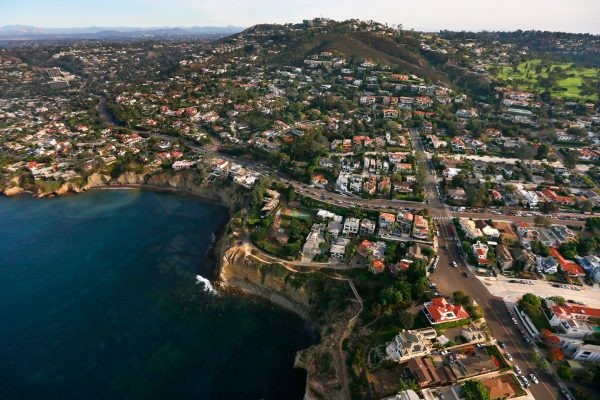
The city of San Diego will not appeal a judge’s ruling dismissing a city lawsuit challenging the La Jolla cityhood process, a decision that clears the way for the next steps, according to the group advocating incorporation.
In October, Superior Court Judge Judy Bae granted a motion from the Association for the City of La Jolla arguing that the city’s case, filed in June, was a strategic lawsuit against public participation, or SLAPP — what the association called a “meritless attempt to obstruct democratic participation and silence a public interest effort through costly litigation.”
The city argued that the San Diego Local Agency Formation Commission — a regional agency that provides guidance to communities seeking to become cities — had overstepped in the process of verifying thousands of signatures in support of the cityhood initiative that ACLJ submitted for review and validation by the San Diego County registrar of voters office and LAFCO.
The city also contended the La Jolla cityhood review process would impose “substantial irreparable harm” on San Diego due to the costs associated with staff time required for the next steps and that dedicating staff members’ time to that process would take away from “performing their core functions.”
By granting the Association for the City of La Jolla’s motion, Bae dismissed the lawsuit, meaning LAFCO could move ahead with the next steps in the process. Those include a comprehensive review of ACLJ’s application, which it submitted in January last year.
The association had expected San Diego to appeal the judge’s ruling, but this week ACLJ President Diane Kane told the La Jolla Light the city has decided not to and that the process can continue.
Representatives of the San Diego city attorney’s office could not immediately be reached for comment.
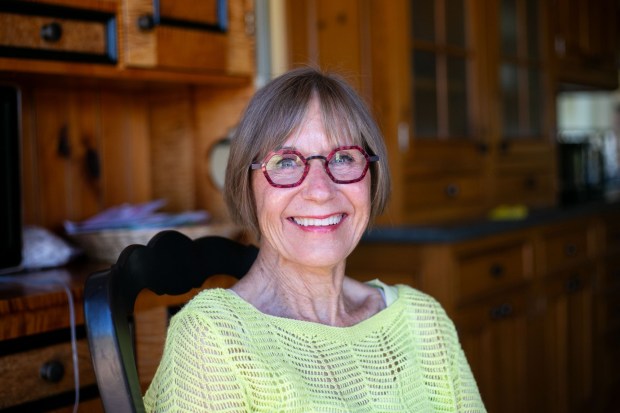 Diane Kane is president of the Association for the City of La Jolla. (Brittany Cruz-Fejeran)
To move the effort forward, ACLJ has worked with LAFCO to release a request for proposals to find a consultant to finalize the necessary fiscal analysis. A preliminary analysis was completed last year by Richard Berkson of urban economics company Berkson Associates, but the final report will dive deeper into the facts and figures.
“LAFCO gave us a draft RFP, but we told them not to issue it because we didn’t know how things were going to play out [with the lawsuit],” Kane said. “We sent it to some knowledgeable parties and they gave us great information. … So LAFCO updated it and it is being sent out.”
ACLJ sent the request for proposals to 14 consultants and is waiting for them to respond.
“We also put together a committee that will review these proposals and produce a final package that would go to LAFCO for approval,” Kane said. The committee includes representatives of LAFCO, the city of San Diego, ACLJ, the San Diego Regional Chamber of Commerce and city unions.
“We have multiple perspectives to assess whatever information is coming,” Kane said. “So we think we have a pretty well-balanced group of perspectives to give us the best information to go forward.”
Once a consultant is chosen, it will collect more data from the city and other agencies that La Jolla would work with if it becomes a new city, including the costs of infrastructure and utilities, maintenance, city start-up costs, responsibilities for debt, contracting services and more.
“This is the whole kit and kaboodle,” Kane said. “The [preliminary fiscal analysis] was a quick look to see if it is a question worth asking — is this feasible and do people want it? Now we have public support and the numbers.
“But there were a number of things not included, so this gets into the nitty gritty. The consultant will determine what we need to know in terms of financial feasibility. It could be easy or it could be messy.”
The preliminary analysis projected a total first-year city budget for La Jolla of about $74.8 million and said that with total expected revenue, the new city could have a positive net amount of more than $8 million in the first year.
It did not estimate annual mitigation payments for the impact of lost revenue that La Jolla may have to pay San Diego. The report estimated the impact on San Diego at $8.5 million annually but said any “alimony” would have to be negotiated between the two cities.
One challenge in compiling a final analysis, Kane said, is that the city of San Diego separates expenses by type — such as libraries or police — rather than by community.
“So they have to determine La Jolla’s share of it,” Kane said. “How much do we cost and how much do we give? So they are throwing in more data and more questions.”
Kane said she expects gathering the needed data and producing the final report will take six to nine months.
“We’re hoping to have something to show by the end of the year,” Kane said.
She added that ACLJ still hopes to have the cityhood initiative on the 2028 ballot, when a majority of voters both in La Jolla and the rest of San Diego would need to approve it.
ACLJ says it needs about $200,000 for the report, plus more money to hire professionals to provide services and expertise beyond what volunteers can do.
The group is accepting donations and volunteers through cityoflajolla.org. ♦