
California’s top environmental regulator lauded a trade deal that Canada struck to import electric cars from China as a win in the global effort to replace gas vehicles.
“I’m excited to see what unfolds in Canada now after you see what the prime minister announced,” California Air Resources Board Chair Lauren Sanchez said Tuesday during a BloombergNEF summit in San Francisco. “It only reinforces that the Trump administration is going it alone.”
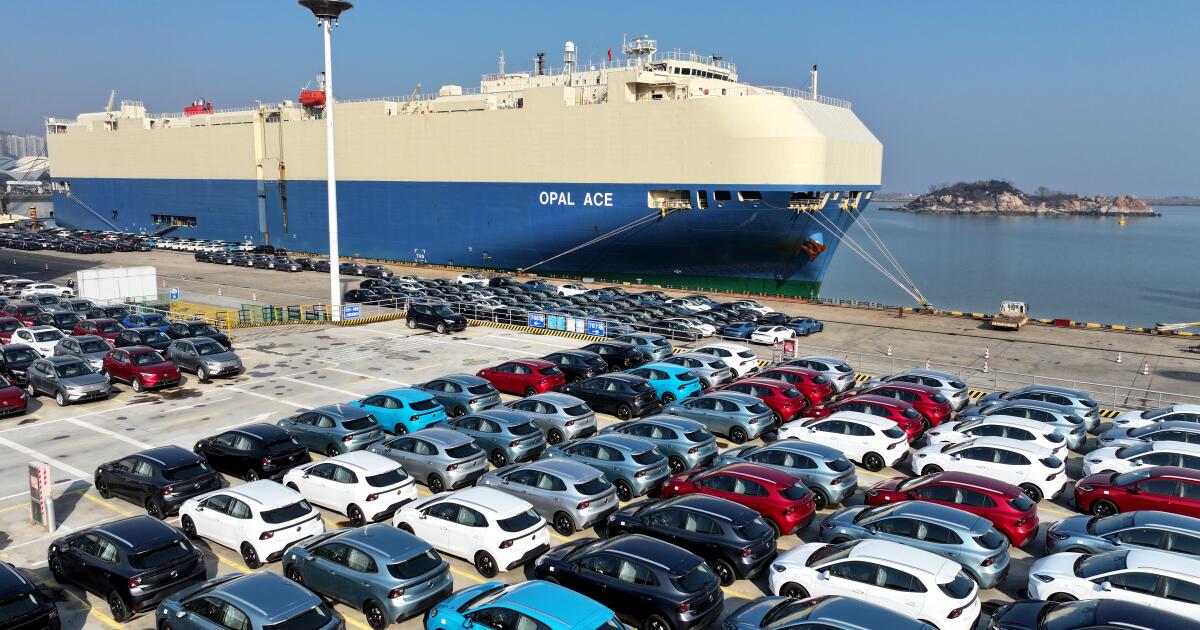
China and Canada reached a wide-ranging agreement to lower trade barriers and rebuild ties this month, signaling a pivot in Canadian foreign policy and a break from alignment with President Trump’s trade agenda. Canadian Prime Minister Mark Carney agreed to allow 49,000 Chinese electric vehicles into the country’s market at a tariff rate of about 6%, removing a 100% surtax, in response to Chinese leader Xi Jinping cutting tariffs on canola, a key Canadian agricultural export. The move sent shockwaves through the U.S. auto industry, where executives fear Canada could become a back door to the U.S. market for cheap Chinese cars, and prompted Trump to threaten a 100% tariff on Canadian exports to the U.S.
In California, Sanchez is fighting to sustain support for EV adoption. The Trump administration and Congress attempted to strip the California Air Resources Board of its authority to regulate emissions, rolled back stringent fuel-economy rules that pushed automakers to electrify their lineups, and defunded a federal $7,500 incentive to buy zero-emission vehicles that has existed for more than a decade.
Sales of electric vehicles plummeted in the fourth quarter amid the end of the federal tax credit, concerns about affordability and growing consumer interest in hybrid vehicles. Sanchez said the recent drop in U.S. EV sales is the result of the Trump administration’s “targeted attacks” on battery-powered cars, and that California is forging ahead with a $200-million investment to sustain consumer incentives in the state, the biggest car market in the U.S.
“The rest of the developed world and the developing world sees the benefits of electric vehicles and, again, wants to remain competitive in a global market where it is headed,’’ she said in an interview at the conference. “That’s why we are focused on advancing that $200-million investment in incentives and making sure that we are supporting our domestic manufacturers here across the state.”
Asked whether U.S. consumers could see EVs from BYD Co., the Chinese juggernaut that unseated Tesla as the world’s biggest seller of EVs, Sanchez said it’s not up to her — but perhaps there might be some in Vancouver.
Hull, Coppola and Chediak write for Bloomberg.