
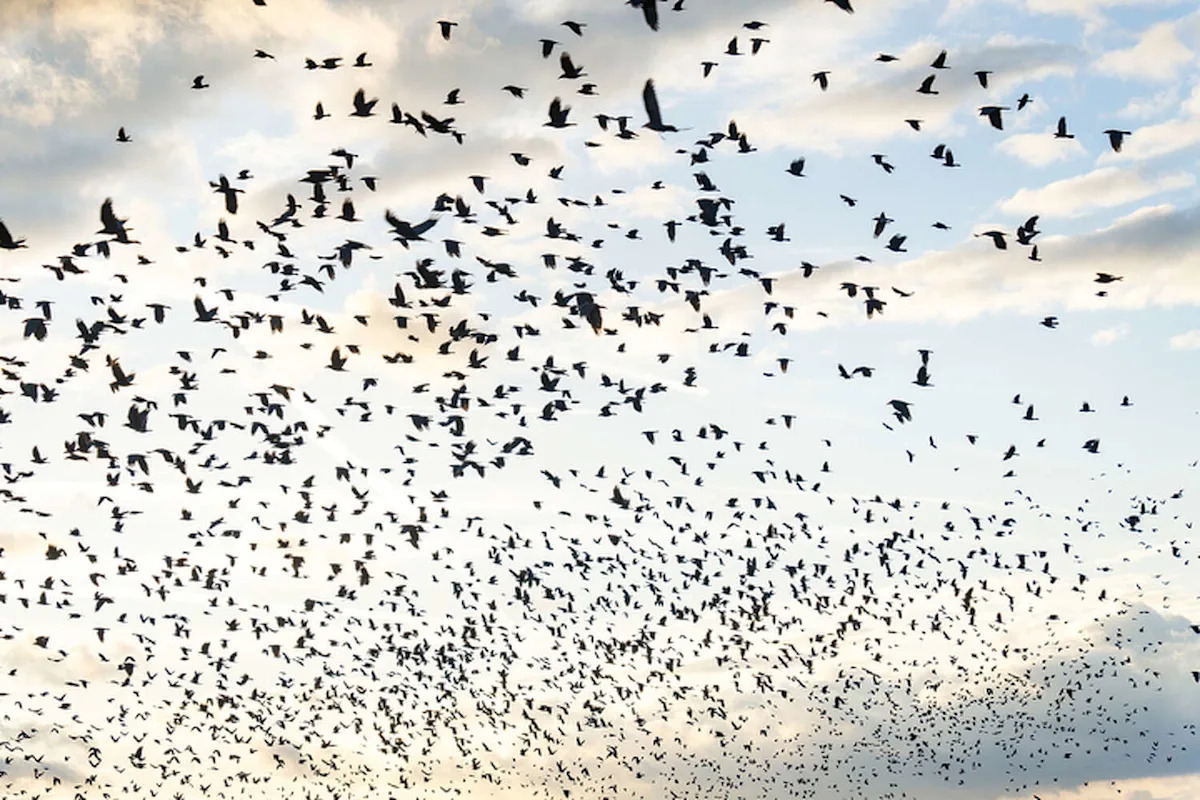
The number of American crows, savvy predators known to congregate during winter, has reached an all-time high in San Francisco.
Over the holidays, birders tallied 3,260 crows in San Francisco during the National Audubon Society’s Christmas Bird Count. That number is an astounding sum, considering in 1984, there were just five crows documented in the city.
Crows, one of the most intelligent bird species, seem to be adapting to city life in the Bay Area.
“This huge increase of crows all of a sudden is because they’re really good at living in our urban environments and feeding on our trash,” Whitney Grover, the director of conservation for the Golden Gate Bird Alliance, told SFGATE. “Crows are adapting to living in these denser human landscapes better than other birds especially. That can be problematic for the other bird species because crows are predators.”
The Golden Gate Bird Alliance, a nonprofit based in Berkeley, organizes volunteers to record all the bird species in San Francisco for the Audubon Society’s historic international count from late December to early January. According to the group, the city’s crow numbers have climbed in recent years, fluctuating from 738 in 2019 to 2,630 in 2023. The most recent count, which started in December 2025, is roughly double 2024’s 1,532 crows.
It’s not just San Francisco. Based on aggregated Christmas count data, the Golden Gate Bird Alliance reports a sharp rise in crow numbers across the nine Bay Area counties over the past five years and an overall trend upward in local populations since 1975.
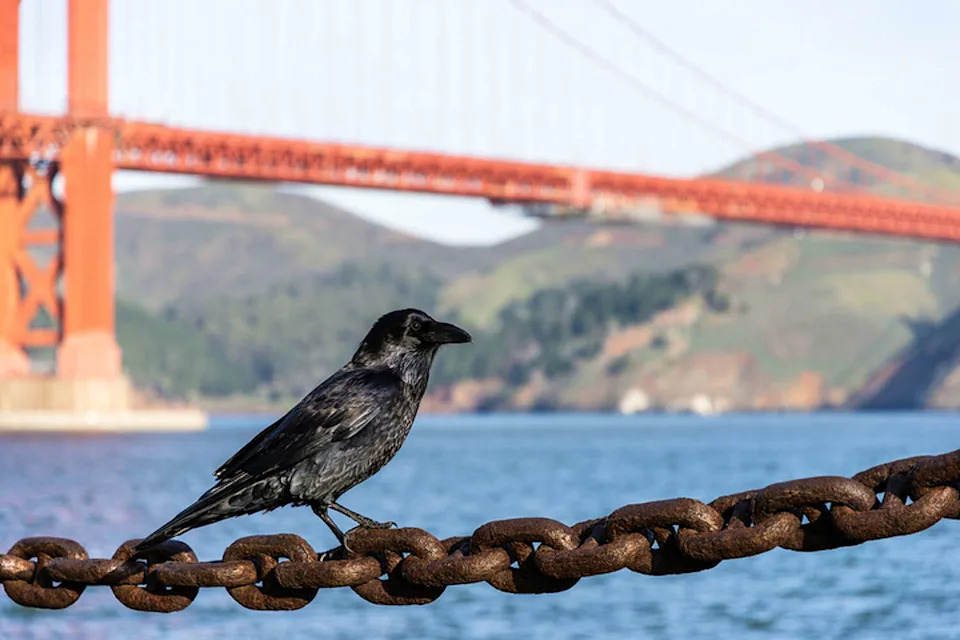
A crow rests near the Golden Gate Bridge in San Francisco. (syaber/IStockphoto via Getty Images)
There are some caveats to the raw data from this year’s crow count, according to Grover, including that the Audubon Society has yet to adjust it for the number of volunteers who participated and their hours. (In other words, more birders any given year can inflate the count.)
Additionally, despite their big Bay Area numbers, crows are not on the rise as a species overall. Although the birds have healthy numbers, some datasets report that they have declined in the U.S. and Canada, especially during a previous West Nile virus outbreak.
Winter is the best time to catch a view of crows on San Francisco streets.
The birds, reviled by some as noisy and messy, gather during the coldest months, working together to find prey, defend their roosts and raise their young. These gatherings, which break up in the spring, are for socializing as well as survival.
“Just the other day, I was coming back from the airport right at sunset, and there were thousands of crows gathering at a roost in downtown San Francisco,” Glenn Phillips, the executive director of the Golden Gate Bird Alliance, told SFGATE. “They group together as a survival strategy. More eyes can help to find food if resources are patchy, or else spot predators.”
Phillips pointed to another explanation behind a historical trend of crows moving away from rural places. In 1972, the Migratory Bird Treaty Act expanded to include crows, strengthening their protections from hunting and helping their populations to expand. Yet today, people can still kill crows in most rural parts of the state, where they are notorious for eating crops on farms.
“Crows are super smart birds, so they figured out pretty quickly that it’s safer to be in the city than in rural places,” Phillips said.
This week, the Golden Gate Bird Alliance plans to publicly release their findings from the entire bird count, with the data on the rise and fall of other bird species locally.
More News
– Calif. tech CEO and electric vehicle pioneer arrested, accused of murder
– Private landowner blocks popular Bay Area beach, threatens trespassers
– Poacher kills ‘rising star’ wolf from Yellowstone’s most viewed pack
– Body found halfway across country ties back to horrific Calif. criminal
Sign up for daily SFGATE breaking news alerts here.
This article originally published at Why crow populations are higher than ever in San Francisco.