
Flores is the executive director of LISC San Diego. Previously he was the chief of staff for councilmember Marti Emerald. Ricardo and his wife live in Kensington.
The future of our region’s largest local governments looks bleak. Very bleak.
The city of San Diego faces a $110 million deficit, the county of San Diego is projecting a $138.5 million deficit and, not to be outdone, San Diego Unified School District is projecting a $47 million deficit.
Meanwhile, solutions to this fiscal crisis are continually viewed through the prism of raising taxes and fees such as parking meter rates – a non-starter with a lot of San Diegans, especially those struggling to make ends meet.
Fortunately, there is another option for generating more revenue. By rolling back minimum lot sizes, San Diego can increase property tax revenue while freeing up more developable land to address the region’s housing crisis.
Let me explain.
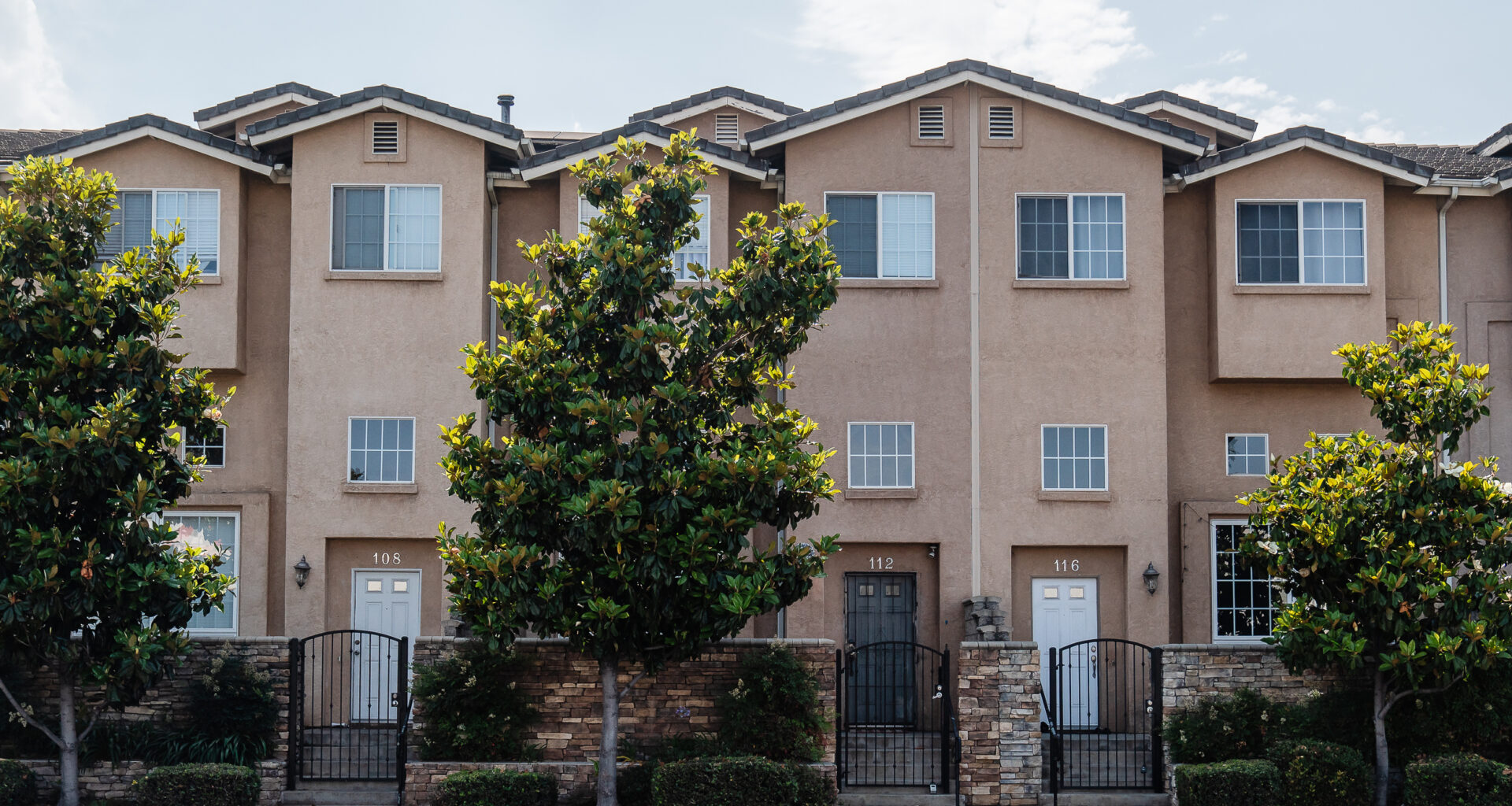
Six years ago, LISC San Diego – a nonprofit bank that provides loans to affordable housing developers to buy land – concluded what most people in my industry intuitively understand: the key to generating property tax revenues for local municipalities while also lowering for-sale housing costs is to create opportunities for families or individuals to buy two- and three-bedroom townhomes or rowhomes on smaller lots.
To understand how much new tax revenue this would generate and how much lower the cost of this new housing would be in San Diego, LISC hired longtime local economist Gary London. Gary and his team, London Moeder Advisors, concluded their analysis with a report that says the cost of a new, family-sized townhome on lots that are 1,000 square feet or less would be 42 percent cheaper than existing single-family homes, for which lots are at least 5,000 square feet.
While that news was welcoming, it was the answer to our other question that truly shocked us. We asked London Moeder Advisors what the implications on local property tax revenues would be if a single-family lot were replaced with five new, for-sale, family townhomes.
The answer would affect not just the city, but the county and the school districts, which also receive a lion’s share of their funding from property taxes. The London Moeder Advisors property tax report concluded that if just 4,000 of the city’s 280,000 single family lots (or 1.4 percent) were divided into smaller lots and two or three-bedroom townhomes were built on those lots, the city would receive a new tax infusion of $430 million annually. Because the county collects 20 cents of every property tax dollar, the county would see an increase of more than $430 million per year. Meanwhile, San Diego Unified, which collects 45 cents of every dollar in property taxes collected, would realize more than $800 million in new revenue per year!
What the London Moeder reports show is the path to local fiscal sustainability, future neighborhood enhancements and public benefits should start with the city creating a path for more developable land in the very place where nearly all of the land in San Diego currently exists – in single-family neighborhoods.
This makes sense. The city passed its single-family zoning law in 1923, more than 100 years ago. At the time, the value of land in San Diego County was much less than it is today. In the last 100 years, continued investments in military readiness, universities, biotech and more have significantly increased the value of the land across our county. Yet, because of a 100-year-old law, residents must still buy or rent a minimum of 5,000 square feet of land to live in 81 percent of the city.
Like any commodity that increases in value over time, there comes a point when an individual who wishes to own that commodity must buy it in a smaller amount. In this case, the value of 5,000 square feet of land within the city is too expensive for the average San Diegan to purchase, so the commodity – the land – must be purchased in smaller amounts to make it affordable.
Changing the city’s zoning law to allow for smaller lot sizes in single-family neighborhoods not only lowers the cost of housing, but provides new property tax revenue for the city, the county and schools – a virtuous loop that benefits all of us.
That’s why this idea is strongly supported by a broad coalition I represent: Homeownership Opportunities for SD. City Hall is also inching closer to being on board, with the mayor recently advocating for the subdivision of existing residential lots where it makes sense.
I encourage you to support this idea and for your elected leaders to do the same. Together, we can change the conversation and move the needle toward actually solving our housing crisis.