
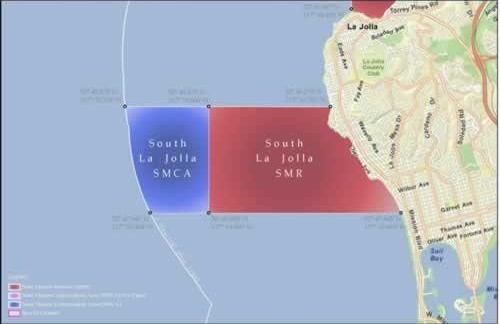
One of the marine protected areas off La Jolla has been identified as “one of the most poached MPAs in California,” according to Del Mar-based ocean conservation group Wildcoast.
Wildcoast California Conservation Manager Lillie Mulligan gave a presentation at the Jan. 26 La Jolla Parks & Beaches meeting about the status of MPAs and strategies intended to protect the marine creatures that live in them.
The presentation was an information-only item on the agenda, and the board took no action.
According to the National Oceanic and Atmospheric Administration, a marine protected area is a region designated and managed for long-term conservation of marine resources, ecosystems and/or cultural heritage. In many of those areas, fishing and disturbing or taking wildlife is limited or prohibited.
Mulligan said MPAs “are like a 401-k” in that “you have to set aside a little bit now but we’ll see benefits in the future.”
La Jolla has four MPAs: the Matlahuayl State Marine Reserve near La Jolla Cove, the San Diego-Scripps Coastal State Marine Conservation Area just north of Matlahuayl off La Jolla Shores, and the South La Jolla State Marine Reserve and the South La Jolla State Marine Conservation Area off Bird Rock. They were established in 2012.
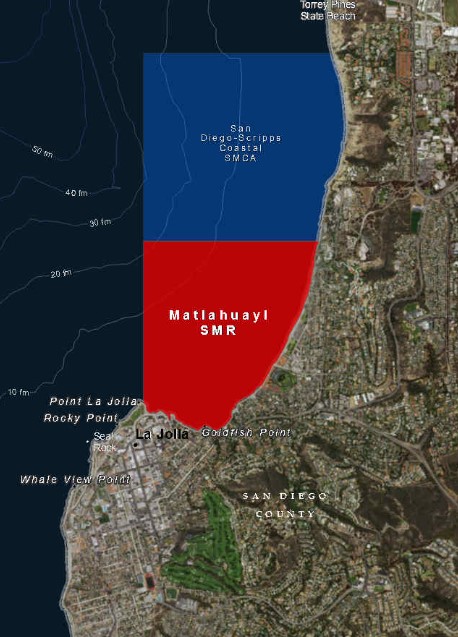 A map shows the Matlahuayl and San Diego-Scripps Coastal marine protected areas off La Jolla. (California Department of Fish and Wildlife)
Mulligan some people still fish in those areas, “some on accident, some on purpose.”
Wildcoast participates in a program called MPA Watch, in which volunteers patrol the areas and monitor what people are doing there.
“It’s important to know how many people surf at [any particular] spot, how many people fish and how many people fish illegally,” Mulligan said. “That data gets sent to the state so they can better monitor and understand what is happening.”
Equipment — some of it in La Jolla — also is used to monitor MPAs around the clock and record any illegal activity.
Through that equipment, Mulligan said, Wildcoast determined that the South La Jolla State Marine Reserve is one of California’s most poached MPAs based on citations written, let alone incidents of people fishing illegally without getting caught.
Fines for fishing in or otherwise taking from an MPA can range from a couple of hundred dollars to $40,000, and people who are cited can be given a stay-away order.
To help raise awareness about the MPAs, Mulligan said Wildcoast would replace “quite a few” of the informational signs on land in La Jolla and add new signs when a beach access trail at Princess Street opens. In addition, portable signs are posted when volunteers are onsite.
Anyone who witnesses poaching, polluting or other violations can call 888-334-2258 or text “CALTIP,” followed by a space, to 847411.
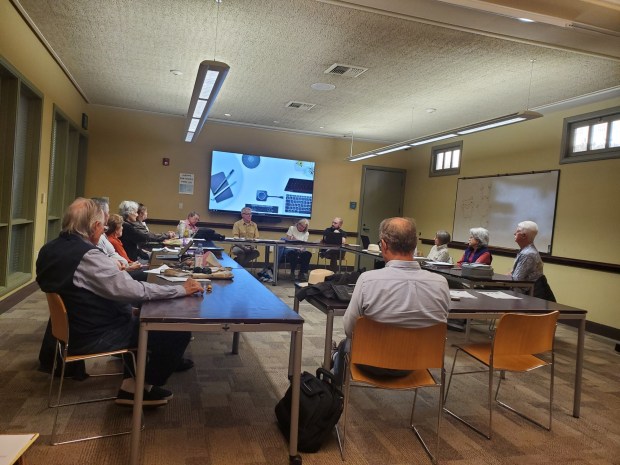 The La Jolla Parks & Beaches board meets Jan. 26 at the La Jolla/Riford Library. (Ashley Mackin-Solomon)
Other Parks & Beaches news
Election results: The board held its annual election at the Jan. 26 meeting to fill three available seats and choose a new president.
Three board candidates ran, so all were elected unanimously. They are local historian Seonaid McArthur, ocean recreationist Kurt Hoffman and San Diego Parks Foundation member Beth Murray.
Ann Dynes was selected as president. She served as president once before, with her term ending in 2020.
Phyllis Minick: After decades of service, longtime LJP&B trustee Phyllis Minick retired from the board effective at the end of the January meeting.
Joaquin Quintero, representing the office of San Diego City Council President Joe LaCava, whose District 1 includes La Jolla, gave Minick a proclamation honoring her time on the board and announced that Jan. 26 was declared “Phyllis Minick Day” in the city of San Diego.
Cove access group disbands: After submitting its recommendations to the city of San Diego last summer about possible ways to ease conflicts between people and sea lions, the La Jolla Cove Access Working Group has been officially disbanded.
The group was formed in 2024 to come up with a collaborative proposal, with the support of as many interested parties as possible, to present the city “a balanced, year-round access solution … preserving recreational access to The Cove while coexisting with the local pinniped population.”
After months of workshops, group members presented five proposed solutions last June:
• Improved signs
• A script in various languages to give to tour buses explaining how people can view the sea lions safely
• A clearly marked area for pinniped viewing
• Rangers authorized to issue fines and/or place cones or tape as a visual deterrent for people
• A system designed to keep sea lions away, such as an acoustic device that emits low-frequency sounds to discourage them from going on land
With the recommendations submitted, the board decided to end the working group.
Next meeting: The La Jolla Parks & Beaches board next meets at 4 p.m. Monday, Feb. 23, at the La Jolla/Riford Library, 7555 Draper Ave. The agenda will be posted 72 hours in advance at lajollaparksbeaches.org. ♦