
Michael Shvo embraced San Francisco back when no one else would. For that reason, his $1 billion bet on the Transamerica Pyramid in 2020 was hailed by politicians as a much-needed turning point for the city, whose reputation had been dragged through the mud for its struggles with mass vacancies and street issues.
But yesterday’s hero seems to have overstayed his welcome.
The Standard has learned that the entities whose money is fueling Shvo’s purchase and redevelopment of the Pyramid — Bayerische Versorgungskammer (BVK), Germany’s largest public pension group, and Deutsche Finance, a private equity real estate investor — have grown wary over the last year of their partnership with the former luxury apartment broker turned high-end real estate developer and are considering ousting him as the building’s primary steward.
The impetus for his potential removal came two years ago, when German lawmakers started questioning BVK for its investment strategy in the U.S., and lawsuits emerged accusing Shvo of fraud.
The ongoing lawsuits have led to questions about whether those acting on behalf of the pension fund were aware of Shvo’s spotty track record — including a $3.5 million settlement (opens in new tab) over tax-evasion charges — before going into business with him.
Scrutiny was heightened as BVK’s U.S. portfolio, which includes several real estate bets Shvo made before and during the pandemic, started to flop, leading to more than $1 billion in losses for the fund’s 2.7 million members. They include doctors, professional service workers, civil servants, and lawmakers, who rely on the state pension for their retirement and other benefits.
Additionally, several of Shvo’s intermediaries at BVK and Deutsche Finance have departed since last spring. One of those executives, Rainer Komenda, the former head of real estate investment at BVK, was dismissed after an internal compliance report identified several violations, including “inappropriate close relationships among individual actors,” according to German newspaper Abendzeitung, which confirmed the contents (opens in new tab) of the report through Komenda’s attorneys.
Other notable departures include Komenda’s boss, Norman Fackelmann, who departed in October, and Deutsche Finance execs Sven Neubauer and Jason Lucas, who were listed on many of the joint venture deals with Shvo.
When asked by the San Francisco Chronicle on Tuesday whether he has even a minority ownership stake in the Transamerica Pyramid, Shvo declined to answer (opens in new tab). “We don’t know why that newspaper chose to publish a story they were told is false,” a spokesperson for Shvo told The Standard. “Nothing has changed with Michael’s role or economic interest in the building.”
BVK, which declined to comment, told its members in a letter dated Jan. 19 that its investments in U.S. real estate were suffering due to “economic challenges” associated with losses as well as “project partners” that “did not meet expectations placed upon them.”
As a result, the pension fund is “systematically work[ing] through” investments made between 2018 and 2020, which is when Shvo guided BVK leaders to purchase multiple properties, including the $650 million Transamerica Pyramid deal.
Selling a dream
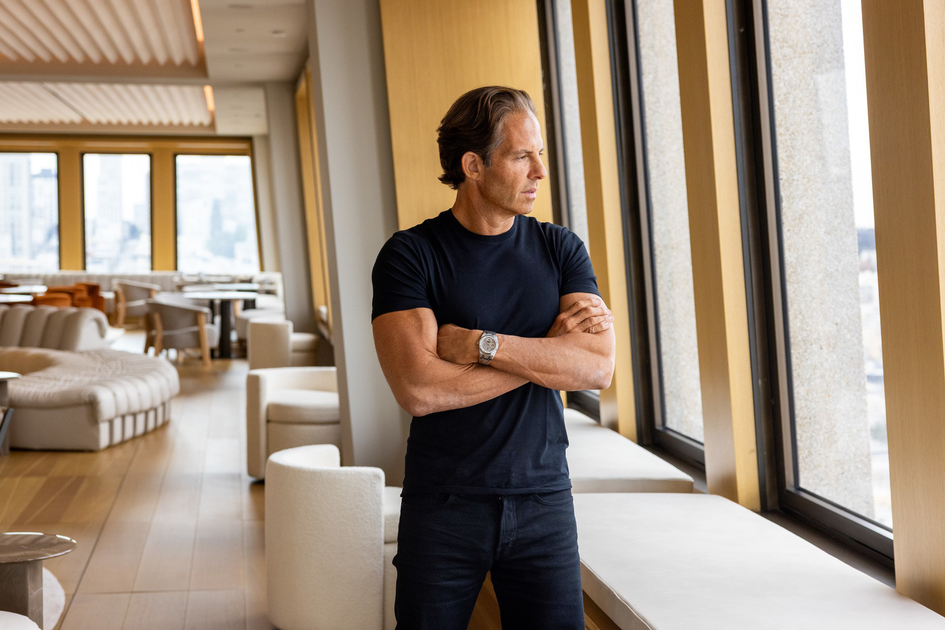
Brash, buff, and black T-shirted, Shvo did not cut the typical figure of a San Francisco mogul. He touted the city’s potential and brought in starchitect Norman Foster to design the Transamerica Pyramid’s extensive makeover. Public officials — in need of good news — hailed his contributions.
 Michael Shvo, center, at a groundbreaking ceremony for the Pyramid in 2022 with former Mayor London Breed, Sen. Scott Wiener, former Mayor Willie Brown, and former Supervisor Aaron Peskin.| Camille Cohen/The Standard
With German capital behind him, Shvo snapped up roughly $3 billion of U.S. property over just a few years in the late 2010s, when interest rates were low. Shortly after the pandemic, his group purchased the Pyramid with plans for a full-scale renovation of the building and transformation of the ground floor into a 5,000-square-foot public park.
The strategy was predicated on building what he called the “Shvo Universe,” which meant sprucing up landmark properties, then renting or selling them at higher prices, often at rates previously unseen in local markets. When he opened the Raleigh condominium project in 2023 in Florida, Shvo bragged that the group (opens in new tab) had “the most expensive product in Miami Beach” and had already wooed buyers from the Middle East.
But most of those gambles have started to go bust.
Last year, Shvo and his partners sold the Raleigh for $270 million prior to it being built and surrendered an office development site nearby. A similar predicament played out in Beverly Hills, where his group defaulted on a $200 million debt earmarked for a 54-unit luxury project, and Shvo was forced to sell his remaining interest (opens in new tab) for a massive discount. Meanwhile, his Mandarin Oriental condo project in Manhattan has reportedly seen slow sales (opens in new tab) in part because units were priced too high relative to their value.
The dynamic at the Pyramid is more complex. On one hand, Shvo has been able to tout his success in siphoning off some of the city’s bougiest office tenants and charging them record-breaking rents. But sources familiar with those leases say the deals are laden with tenant concessions and costly remodel allowances that ultimately hurt the landlord’s bottom line.
His strategy might look like it’s paying off in the short term. But sources say BVK and Deutsche will have a difficult time recouping their investments if they’re banking on the building’s value increasing, since tenants can just as easily find comparable offices for half the price once their leases expire. Most office buildings surrounding the Pyramid lease for around $70 per square foot, whereas Shvo is charging more than triple the amount in some cases.
Amid mounting speculation about his relationship with his investors, Shvo claimed in September that his partners added $250 million in new equity to their office portfolio. BVK did not deny the stated amount when later asked about it by Abendzeitung, but said it was for “individual capital commitments” for the “expansion of newly leased space.”
 Michael Shvo points to a drawing he made of the tower as a child. He said he fell in love with the skyscraper during a visit to San Francisco with his parents. | Source: Camille Cohen/The Standard
 The 48-story skyscraper was built in 1972 and renovated by Shvo and his investors in 2022.
Geometry also limits the amount of revenue the Pyramid can generate. The reason why developers of skyscrapers — other than Transamerica — have typically avoided the form is, in part, financial. Even though views and rents increase with height, space near the top of the pyramid is more scarce, meaning fewer revenue opportunities.
Additionally, Shvo has faced challenges related to an elite members-only business, Core Club, that was slated to anchor the renovated property as a key tenant. The parties remain locked in overlapping lawsuits. Core alleges that Shvo misrepresented himself and misused funds, while he claims his investors are owed millions in unpaid rent.
In response to concerns about his stewardship of the Pyramid, Shvo this month touted record-high leasing rents and said the tower is around 85% occupied.
“We’ve created an unbelievable income stream,” he previously told The Standard.
BVK and Deutsche’s Transamerica purchase included two other office properties on the same block on Sansome Street. One of those sites is entitled for a new 150,000-square-foot office building.
Sources have said the Pyramid is still underwater financially, and a significant restructuring of its debt is likely if the landlords want to keep possession. Two real estate sources said multiple leases were held up last year after the Pyramid leasing team delayed countersigning contracts. Some were eventually signed and continued forward.
The legal problems faced by the developer led to a publicity stunt that cast a pall over the Pyramid’s reopening event in 2024. While celebrities and public officials cut ribbons and snapped photos, a plane buzzed overhead trailing a banner that read: “Shvo must go.”