
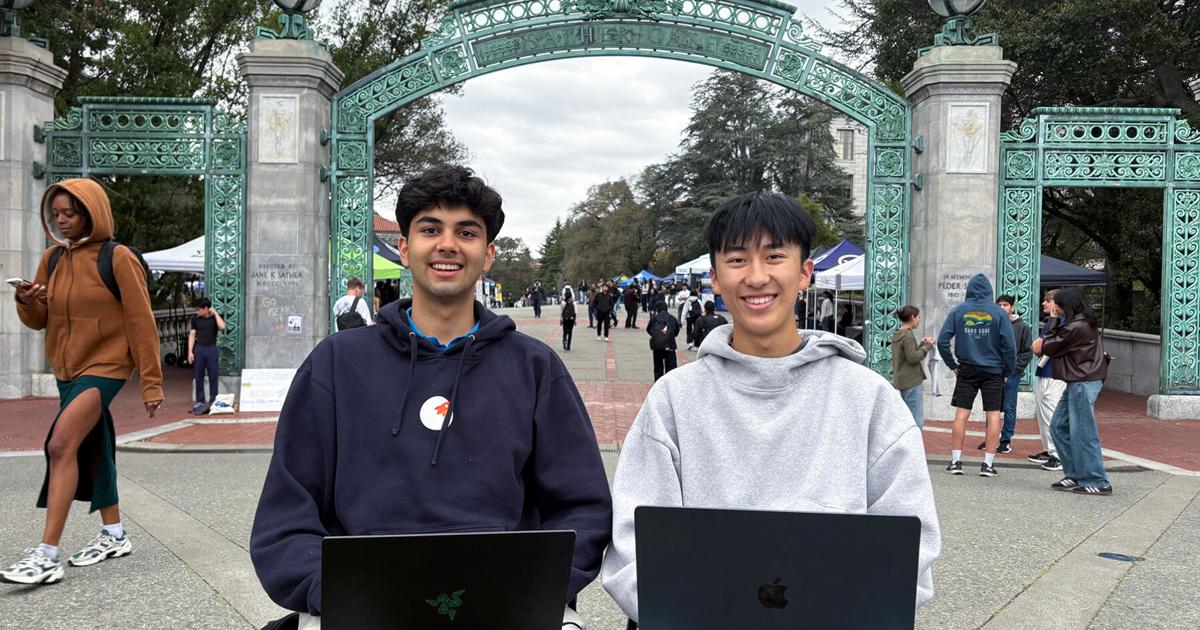
When Caden Li, a freshman using the unlimited meal plan, met Mohul Shukla, a sophomore paying in flex dollars and cash at campus restaurants, the idea behind UBerk Eats quickly emerged. The app, founded by Li and Shukla, launched Nov. 13, 2025, allowing freshmen to sell unused meal swipes to other students at a discounted price.
However, after just 15 days of operation, UC Berkeley Dining emailed Li and Shukla asking them to shut down the app Jan. 20.
“I would say (the app) got pretty positive reactions,” Li said. “The idea of paying $6 for campus eateries and having freshmen actually make money for swipes they don’t use was received as an idea that’s beneficial to both freshmen and upperclassmen.”
Freshmen earned $5 per meal, while upperclassmen purchased them for $6; the $1 margin was used to cover operating costs and refund customers if meals weren’t received, according to Li.
The app saw daily growth of 20%, earned the freshmen who sold swipes a combined total of $1,985 and saved upperclassmen a total of $4,125 on meals, according to Shukla.
Freshman Jaiyen Shetty, who helped with UBerk Eats’ marketing, sold the most swipes. According to Shetty, he sat atop the leaderboard of the app’s ranking system of users, with Li dubbing him as the “No. 1 provider.”
“The app launched, and I was like, ‘Wow, this is actually phenomenal,’” Shetty said. “You best believe I’m not going to Crossroads, right? … So I sell my meal, and I get something else, like Chipotle.”
While he began using the app for personal reasons, Shetty said he quickly realized its impact on the campus community. He noted how it helped students with financial struggles, as it allowed those who had leftover meal swipes to get some reimbursement for the unused ones.
UC Berkeley Dining became aware of the app after concerns emerged that it enabled peer-to-peer meal swipe transfers, according to campus spokesperson Lindsey Michels in an email.
“Berkeley Dining reviewed the matter and determined that the project enabled activity inconsistent with the meal plan agreement,” Michels said. “UC Berkeley meal plans are governed by terms and conditions that specify meal swipes are non-transferable.”
According to Michels, UC Berkeley Dining contacted the students involved and asked that the app be shut down. No further campus action was necessary.
After seeing the email, Li and Shukla immediately disabled ordering, notified their customers and launched a video recapping their experience on Instagram, according to Shukla.
“It was interesting to see that (UC) Berkeley, after two weeks, was already willing to take serious action,” Shukla said. “So it was slightly surprising but also confirmation that we had a good idea in the sense that we saw demand, and (UC) Berkeley had to do something about it.”
Despite the app’s impermanence, Li said the development process was a valuable learning opportunity.
“I feel like a lot of experiences that we do have as (computer science) students is a lot more theoretical … but it’s a very different feeling talking to the people who do end up using your code,” Li said. “It’s a very fulfilling feeling because … people (appreciate) the things that you build.”