
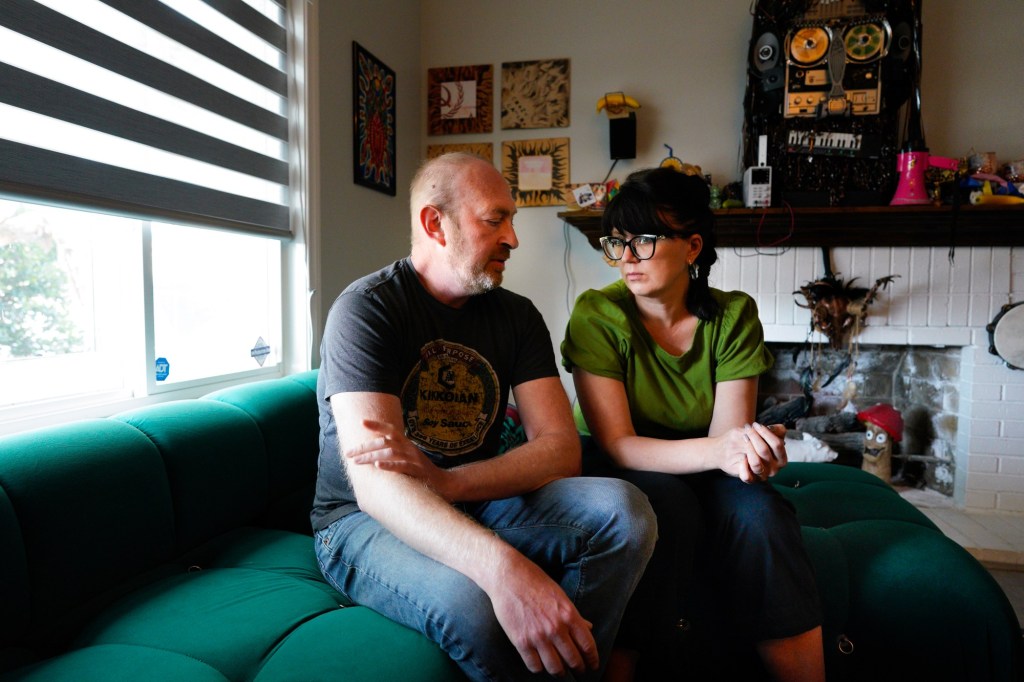
Last month in San Diego, federal immigration officers arrested one of Pathways to Citizenship’s clients during her green card interview, an interview she attended because she was following the law. For three days, Viktoriia Bulavina, a Ukrainian immigrant married to a U.S. citizen and in the final stage of the permanent residency process, was held in a basement facility under degrading conditions before being transferred to Otay Mesa Detention Center. Only after public pressure mounted did ICE release her. As of today, there have been no answers, no explanations, no action on her case, and no accountability for her arrest and detention.
This is not an isolated incident. It is one example of a system that allows Immigration and Customs Enforcement to detain U.S. citizens, lawful permanent residents and people with no criminal record who are actively pursuing legal pathways to citizenship, with no consequences when the agency gets it wrong.
Bulavina came to the United States three years ago under a humanitarian program for people fleeing the war in Ukraine. She did what our laws ask: She applied, she showed up, she complied. And for that, she was shackled, held in a basement, deprived of basic dignity and forced to endure conditions her husband rightly described as “absolutely atrocious.”
According to Bulavina, she and the women detained with her in the San Diego DHS basement had no privacy to use the toilet, which was visible to the guards. They were fed expired food and huddled together for warmth. One woman had her medication taken away. When moved, they were restrained with chains on their hands and feet. She spent three days there with no access to legal counsel, and with no bed, mattress or blankets. The only option for sleep was on the bare floor or in a vehicle. These are not the conditions of a lawful administrative process; they are punitive measures imposed on people who have not been accused — let alone convicted — of any crime.
At Pathways to Citizenship, we work every day with families navigating the legal immigration system. We tell them to follow the rules, to attend their appointments, to trust the process. Incidents like this shatter that trust. They send a chilling message: Following the law does not protect you.
ICE’s ability to detain people without cause, with so little transparency, raises a fundamental question: Who is enforcing the law? When ICE wrongfully detains a person, especially someone with lawful status on a clear legal path, there is no automatic review, no public accounting, and no meaningful remedy. Families are left scrambling and often without income, attorneys fight in the dark, struggling even to locate their clients, and law-abiding people who love this country suffer behind locked doors while agencies refuse to answer basic questions.
In Bulavina’s case, her husband and Pathways’ attorney pushed for her release, and media scrutiny finally forced ICE’s hand. But justice should not depend on press coverage or public outrage. Justice should be the foundation of the system.
Accountability means clear limits on ICE’s detention authority, especially for people with lawful status or pending applications. It means warrants, independent oversight of detention facilities, prompt access to counsel, and explanation and remedy when mistakes occur. It means consequences when rights are violated, not silence.
We should also be honest about the broader impact. When ICE detains people who are following the law, it discourages others from doing the same. It undermines humanitarian programs designed to protect people fleeing violence. And it erodes the integrity of a complex legal immigration system that already demands patience, resources, and faith from those navigating it.
Bulavina is now home with her family, but the damage is done, and her fully qualified case still has not moved forward. Her question, and her husband’s, remains unanswered: Who will take responsibility?
Until ICE is held accountable for wrongful detentions and inhumane conditions, stories like this will continue. And every person pursuing the American promise through legal means will be left wondering whether doing everything right is enough to keep them safe.
It should be.
Williams is executive director of Pathways to Citizenship, a nonprofit organization providing affordable and pro bono legal assistance for eligible immigrant families in San Diego.