
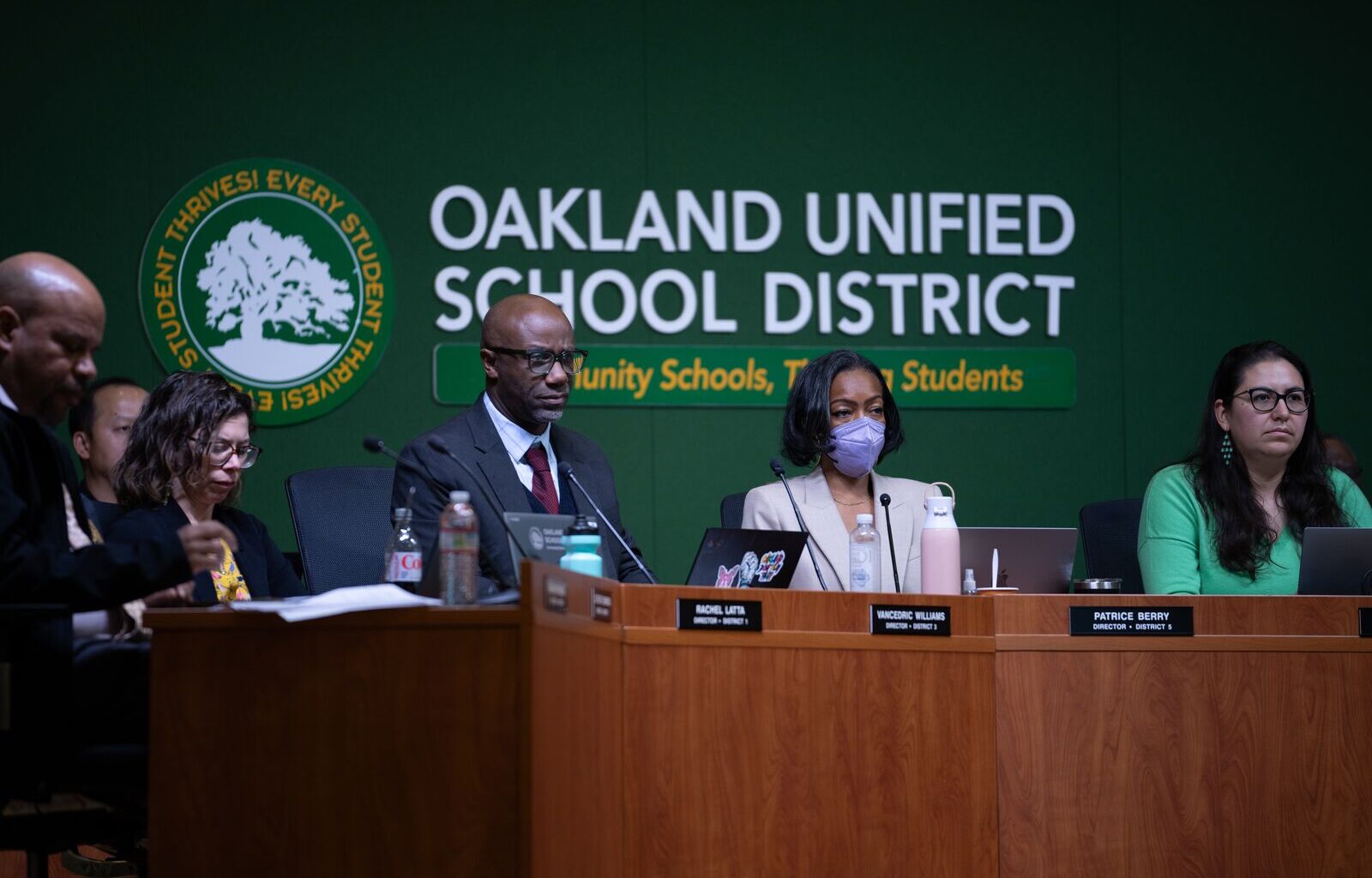
Tensions are running high in Oakland Unified School District as the board faces a quickly approaching deadline to settle next year’s budget even as negotiations with the teachers union have reached an impasse.
On Wednesday night’s meeting at La Escuelita Elementary School, the school board, parents, and hundreds of protesting teachers got their first look at a budget plan put together by a consulting firm the board hired in December after chief business officer Lisa Grant-Dawson resigned. The mandate of the firm, Hazard, Attea, Young and Associates, was to come up with a plan, based on board guidance, to trim $102 million from next school year’s budget.
The plan they came up with relies heavily on shifting spending from OUSD’s unrestricted base fund — where the deficit is — to restricted resources, which typically have earmarked uses or are spent on targeted student groups. That will also mean finding new funding sources to cover expenses that were previously paid for out of the restricted budget, or cutting them altogether.
Ruben Frutos, one of the fiscal advisors, explained Wednesday that the strategy is to tap out restricted resources first, before spending elsewhere. The district receives more than $100 million in supplemental and concentration funding — state dollars that are intended to support English learners, foster youth, and low-income students. About 82% of OUSD students fall into these categories.
“There is no new funding, these are the same budgetary numbers we had, but we are shifting some of the funds in order to protect the unrestricted portion of the budget,” Frutos told the board.
By shifting these expenses, the consultants managed to reduce next year’s general fund deficit to around $50 million. But the restructuring means next year’s supplemental and concentration funds — which pay for everything from assistant principals to elective teachers, newcomer teachers, attendance specialists, noon supervisors, case managers, and community school managers — could be cut by $55 million.
Some community members are concerned that this approach risks eliminating resources for the district’s most vulnerable students. “I am worried that in order to actually right the ship here, that we’re going to have to significantly reduce the services that we’re providing to our highest need students in our highest need schools,” Matt Glaser, a parent at Peralta Elementary, told The Oaklandside.
 Students eat in the after school program at Manzanita Community School. Credit: Amir Aziz/The Oaklandside
$16 million recovered from this year’s budget
In December, the district was projected to have end-of-year reserves of around $19 million, below the state-mandated 2% of the general fund, and below the district’s self-imposed mandate of 3%. This predicament meant the district was at risk of state intervention again, months after exiting receivership, and had little room to offer raises to workers.
The board’s directive to the superintendent and her staff was to come up with a plan that did not require closing or merging schools, reduced reliance on contracts, and kept cuts primarily at the district’s central office headquarters instead of school sites. But there’s no way to cut tens of millions of dollars from the budget without impacting students, interim superintendent Denise Saddler said.
“Cuts at the central office will have real impact on the experience at schools,” Saddler said at the meeting. “Fewer people to process contracts, slower response times for facilities requests, reduced capacity for recruitment and hiring support, less communication support for school websites and family engagement.”
Since hiring the fiscal advisors, the district has recovered about $16 million from this year’s budget to build its reserves above the required 3%, and now OUSD is projected to end the year with about $35 million in its coffers. Those savings were found by cutting unspent money from the central office and school sites, which reduced central office staffing by 53 employees. The district also shifted custodial, noon supervisors, and attendance specialists to restricted funds, freeing up $18 million in general funds.
For next year, the plan is still to implement a total of $102 million in reductions, Frutos said, though the details are still being fleshed out.
None of the cuts will be simple. Reducing the district’s special education budget is tricky because of federal “maintenance of effort” regulations that require districts to spend the same amount year over year, Frutos said.
Plans to reduce the deferred maintenance budget at time when the district has major facilities needs is also a challenge, Valarie Bachelor, chair of the board’s facilities committee, said.
“I see every single day the needs of our school sites regarding facilities,” she said. “I don’t want to make reductions to deferred maintenance. I want to encourage us to think about every single reductions we’re seeing today and the impact each of these reductions is going to have.”
School principals objected to other proposed changes, saying they can’t afford to lose support staff from their schools.
“High-quality schools don’t happen on accident or on endurance alone,” said Swaicha Chanduri, the principal of Joaquin Miller Elementary. “None of this happens without adequate planning time, support staff, updated materials and technology and opportunities for educators to collaborate as professionals. Just as teachers cannot provide differentiated instruction without time to plan and analyze student work, principals cannot effectively leave schools and instruction without essential staffing.”
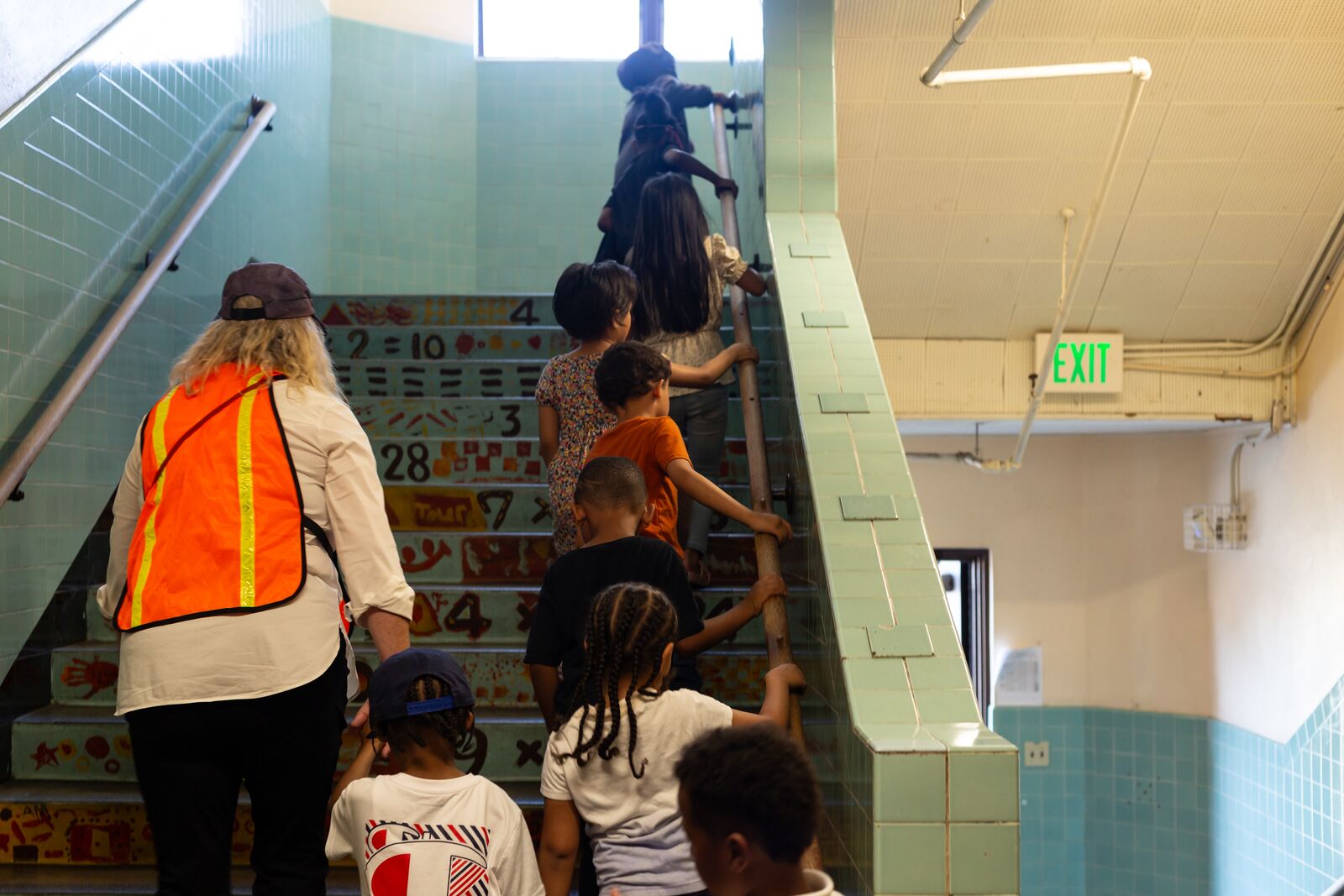 Students walk to class on the first day of school at Bella Vista Elementary School. Credit: Carla Hernández Ramírez
OUSD attendance is at 91.8% so far this year, up from 90.5% last year. The district’s goal is to raise attendance by 2 percentage points by the end of the year, which would bring in another $10 million in general fund revenue through the state’s funding formula. But as negotiations stall, the prospect of a teachers strike could upend that goal.
On Feb. 11, the board will further discuss budget strategies before voting on Feb. 25. By March 15, the district must give notice to staff who won’t be returning next year. Tara Gard, the district’s chief of talent, said OUSD will help to find work for those individuals elsewhere, such as with neighboring districts or with the city.
Parents start dissecting the budget
Some parents say they want to see the board fundamentally overhaul the budget and district operations, instead of moving money around, to get to a sustainable place. And they’re encouraging more families to get involved with budget advocacy.
Glaser, the Peralta parent, chairs his school site council, the bodies that guide some school-specific spending. He also serves on the district’s Parent and Student Advisory Committee, which makes recommendations to OUSD on its Local Control Accountability Plan, a three-year plan every district submits to the state to outline how it will improve student outcomes.
Glaser put together a budget framework document to help parents understand the district’s predicament and engage in budget conversations.
“Every single person who tries to get involved with budget discussions, every single parent, including myself, is overwhelmed by the amount of information that is out there,” Glaser told The Oaklandside. “Nobody knows what’s accurate, what sources to trust, stuff is outdated. There’s also so many different parts of the budget that it becomes overwhelming and people tend to check out.”
His document explores eight areas and how they relate to the budget: special education, school closures, charter schools, facilities, the central office, enrollment, academics, and student services.
“The point is to get people to dig into specific areas and decide this is going to be their specialty,” he said.
Other members of the Parent Student Advisory Committee have also expressed their concerns about the budget plan, with its vague commitments to protecting classrooms over everything else, and worry that cuts to enrollment and custodial staffing could cause more families to leave the district, compounding its problems.
Arielle Fleisher, a parent at Crocker Highlands Elementary, helped create another analysis of the budget, a second independent effort to provide a resource for parents struggling to wrap their heads around the district’s budget woes.
The guide challenges assumptions around central office costs, contract spending, and school consolidations.
“We’re trying to get parents to understand the complexity,” Fleisher told The Oaklandside. “To have them feel empowered, to engage, and not to tune out.”
The group that worked on it, which Fleisher said is made up of about 20 to 30 parents from schools across the city, wants the board and district leadership to lay out their big picture vision for schools and students instead of responding to budget crises every year.
“We’re always budgeting from a place of crisis and we’re never budgeting from a place of our values,” Fleisher said. “I have no idea what the board’s vision for schools are. I want to budget towards outcomes.”
Kim Ayers, the parent of a transitional kindergarten student at Laurel Elementary, echoed this view.
“I want to see a multiyear plan that brings us to financial stability and sustainability,” she told The Oaklandside. “So all of us, families and educators, can get back to actually focusing on kids and their learning, which is the real crisis I wish we were talking about. Instead of being focused on whether we’re going to be able to pay our bills next month.”
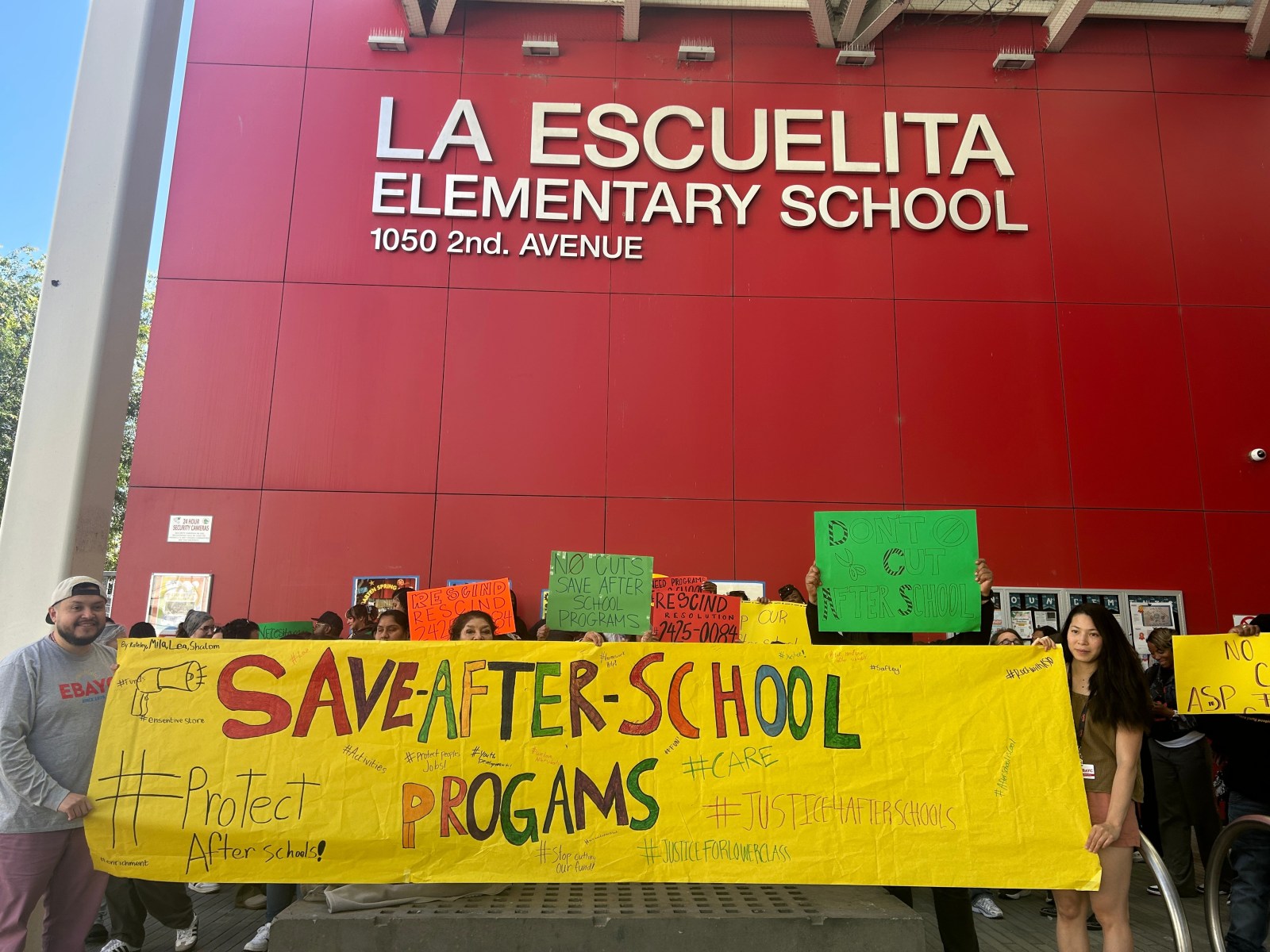 Staff and supporters of after-school programs in Oakland rally ahead of a school board meeting to urge district leaders to rescind program cuts on May 21, 2025. Credit: Ashley McBride/The Oaklandside
Without a vision, Ayers said, budget decisions can have unintended consequences — such as last year’s decision to cut contracts that almost defunded after school programs. She said the chaos that produced was her first introduction to OUSD as a parent.
Teachers union seeks a 14% raise
Negotiations between the Oakland Education Association, which represents the district’s teachers, and OUSD have been at an impasse since a mediation period ended in December. If bringing in a neutral fact-finder isn’t able to resolve the disputes, the district could experience the second teachers’ strike in three years. Last year, a one-day strike was narrowly averted.
The two sides are far apart. The union has asked for a 14% raise over two years, while the district offered a 0% increase, citing OUSD’s budget constraints. The union’s student-centered budget highlights outside contracts and central office management as areas to cut in order to protect budget for schools and classrooms.
In a statement ahead of Wednesday’s meeting, teachers said they were encouraged by the progress the district had made in shrinking its deficit and building its reserves and maintain that the district can keep all its schools open while offering higher wages to educators.
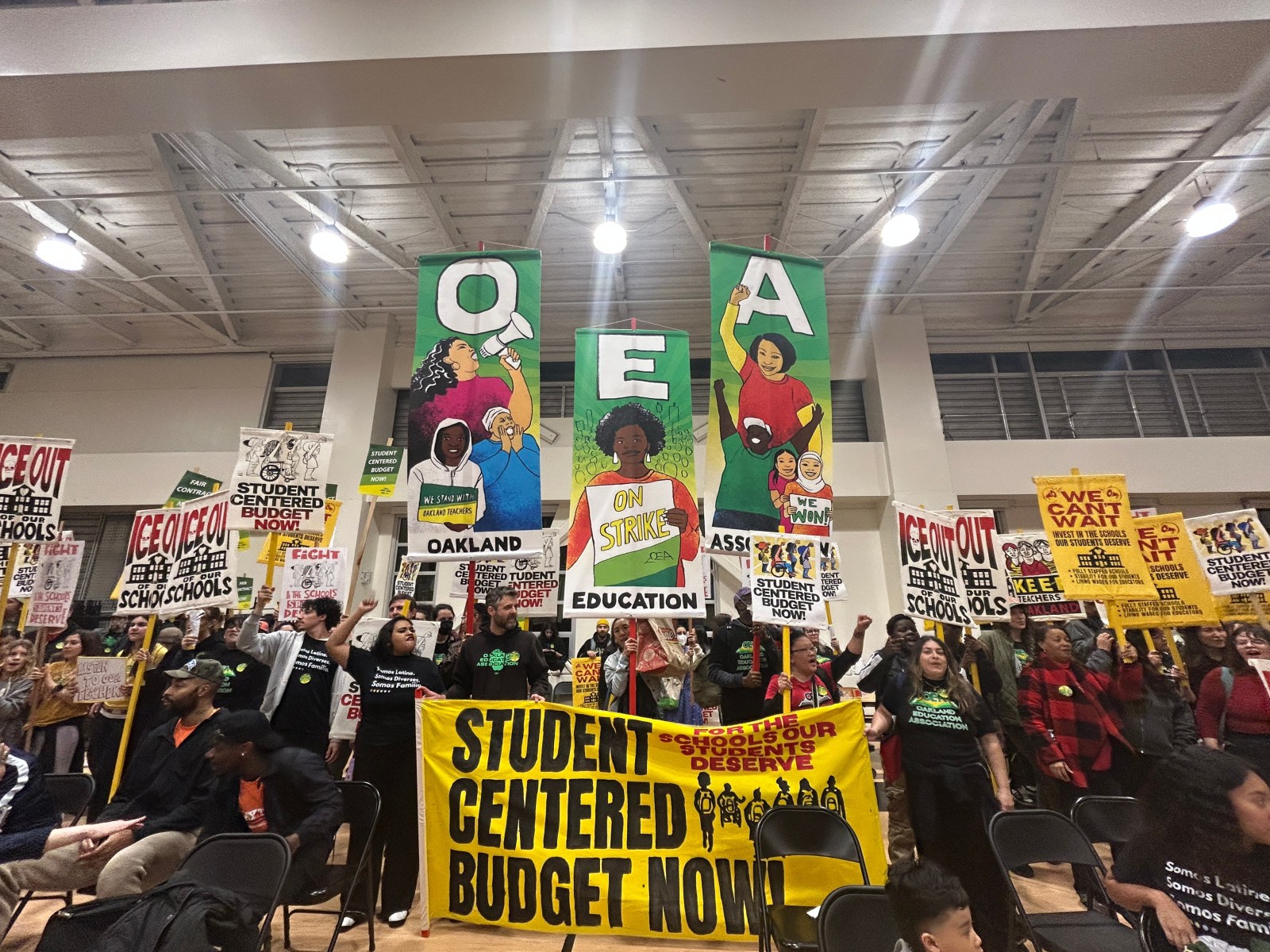 Oakland Education Association members and their supporters file into the OUSD school board meeting on Jan. 28, 2026. Credit: Ashley McBride/The Oaklandside
At Wednesday’s meeting, hundreds of union members and their supporters filled La Escuelita’s Great Room with signs and chants. They were joined by some of the district’s other labor groups, including the Buildings and Trades Council, which is also in negotiations, and the Service Employees International Union, which settled a new contract on behalf of more than 1,000 school district staffers in December.
“We know there’s enough money for everyone to be paid a livable wage,” said Jorge Paniagua, an ethnic studies teacher at Oakland High School. “Eighty percent of our budget to student-facing staff, period. Last year when there was a potential strike, I showed up in front of all of you to say we do not want to strike but we will if you give us no other choice. I’m here to say the same: If you don’t want to see us strike, support our student-centered budget.”
“*” indicates required fields