
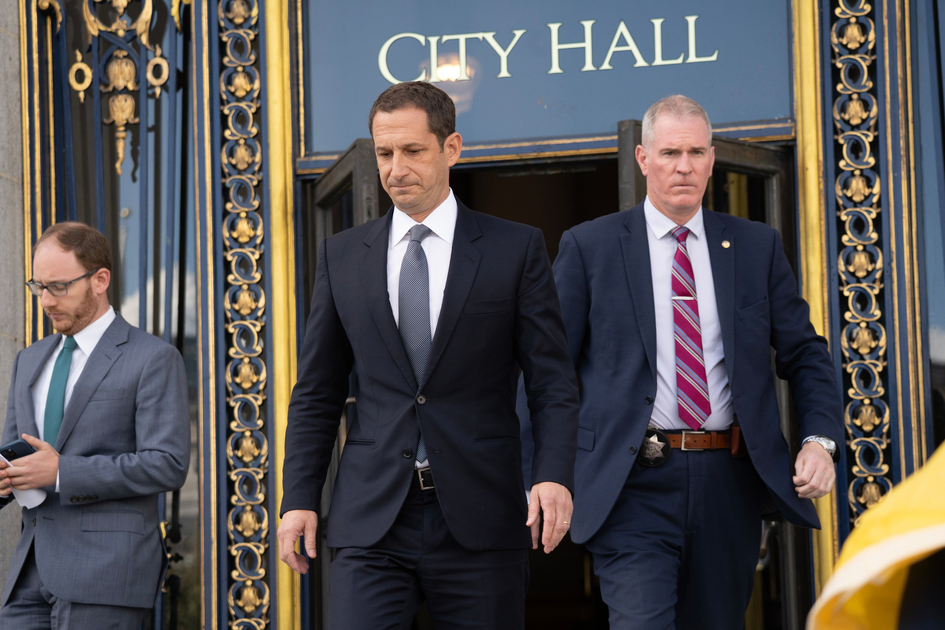
San Franciscans regularly vote on so many ballot measures that their pamphlets feel like phone books.
Mayor Daniel Lurie wants to slim those ballots to the size of a brochure.
The mayor is throwing his political weight behind a series of proposed reforms to San Francisco’s charter, including measures that would make it tougher to place propositions on the ballot, winnow byzantine contracting rules, and give the mayor’s office more authority to hire and fire department heads.
Lurie’s team will share his stances with a 30-plus-member charter reform task force on Friday, sources with knowledge of the mayor’s plans told The Standard. The working group was convened by Lurie and Board President Rafael Mandelman in December, with the goal of producing a range of recommendations on streamlining governance.
Of the changes Lurie’s proposing, limiting the ability to bring ballot measures to voters may attract the most public opposition, chiefly from labor unions.
The city’s charter, its guiding legal document, can be tweaked only at the polls. And once a new law is added, no matter how poorly written it is or what unintended consequences arise, only another vote can change it. For decades, that has led to conflicting, overly complicated legal hurdles, Lurie has argued.
The think tank SPUR and other Lurie allies have opined on the need for changes, but this is the first time the mayor has officially thrown his support behind those ideas.
Union representatives on the charter reform group have voiced objections to making it tougher to place measures on the ballot. From raising taxes on wealthy CEOs to creating the role of inspector general to investigate corrupt government officials, ballot measures are the easiest way for working people to express their political will, the unions argue.
Kim Tavaglione, executive director of the SF Labor Council and a member of the working group, said she believes business interests are pushing charter reform because they’re incensed they’ve lost against past tax measures.
“We don’t want you to change the rules because you don’t like the outcome,” she said. “San Franciscans deserve democracy.”
Another member of the working group, Sachin Agarwal, cofounder of GrowSF, said the charter has become weighed down with laws meant to protect insiders — not improve the lives of residents — echoing a view Lurie aired (opens in new tab) during his campaign.
“The city charter fosters a culture of corruption and protects the status quo at the expense of San Franciscans,” he said. “It’s a system that has enabled the scandals at [the Department of Building Inspection], allowed city contracts to be dictated by politicians, and created an initiative system that leads to lengthy and confusing ballots that reward special interests and division instead of consensus.”
As it stands, four members of the Board of Supervisors can place a proposition on the ballot. Lurie favors a proposal that would raise that threshold to six, a majority of the 11-member board. Alternatively, signatures from 2% of voters can place a measure on the ballot (as long as it doesn’t pertain to the charter, which has a 10% threshold). Lurie favors increasing the number of signatures for a non-charter measure, though it’s unclear by how much.
San Francisco’s threshold for putting measures before voters is low compared to that of other California cities. The state’s 10 largest cities, including Sacramento, Long Beach, and Anaheim, require signatures from at least 10% of voters, according to a report (opens in new tab) by the Rose Institute of Claremont McKenna College.
According to sources close to Lurie, the mayor also believes politicians use the ballot to pass laws that couldn’t be negotiated in City Hall. That was the case in 2024, when moderate and progressive Democrats drafted Propositions D and E to offer voters two visions on streamlining city commissions.
Upping the requirements may lead to more compromise, Lurie hopes.
Two other potential reforms Lurie is said to support may face less public opposition.
One would give the mayor the power to fire and hire department heads, like the police chief or Public Works director. While voters may assume that’s already within the mayor’s purview, it’s usually citizen commissions and committees that dismiss department heads, except in extraordinary circumstances like malfeasance.
Former Mayor London Breed butted heads with a police commissioner when she tried to stack the group’s leadership with allies who favored her preferred candidate for SFPD chief.
Another reform would give the city administrator’s office the authority to streamline contracting rules across city departments. Critics of government contracting maintain that San Francisco takes an inordinate amount of time to approve even simple contracts and that many are duplicative. Departments across San Francisco have contracted 20 training systems from various companies and 14 distinct document management systems, according to the city administrator’s office.
Under the proposal, the Board of Supervisors would be unable to directly change contracting procedures. It would still have approval powers over the city administrator’s reforms, necessary oversight to safeguard against corruption, officials have said.
The $10 million threshold that triggers Board of Supervisors approval for contracts — which hasn’t changed since 1988 — would also be raised and would rise further with inflation.
The proposed charter reforms appear to be popular: Polling shared with The Standard by FM3 shows that 78% of voters support tweaking the ballot threshold. Another poll, from David Binder Research, shows that around 70% of voters favor giving the mayor more authority to fire and hire department heads, while the contracting change faces more scrutiny from voters, who approve it by just 54%.