
Berkeley City Council’s Public Safety Committee unanimously approved the removal of the Berkeley Police Department’s pepper spray reporting requirement Thursday.
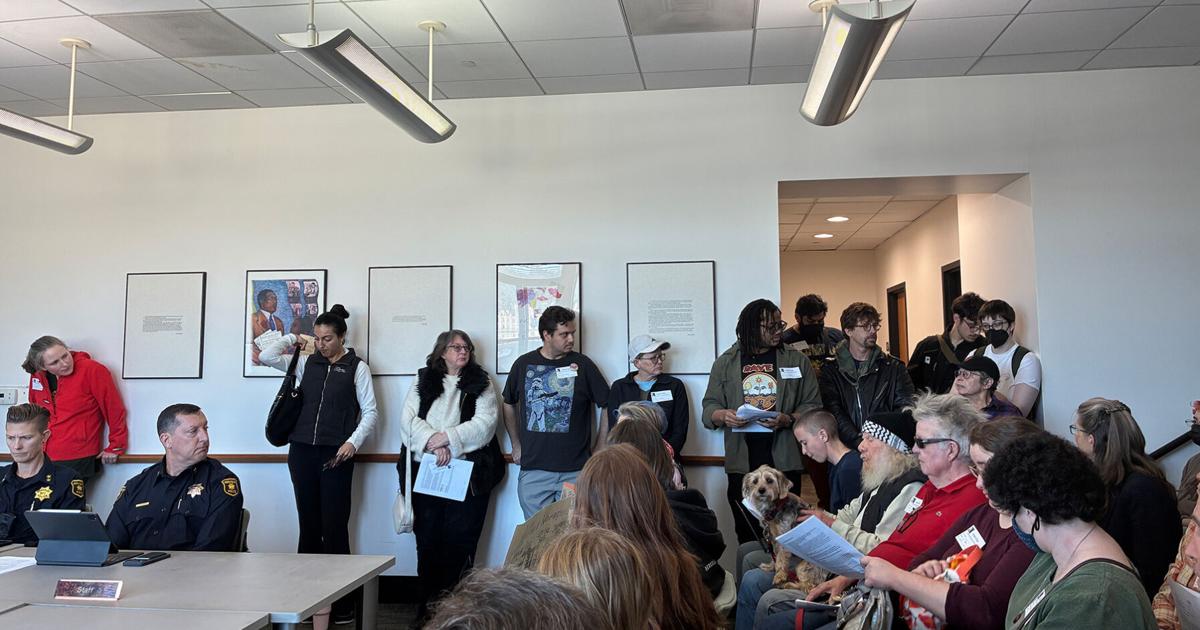
Starting at 2 p.m., nearly 50 people filed to speak out against the proposals to modify the reporting process for pepper spray, as well as the use of air support and canine units. The agenda included a resolution to repeal the COVID-19 moratorium banning tear gas, but this was tabled for a later meeting.
District 1 Councilmember Rashi Kesarwani authored all three of the proposals; District 8 Councilmember Mark Humbert co-authored the proposal that would lift the COVID-19 moratorium banning tear gas.
“We are still waiting on effective oversight on police, where are your experts, who will be talking about impacts of chemical weapons and dog mauling, the transparency hub is no substitute for police reports,” said Andrea Prichett, a member of Berkeley Copwatch.
The item was approved with the qualification of including the Police Accountability Board in the review of this change, clear documentation of how the policy is and is not changing and collaboration with BPD to improve the transparency hub.
District 6 Councilmember and Public Safety Committee Chair Brent Blackaby proposed continuing the discussion at the committee meeting next month after the first item took about an hour and a half to discuss. All public comment speakers were opposed to the resolutions.
According to BPD Deputy Chief Jen Tate, pepper spray was used in four incidents last year. Tate said the main reason for this agenda item was to streamline reporting processes.
Whenever use of force is used, BPD is required to upload this information into their transparency hub.BPD is also currently required to write a Use of Pepper Spray Report within a week of the chemical being deployed, according to a memo by Kesarwani.
Kesarwani wrote in the memo that the requirement of both Use of Force and Use of Pepper Spray reports creates “an unnecessary administrative burden.”
Multiple public commenters cited complaints with the lack of alternative transparency measures and the nationally heightened use of force by federal law enforcement, including recent U.S. Immigration and Customs Enforcement, or ICE, actions in Minneapolis and the use of pepper spray. Commenters expressed concern over ICE coming to the Bay Area and BPD using pepper spray, canine units and helicopters against protesters.
“We all understand the context and the broader concerns … we all share those concerns, but I also think we have a really good police department,” Blackaby said. “Our police department is not ICE, our police department is not CBP.”
Commenters additionally noted that they will “remember” this meeting when going to the polls, as Kesarwani is up for reelection this fall.
Some commenters criticized the lack of presence of the Berkeley Police Accountability Board, or PAB, at this meeting. PAB did author a letter to the committee in preparation of the meeting, questioning why the BPD needs to reinstate a policy on the reinstatement of tear gas.
“Given this limited historical use, the board questions whether reinstatement meaningfully enhances public safety, or whether it reintroduces a tool associated with significant community concern for marginal operational benefit,” the PAB memo said.
PAB also recommended that if there are changes to Berkeley reinstating the use of chemical agents, they prohibit the use of tear gas on protesters and that “any authorization be narrowly framed and explicitly bounded.”
In response to public comment, Blackaby said his focus moving forward will be clarifying the information that is documented and collected by BPD.He added there will be no change in available data relating to pepper spray use if the proposal to modify the reporting process is approved by the council.
“There is not going to be any difference in the future versus now in what is publicly available on these incidents; there is no degradation,” Blackaby said.