
I’ve been covering San Diego’s public, not-for-profit, government-run, renewable energy buying and selling entities since they began circa 2020.
Technically, they’re called community choice aggregators or CCAs, which my predecessor at Voice of San Diego, Ry Rivard, and I both agree is a “dumb, confusing name.” Blame the name on the original legislation, which in 2002, allowed cities or counties to band together, combine the purchasing power of all the customers within their borders, and decide what kind of energy to buy and where to buy it from.
Why? Many felt the state’s three biggest and privately held energy utilities weren’t moving fast enough to transition the grid off fossil fuels like natural gas and onto renewable energy like solar. CCAs were a solution.
A few years ago, I started referring to community choice aggregators as public or government-run power companies because I thought it would make more sense to readers. San Diegans know the private or shareholder-run company San Diego Gas and Electric, which until recently bought and sold the region’s energy and built and maintained the electric grid and gas lines. The latter is how SDG&E makes its money – it profits by building things or maintaining things. It can’t profit off of the energy itself and must sell it for what it costs. (That’s because the state forbid it after a huge scandal involving Enron and the manipulation of electricity markets.)
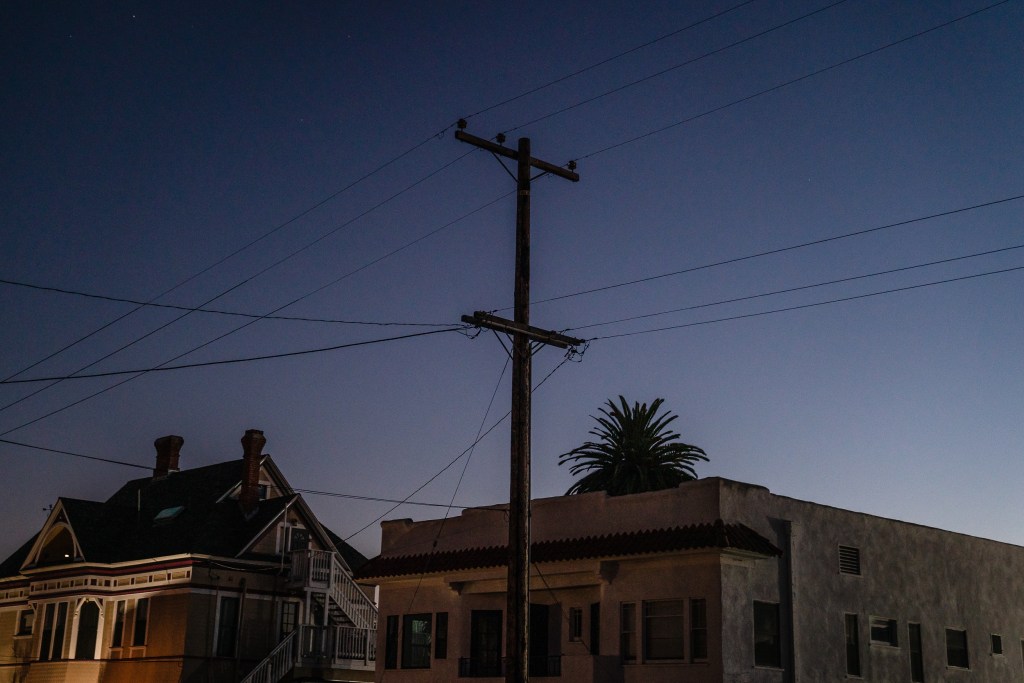 Power lines in Bankers Hill on Sept. 15, 2025. / Ariana Drehsler for Voice of San Diego
CCAs basically took over SDG&E’s business of energy buying. And because it’s government-run, any money it makes should be reinvested back into the community or used to lower rates.
There are similarities between what CCAs and SDG&E do. While CCAs don’t answer to a board of shareholders, they are governed by a board of elected leaders from each member city that makes decisions about rates. CCAs hired experts away from for-profit utilities to build their own power-buying teams, operating in the same energy markets as private companies. And when CCAs bid out new solar or battery projects, for-profit companies answer to build them. Members of the public can request copies of energy contracts, which would likely never be produced by a private company. But, like private companies, the price of these contracts remains private.
As the saying goes, if it looks like a duck, and quacks like a duck – then it’s probably a duck.
But in this case, San Diego Community Power pursued me relentlessly to prove they are not a duck – in other words, we are not a company, they say. Please, stop calling us that.
“We are a government agency,” said Jen Lebron, the spokesperson for San Diego Community Power.
She said the main reason San Diego Community Power doesn’t want to be called a company is to differentiate itself from SDG&E.
“SDG&E is a for-profit company. They have a fiduciary responsibility to their shareholders. They’re supposed to make money. That’s their job,” Lebron said. “Our job is to keep costs as low as possible. Any revenue we have is intended to go straight to our buying power and providing benefit programs that help everybody.”
CCAs are subject to California public records law; SDG&E is not – except for most of the documents (of which there is a lot) provided to SDG&E’s regulator, the California Public Utilities Commission. CCAs are not regulated in the same way by the CPUC. The state approves all of SDG&E’s spending and the price they charge customers.
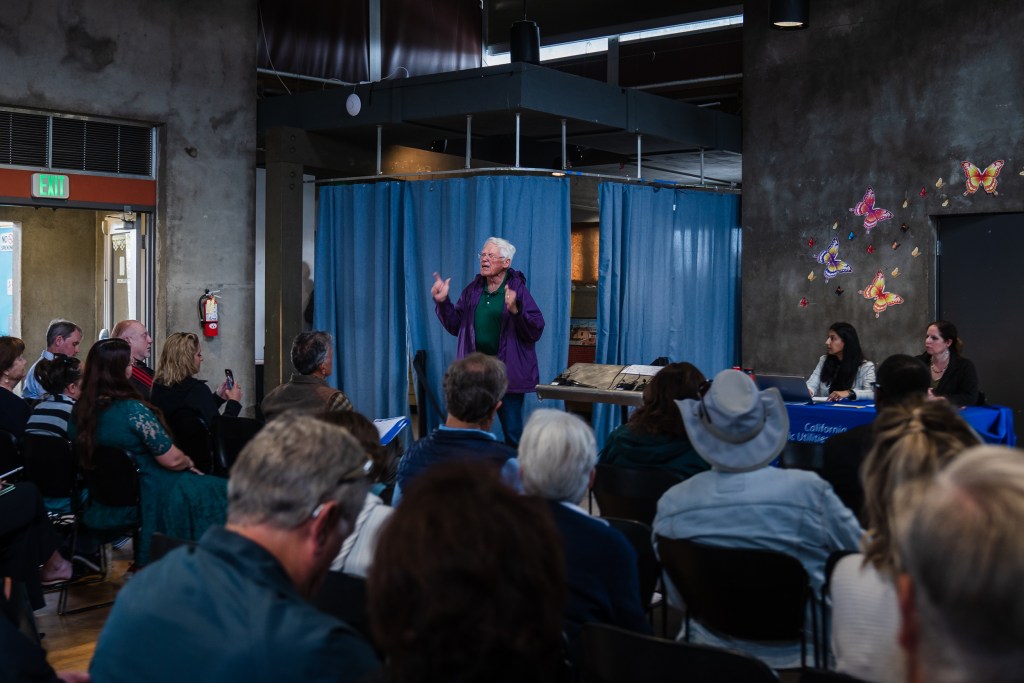 Members of the public speak at a California Public Utilities Commission public forum at Sherman Heights Community Center in Sherman Heights on March 23, 2023 about a rate hike that SDG&E is proposing to start in 2024. / Photo by Ariana Drehsler
A CCA’s governing board approves rate by vote at a public meeting. And San Diego Community Power is also not a nonprofit corporation, Lebron said, because we can’t accept donations, she said.
San Diego Community Power could create a corporation if it wants to, however. Its bylaws state that it can do so to execute energy supply and conservation programs, which would still be “public entities,” Lebron added.
“If they were going to build their own power plant, they might structure it for tax or financing reasons (as a corporation),” said Joseph Kaatz, an attorney at University of San Diego’s Energy Policy Initiatives Center.
But San Diego Community Power is also not a public utility because it doesn’t build and maintain the grid. Sacramento has one of those called Sacramento Municipal Utility District or SMUD. Citizens voted in 1923 to create SMUD which bought its local electrical grid from Pacific Gas and Electric. That took about 23 years and a state Supreme Court battle to achieve.
SMUD is like a publicly-run SDG&E, meaning it both owns and maintains Sacramento’s grid and buys all the power. Public utilities in California also have some of the lowest electric rates in the state.
But something else stumped me. SMUD’s website has a page called “company information” that describes what their “community-owned, not-for-profit electric service” provider is.
I asked SMUD to explain.
“When we sometimes use the term company, it’s to describe how we operate day-to-day – focused on reliability, innovation and customer service – not our ownership or purpose, which remain entirely public,” said Gamaliel Ortiz, a spokesperson for SMUD.
Kaatz, from the University of San Diego, said he ran a legal clinic that worked on the original framework for San Diego Community Power.
He pointed out that the city of San Diego is technically a “municipal corporation” under its city charter, Article I, “corporate powers.” The term stuck around since the 1800s when cities were defining their individual rights to self-govern outside the authority of state Legislatures.
When it comes to San Diego Community Power, he said: “I would call them a public agency that’s in the business of supplying electricity,” Kaatz said.
Load more posts
Something went wrong. Please refresh the page and/or try again.