
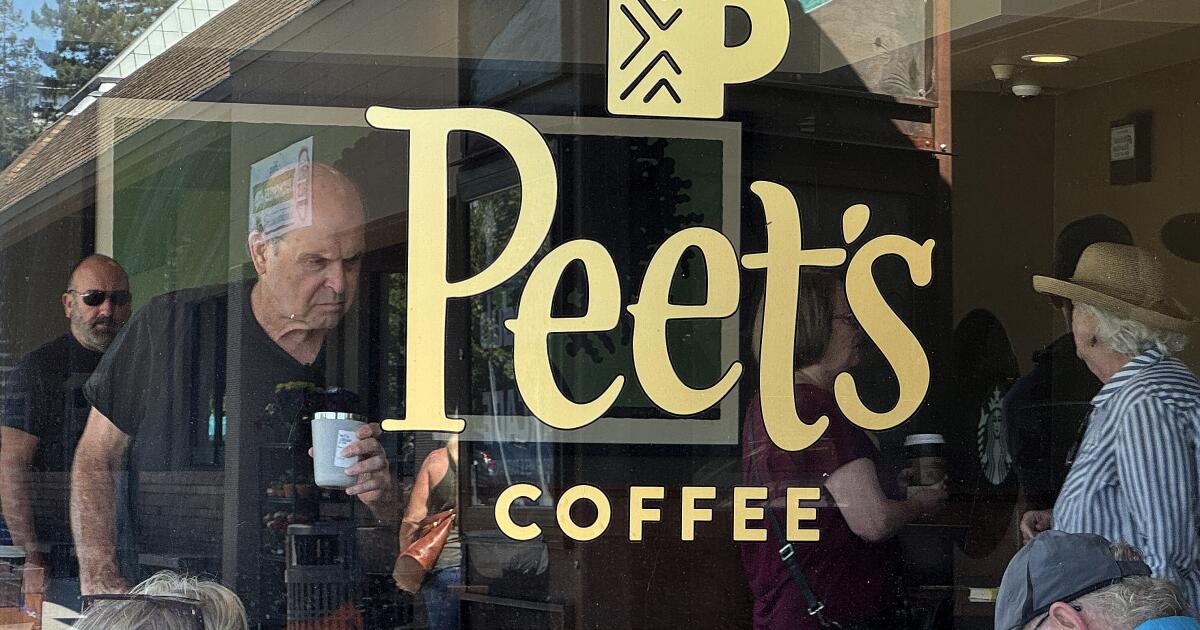
SAN FRANCISCO — Do you remember a time before carmel vanilla lattes? Before coffee presses and pour overs? Before grinding your own beans?
I do. I grew up watching my parents pour hot water over Taster’s Choice (instant) coffee crystals or, in a truly exotic gambit, brew Yuban in a percolator. It might not have tasted great, but it was simple, fast and cheap.
I thought of those times Friday as I visited the San Francisco Bay Area, epicenter of a coffee revolution in California and America. It was here on a corner in leafy north Berkeley that Dutch immigrant Alfred Henry Peet opened Peet’s Coffee, Tea & Spices, offering finely curated and freshly brewed coffee — and the raw materials to re-create the same at home.
Peet opened his original location in 1966, inspiring folks up the road in Seattle to open the first Starbucks several years later. Thus the coffee gods created a world of more discerning (some might say finicky) coffee connoisseurs, one where people now pay $5, $6 and more for a cup of liquid get-up-and-go.
That history came to mind Friday, as an estimated 27 of Peet’s 283 locations closed their doors as part of what the new corporate owners (Keurig Dr Pepper bought the chain last August) call a “challenging environment” (aka, high coffee bean prices.) The original location on the corner of Vine and Walnut streets in Berkeley remains open.
A spot where everyone knows your name
It felt more like a betrayal, or a wake, to the Peet’s regulars I visited with Friday morning in the Castro District and in Berkeley. Many came for the final day at their favorite locations, telling how they would miss a place where (apologies to TV’s “Cheers”) everyone knew their names.
When I stepped into the Castro Peet’s, on Market Street, just after 10 a.m., a group of five who have been gathering there for more than two decades were handing their favorite barista, Evelyn, a cash donation and a farewell card.
“I feel like the coffee is secondary to the experience of coming here for so many years, to have this community,” said Mark Lambert, a retired consultant. “There are a lot of other groups here too. I had people on the street come up to me almost in tears, saying ‘Did you hear the news that it’s closing?’ “
Adrienne Ferrari, a San Francisco native, called the shutdown “a stunning loss for the Castro,” adding: “People came here daily. Especially for people who don’t have family, a coffee shop takes up a lot of that same space. It’s a routine, a place for the low-level exchanges we all need that help us get through the day.”
Ferrari said Peet’s also represented Northern California’s striving for elevated dining experiences, epitomized by Berkeley’s “gourmet ghetto.” “Whether its Chez Pannise, or Peet’s or Acme Bread, it became part of our value system in this region, a reaching for excellence,” Ferrari said. “It became like a gold mine here.”
Frank Reyes, a hairstylist in the Castro, counted himself among the many regulars who appreciated the way the baristas always remembered his order. “A mocha, with Dutch, unsweetened powder, 2% milk, no foam, no whip, extra shot,” he said. “They got it, every time.
“They knew my name. I knew theirs. I will miss the community so much.”
Workers at a unionized Peet’s on Telegraph Avenue in Berkeley said they plan to challenge the closure, saying management did not meet its “legal obligation to bargain over the impacts of this closure.”
Mr. Peet was more about tea than coffee
Many no doubt wonder how Mr. Peet would view what’s become of his baby. Michael Phillips, part of the Castro klatch with Lambert, said he wasn’t sure about that. But Phillips remembered meeting the founder shortly after the Berkeley Peet’s opened. They shared a few meals, along with a larger group that included Phillips’ wife, Sonie Richardson, who recalled the coffee emigre, a German labor camp survivor who died in 2007, as “very quiet, very mild.”
And Phillips recalled something else about Mr. Peet. The entrepreneur said he opened a coffee business because he didn’t find good coffee in America. “But he also told us he didn’t really have any interest in coffee at all,” said Phillips, a retired businessman. “He was a tea broker. He said the coffee business took up 1% of his brain. The other 99% was involved with tea.”
The week’s biggest stories 
(Frank Franklin II / Associated Press)
ICE protests, arrests and attitudesMore on the Colby Mountain Fire Lookout towerYesterday morning, we shared the story of the Colby Mountain Fire Lookout. Kenny Jordan had manned the tower 41 years when the U.S. Forest Service told him they wouldn’t need him back next summer. The fate of the lookout became murkier Friday afternoon, when a U.S. Forest Service spokesperson said plans for the outpost remained undecided.Trump administration policies and reactionsMedia and entertainment newsCrime and courtsWhat else is going onMust readsOther meaty readsFor your downtime 
(Christopher Reynolds/Los Angeles Times)
Going outStaying inL.A. Timeless
A selection of the very best reads from The Times’ 143-year archive.
Have a great day, from the Essential California team
Jim Rainey, staff reporter
Hugo Martín, assistant editor, fast break desk
Kevinisha Walker, multiplatform editor
Andrew J. Campa, weekend writer
Karim Doumar, head of newsletters
How can we make this newsletter more useful? Send comments to essentialcalifornia@latimes.com. Check our top stories, topics and the latest articles on latimes.com.