
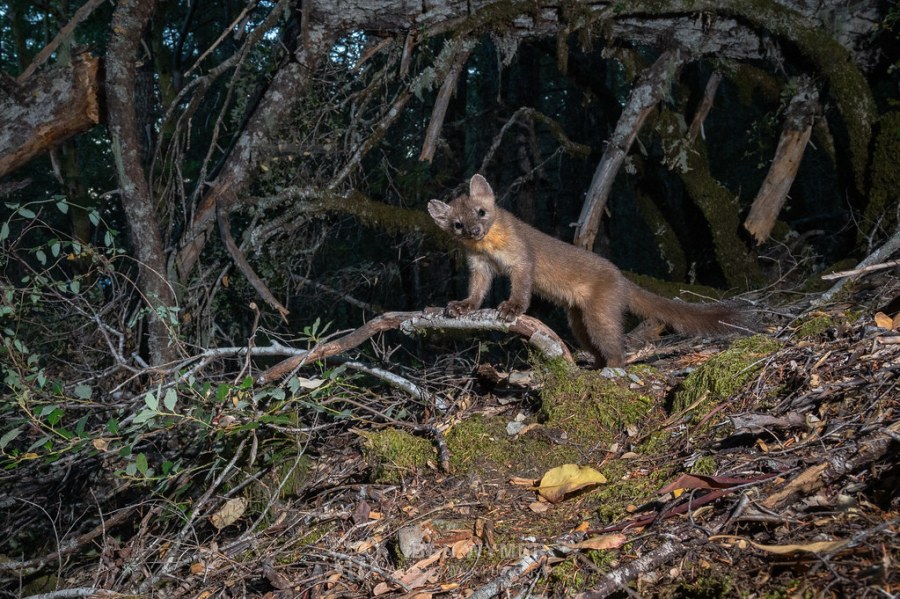
PORTLAND, Ore. (KOIN) — One of the most adorable mammals in the Pacific Northwest isn’t the beaver or wolf. It’s a soft, elusive, ferret-sized member of the weasel family known as a coastal marten or Humboldt marten.
Researchers from Oregon State University’s Institute for Natural Resources recently led a three-month survey to learn more about the marten population in Northern California. Their findings were published in the journal, Global Ecology and Conservation.
President Trump’s face is on a National Park pass. Senator Merkley wants to change that
“Coastal martens like forests with old-growth characteristics and those types of forests are being threatened by the effects of climate change, including more frequent and severe wildfire, and certain forest management practices,” said OSU Wildlife Ecologist Sean Matthews.
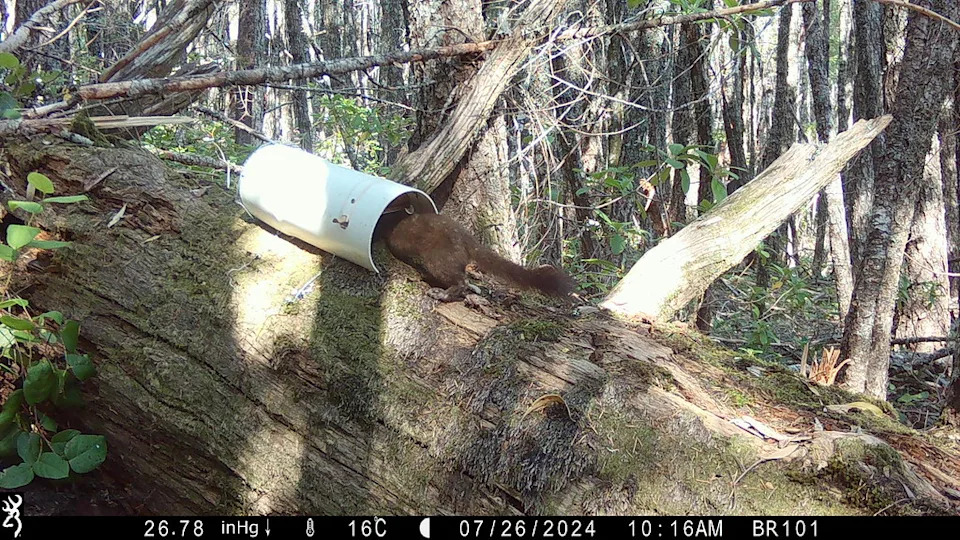
A coastal marten, also known as a Humboldt marten, is pictured by a wildlife camera inside a PVC pipe set up by Oregon State University researchers to collect a hair sample from the animal. The data collected from the hair samples help scientists better understand the size of the marten population. (Oregon State University)
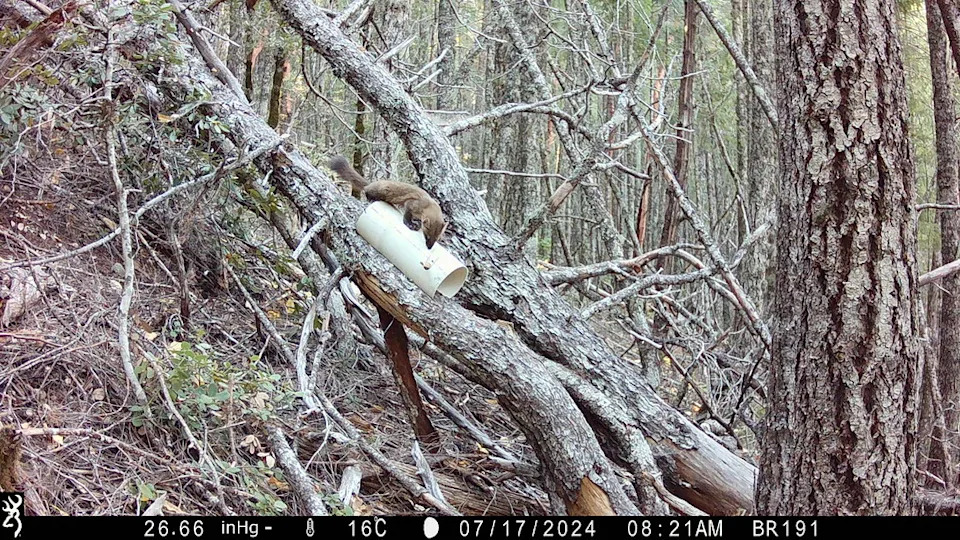
A coastal marten, also known as a Humboldt marten, is pictured by a wildlife camera inside a PVC pipe set up by Oregon State University researchers to collect a hair sample from the animal. The data collected from the hair samples help scientists better understand the size of the marten population. (Oregon State University)
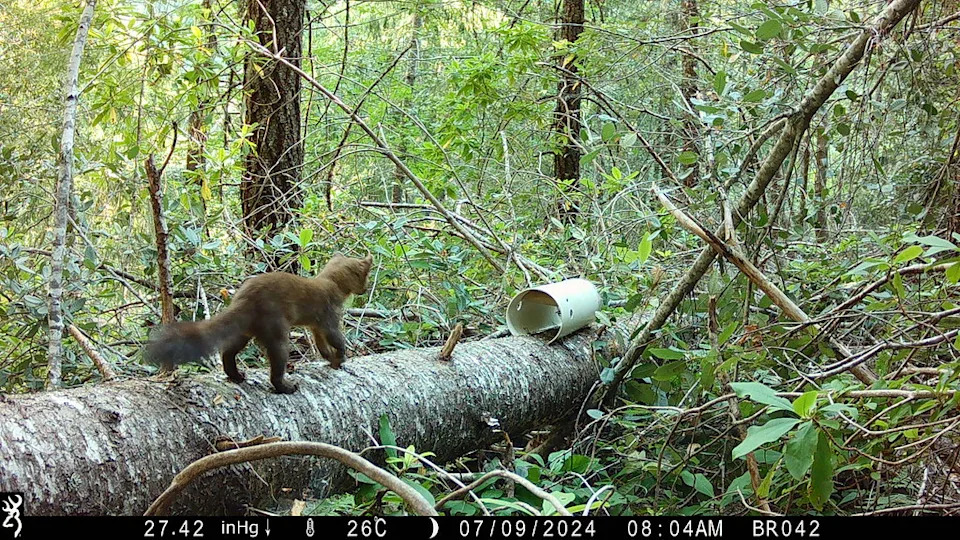
A coastal marten, also known as a Humboldt marten, is pictured by a wildlife camera inside a PVC pipe set up by Oregon State University researchers to collect a hair sample from the animal. The data collected from the hair samples help scientists better understand the size of the marten population. (Oregon State University)
“Beyond that, there’s a lot we don’t know about this species, including information as basic as what forests do coastal martens still occupy, how many martens are there, and are these populations increasing?”
The coastal marten was once common in Oregon and Northern California forests, but were driven to near-extinction by fur trappers who valued them for their soft coats. Logging practices also contributed to habitat loss, further harming the species.
In fact, the species was thought to be entirely wiped out until 1996, when a U.S. Forest Service biologist discovered a small number of them living in the woods of coastal Northern California.
The researchers from OSU found 46 different martens, including 28 males and 18 females. They were most commonly found in higher elevations along forested ridgetops with consistent snowpack, according to the report. They were also more common in lower elevations in ravines of coastal forests.
Thanks for signing up!
Watch for us in your inbox.
Subscribe Now
“Martens tend to select forest stands with greater than 50% canopy cover and lots of large-diameter trees, snags and hollow logs,” said OSU faculty research assistant Erika Anderson, who led the study.
The findings are significant because they can help inform future conservation and land management decisions.
Currently, the coastal marten is listed as threatened under the federal Endangered Species Act and remains at risk from rodenticides, vehicles, disease and habitat loss.
Copyright 2026 Nexstar Media, Inc. All rights reserved. This material may not be published, broadcast, rewritten, or redistributed.
For the latest news, weather, sports, and streaming video, head to KOIN.com.