
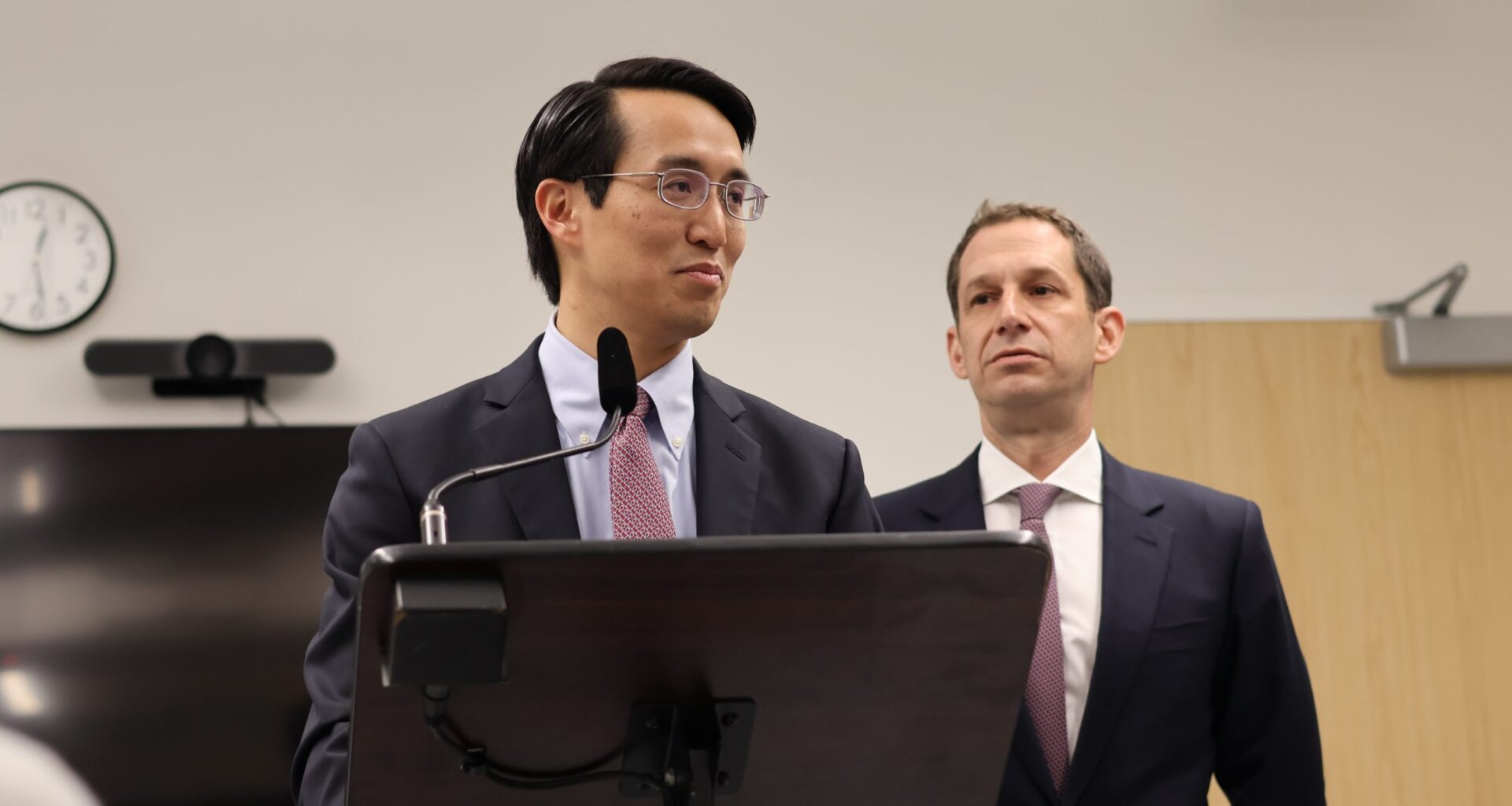
Absolutely no one was happy at the meeting of the San Francisco Health Commission on Monday evening at City Hall. Not the NICOS Chinese Health Coalition (facing a $200,000 cut). Not the San Francisco AIDS Foundation (facing an $800,000 cut). Not UCSF (potentially out $5.8 million). Definitely not Livable City (quite possibly dropped from the public health budget entirely). And definitely not the health commissioners.
“There is really no joy in any of the decisions that we’ve been trying to make,”said Department of Public Health Director Daniel Tsai to the nearly 100 people who came to make a case for reinstating their funding. “And sometimes it’s a question of what is the least difficult or least harmful decision to make.”
The two-year city budget, drawn up (mostly) by the mayor’s office and approved by the mayor and Board of Supervisors in July of last year, made it clear that cuts were coming.
Citywide, $400 million in cuts await. Last month, the public health department released a list of $17 million in planned cuts in its contracts with community-based organizations for the fiscal year 2026-27, as required by last year’s budget.
The cuts are preliminary: The Department of Public Health is taking input via email until Feb. 4, and the final list of reductions will be released in late February or early March.
The reductions proposed so far reflect the department’s desire to avoid slashing direct health and clinical services, Tsai said during Monday’s meeting.
Instead, the largest block of the reductions — $6 million — comes from cuts in funding for training programs for public health and contracted employees. That includes some programs providing training on harm reduction, gender-affirming care, sexual health and HIV care, and language access.
Speakers pushed back on the notion that these were not “direct” cuts. “Calling these reductions ‘capacity’ rather than ‘direct care’ ignores reality,” said a speaker from the HIV Advocacy Network during the public comment period. “Care is only as strong as the workforce providing it.”
“What’s really concerning about [the cuts] as well is, they’re sort of being presented as non-essential services, things that are not core to what public health is,” said Anya Worley-Ziegmann with the People’s Budget Coalition, an alliance of over a hundred community organizations and unions. Cuts like the ones proposed, she said, could affect the safety of patients and shift the city away from expanding access to health programs. “These cuts are disproportionately going to impact the most vulnerable communities in San Francisco,” Worley-Ziegmann said.
That said, Worley-Ziegmann added, blaming the Department of Public Health was too simplistic: They are only making cuts the mayor has asked them to make. “We know,” she said, “that the buck stops with the mayor at the end of the day.”