
The Abridged version:
Cities, similar to their residents, are wrangling with inflation and a higher cost of doing business.
At least nine cities and three counties across the Sacramento region faced budget difficulties last year.
Multiple local governments are turning to layoffs or retirement incentives to make ends meet.
A shuttered fire engine team. Spikes in parking fees. Layoffs of city and county workers.
The signs are subtle at first, but cities and counties across the Sacramento region are feeling the strain on their budgets and predicting tougher financial times ahead.
An analysis by Abridged found that at least nine cities and three counties in the region faced some form of budget shortfalls and structural deficits last year. Those municipalities were located across Sacramento, Placer, El Dorado and Yolo counties.
Local government budgets quietly shape the lives of people in the Sacramento region. Beyond baseline services like roads, sewer, police and fire departments, cities and counties also fund homelessness services, youth activities and economic development.
Residents may be calling on their governments to do more to address homelessness or crumbling roads, but the financial forecast is darkening for many of the region’s municipalities.
Cities turn to job cuts, increasing fees
Folsom residents have a higher median income level than Sacramento County as a whole, according to the U.S. Census Bureau. Despite that tax base and fast-growing housing developments, the city still found itself $3 million short before landing its 2025-2026 budget.
The city took one of if its five fire engine companies out of service and laid off five city staff members to balance its budget.
“Folsom has been a very prosperous city for a long time with some of the best amenities around,” City Manager Bryan Whitemyer said. “It’s become more and more expensive to maintain those. Labor costs have gone up extraordinarily.”
While Folsom has added a significant number of new homes in recent years, other neighborhoods are filled with residents who opt to stay in their homes for decades, which limits the amount that property taxes can increase, Whitemyer said. The city’s sales tax base is also stagnating due to online retailing, he said.
Sign Up for the Morning Newsletter
The Abridged morning newsletter lands in your inbox every weekday morning with the latest news from the Sacramento region.
The forecast remains dark for the city of Sacramento as well.
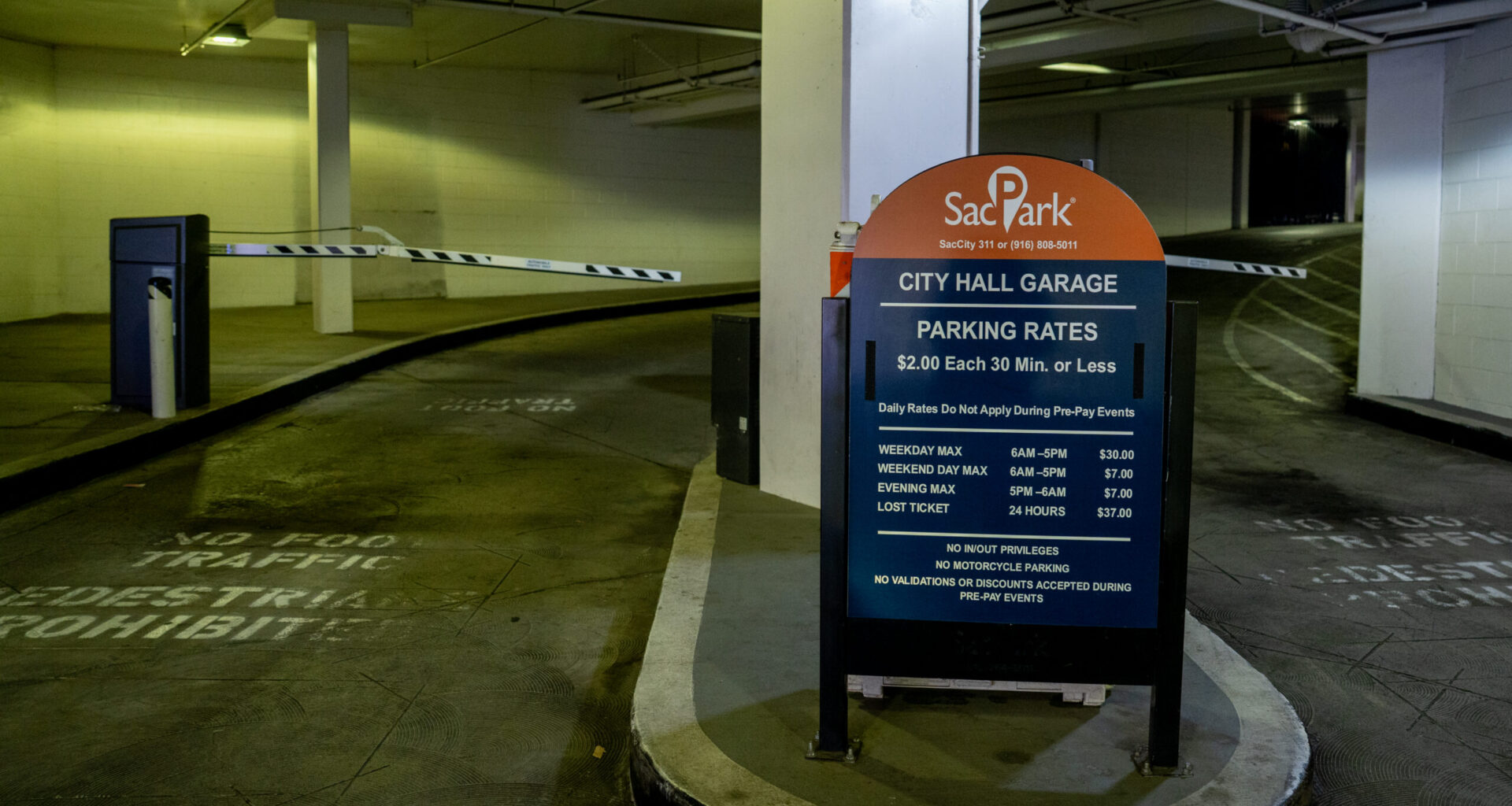
After wrangling a $62 million deficit last year, the upcoming budget is projected to have a shortfall of $66.2 million for the fiscal year that begins July 1. Last year, the city managed to get by through increasing parking fees and cutting 80 vacant positions.
“You can’t cut your way out of 60 million,” City Manager Maraskeshia Smith said. “We have to grow our economic pie. … We have to improve our tax base in order to improve our coffers.”
Smith said that as she is looking for ways to steer the city out of a structural deficit — when expenditures outweigh revenue. Everything, she said, is on the table, including layoffs. She said she is primarily looking to economic development, like incoming projects in the Railyards, to boost the city’s revenue in the coming years.
 Sacramento’s new city manager, Maraskeshia Smith, told Abridged there are going to be “hard choices” made during the upcoming budget cycle. (Tyler Bastine)
Other cities facing deficits in the last year include Davis, Lincoln, Auburn, South Lake Tahoe, Woodland and Placerville.
Isleton is once again on the brink of bankruptcy. The city has a budget of just $1.6 million but faces a looming $4.6 million in debts, according to budget documents.
Counties face dwindling reserves
Sacramento, Yolo and El Dorado counties are all facing hefty structural deficits with little relief in sight.
A $101 million deficit is projected for Sacramento County for its upcoming 2026-2027 budget. Severe cuts to federal funding, as well as increasing costs at the Sacramento County Jail and road maintenance, are set to fuel deficits for at least the next five years, according to the county.
“Without constraining budgeted expenditures, our reserves are projected to be depleted in about three years,” said Amanda Thomas, chief fiscal officer for Sacramento County, at a recent Board of Supervisors meeting.
To compensate for that, the county will have to consider cuts to its department budgets across the board. The county is also exploring local tax measures to help pay infrastructure costs.
“It is dire and it should keep you awake at night,” said Supervisor Pat Hume.
El Dorado County had to navigate a $20 million deficit when it passed the budget for the current fiscal year. To balance its budget, the county laid off 11 employees and cut 28 vacant positions.
Some 95 county workers are seeking buyouts from El Dorado County. A new program in the works offers retirement incentives of up to $2,500 per year of employment with the county. Some of the positions will be filled while others will be eliminated. The county initially approved $2 million to go toward the retirement incentives, and it is currently considering increasing that amount.
Yolo County is also in a structural deficit, with an estimated $27 million shortfall in its 2026-2027 budget. County supervisors are considering up to $15 million in budget cuts for the next year.
Why is this happening?
Cities across California, and the nation, are feeling the budget crunch.
“Just like our residents have their costs going up, costs go up for cities as well,” said Ben Triffo, legislative advocate with the League of California Cities.
Broader economic factors, such as the inflationary cost of goods and the gap between cost increases and wages, are affecting cities as well, Triffo said.
“Year over year costs are rising, but revenue is flattening,” he said. “You’re going to have that gap.”
About 55% of cities across the nation said they felt “less able” to balance their budgets in 2026, according to a survey by the National League of Cities, a considerable increase from just four years ago, when just 11% voiced similar concerns.
Cities are largely fueled by sales taxes and property taxes. As more residents turn to online shopping and local storefronts go empty, cities are seeing their sales tax revenue stagnate.
Cities like Folsom don’t have any Amazon warehouses within the city limits, so the city misses out on the sales tax of the products its residents are purchasing, Whitemyer said.
“As our population has grown, the amount of sales tax has not actually changed,” he said.
Fast-growing cities continue to prosper
Local suburban cities like Elk Grove, Rancho Cordova and Roseville have often topped the state’s list of fastest growing cities. In turn, those cities’ budgets also are faring better.
Rancho Cordova has had an operating surplus every year since the city incorporated 22 years ago, said Kim Juran-Karageogiou, the city’s administrative services director.
“That’s definitely not something we take lightly,” Juran-Karageogiou said. “It comes through a lot of careful planning.”
Property taxes fuel much of that surplus, she said. The city also has two of its own local sales tax measures that help line city coffers as well.
The outlook for the city remains optimistic, as its housing stock continues to grow and a new city center and arena, dubbed “Downtown Dova,” are underway.
Felicia Alvarez is a reporter at Abridged covering accountability. She’s called Sacramento home since 2015 and has reported on government, health care and breaking news topics for both local and national news outlets.