
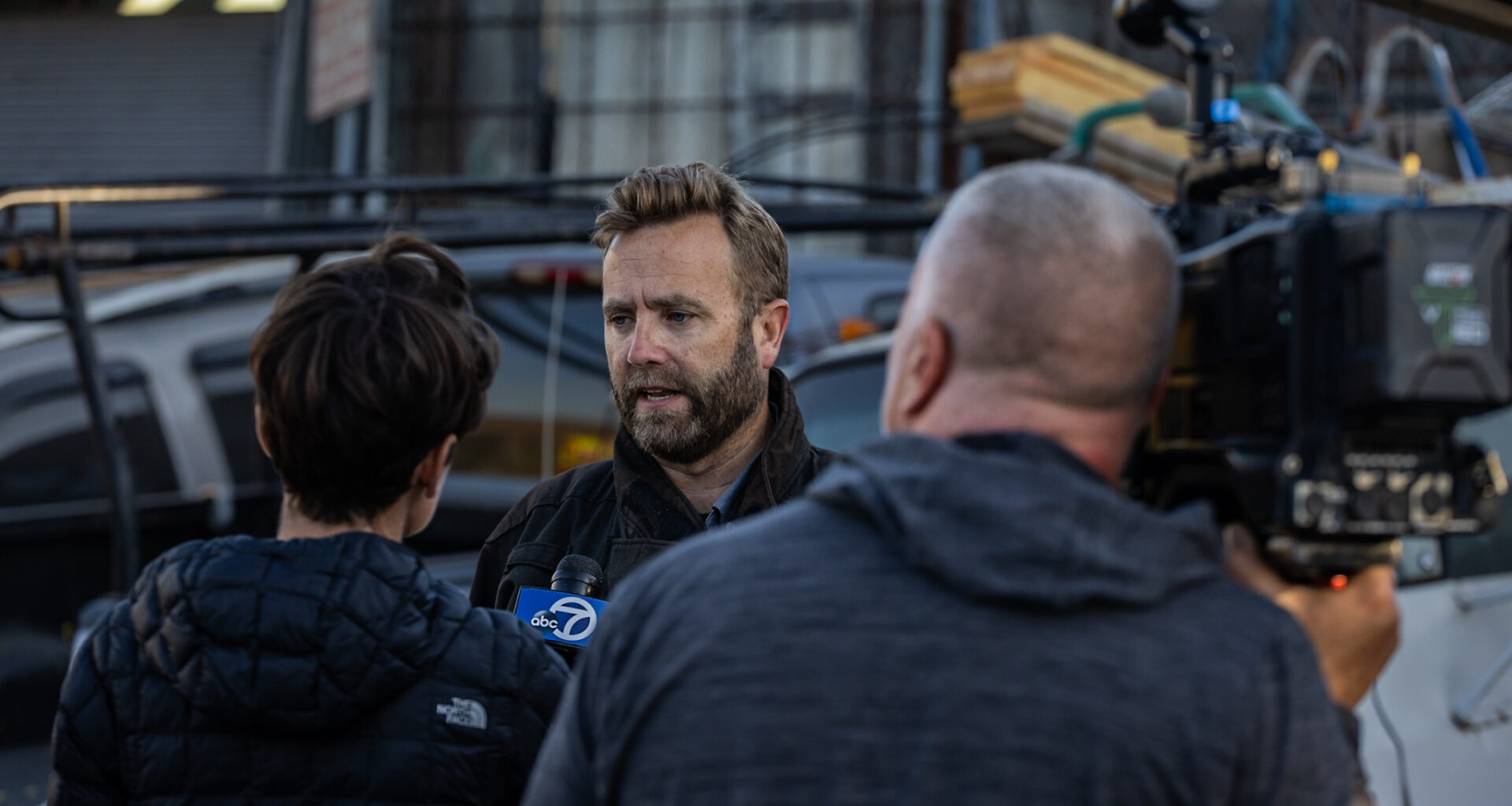
To report on city government, journalists at The Oaklandside often need documents, data, and information from city agencies — and to serve our readers, we need them to answer our questions promptly. Oftentimes, our first stop is an agency’s public information officer. Some are ready to be of service to the public and get answers to our questions right away. Some seem to see their job as protecting their agency by stonewalling our requests.
To be fair, this can be part of a communications professional’s role, especially during a crisis. But for too many PIOs, it becomes the main focus — slowing down the press when we’re seeking factual information to share with the public. They become gatekeepers, blocking the press and the public from learning about the operations of their government and its elected or appointed leaders.
Some PIOs work differently, embodying the spirit of public service and transparency that better serves the people they work for. Michael Hunt, the chief of staff and spokesperson for the Oakland Fire Department since 2019, has a track record of working this way.
“I think some people embrace an adversarial relationship that doesn’t need to be there,” he said about running communications for a large government agency. “I think people sometimes forget that this is a two-way street.”
Hunt amassed 12 years of experience in local and national communications before joining OFD. He previously worked for former mayors Ron Dellums and Libby Schaaf, as well as former City Council President Ignacio De La Fuente. He also served as communications director for the Iowa Democratic Party during former President Barack Obama’s reelection campaign.
“He has deep knowledge about the city because he has worked under various mayoral administrations,” said Azucena Rasilla, The Oaklandside’s arts and community reporter.
In recent years, Oaklandside reporters have contacted Hunt for a wide range of stories, including the 2024 Keller Fire, the long-anticipated Vegetation Management Plan, the reopening of three firehouses, a series of suspicious fires along Interstate 580, illegal fireworks extravaganzas, and a sit-down interview with Fire Chief Damon Covington.
Hunt has also provided our reporters with unusual access during breaking stories.
While driving in West Oakland several years ago, news editor Darwin BondGraham recalled seeing a plume of black smoke arising from the Wood Street homeless encampment. When he arrived at the scene, he saw unhoused residents scrambling to save their belongings as firefighters doused flames on the timbers of an old railroad trestle.
That’s when BondGraham said Hunt spotted him and immediately began sharing what he knew about the fire. Ushering him beneath the police tape, Hunt walked BondGraham through the origins of the blaze and how firefighters extinguished it.
“I never felt like we were walking in an unsafe area, but the behind-the-lines access and the candor were exemplary,” BondGraham said.
In an interview with The Oaklandside, Hunt said he prioritizes being prompt and responsive.
“I think of myself as on-call 24/7, especially working for an agency that responds to calls all day, all night, 365 days a year,” he said.
One reason the newsroom has appreciated Hunt’s approach is his willingness to pick up the phone. Many PIOs communicate almost exclusively over email. Hunt readily makes and takes calls from reporters, an old-school approach that makes newsgathering faster and more accurate.
Beyond responding to media inquiries, Hunt manages the fire department’s Facebook, Instagram, and Twitter accounts. He regularly posts photos and videos of firefighters hosing down a burning building or engaging with families at community events, and provides detailed summaries of incidents to which OFD and MACRO have responded.
“It’s a really compelling way to show the day-to-day activity of this hardworking, dedicated, and busy fire department,” he said.
“He’s organic in conversations, and texts anecdotes that may or may not be relevant to the reporting,” said Natalie Orenstein, who covers housing, homelessness, and City Hall for The Oaklandside.
Hunt’s approach to the job, embracing transparency, stands in contrast to the experience reporters often have with other spokespeople.
It’s not uncommon for our emails and phone calls to go unanswered. That’s why readers will sometimes see language in our stories noting that an official or government agency “didn’t respond.” (In breaking news situations where a PIO may be fielding lots of calls or has not had enough time to get back to us, we’ll often write that they didn’t “immediately respond.”)
In other cases, responses arrive on time but contain vague written statements that fail to answer specific questions and instead parrot irrelevant talking points. Recently, some of the most frequent offenders have been tech companies and agencies within the U.S. Department of Homeland Security.
Another troubling practice occurs when we request interviews with government officials, only to be told by a PIO that the official will not speak to the media. Instead, the PIO sends a written statement attributed not to the official, but to an unnamed “spokesperson” for the agency.
The result is that no one takes responsibility for the information or position being presented.
Asked why this happens, Hunt said some PIOs misunderstand the role of the press or view journalists as adversaries.
That relationship, Hunt said, also means holding each other to account. Just as journalists press PIOs for answers, PIOs should let reporters know when inaccurate or incomplete information is provided to the public.
“You have a responsibility to hold them accountable the way they have a responsibility to hold your department accountable,” he said.
Hunt’s advice to fellow PIOs: Proactively establish a good working relationship with reporters. Don’t just reach out when there’s breaking news, and don’t wait for journalists to call before providing information. Pitching stories, he said, can boost credibility and help journalists churn out better, more well-rounded stories.
“There should be a shared understanding of the best way to work together,” he said.
Hunt also brings a sense of humanity to his role. Over the years, Hunt has brought his son Myles, now 6, to fires and other events, giving him a firsthand look at the work Oakland firefighters do.
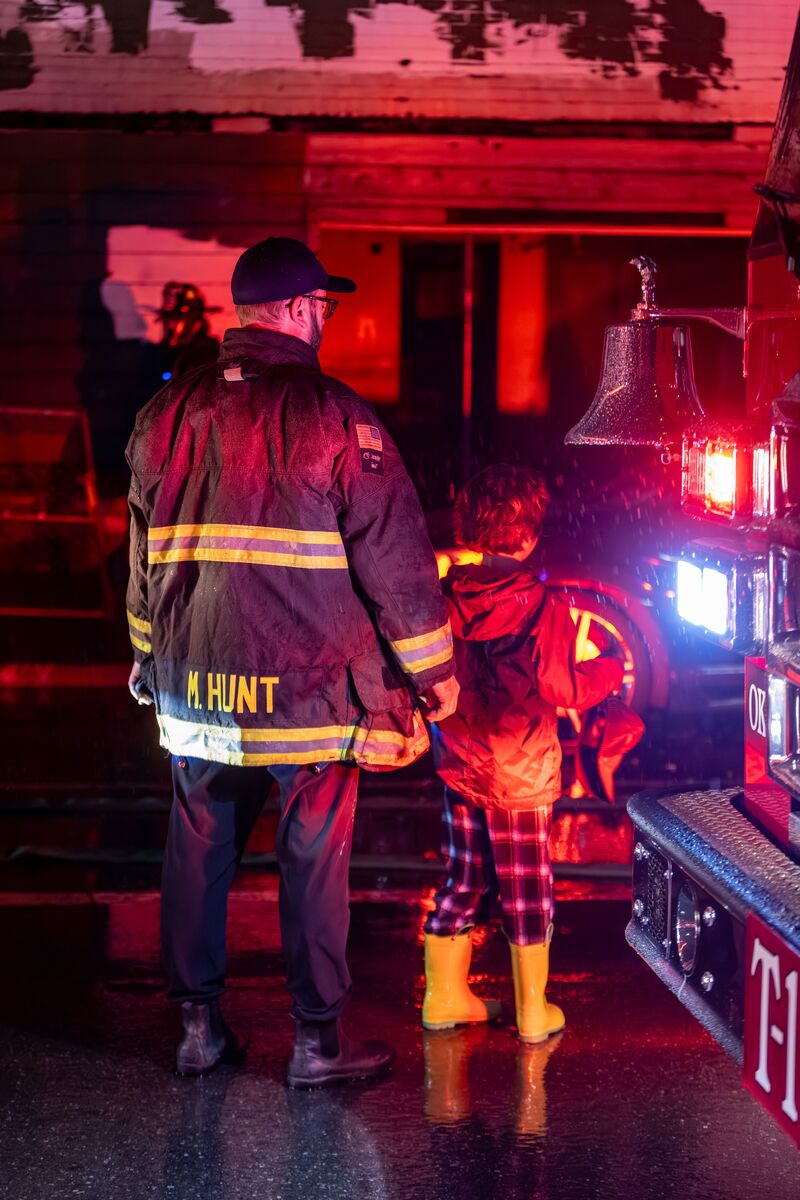 Hunt, left, and his son Myles observe Oakland firefighters respond to a two-alarm fire on West Grand Avenue on Friday, Jan. 2, 2026. Credit: Oakland Fire Department photo archive
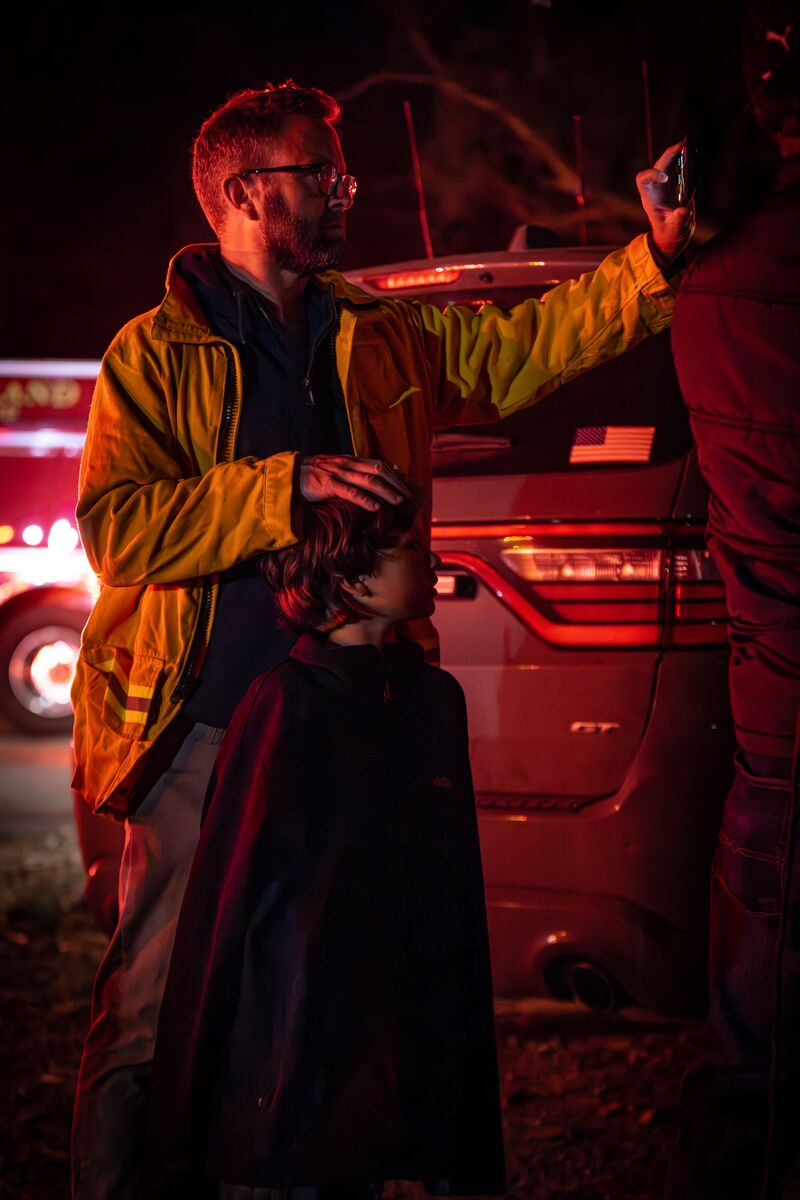 Hunt and his son Myles observe a press briefing about a three-alarm fire in the East Bay Regional Parks District off Skyline Boulevard in May 2025. Credit: Oakland Fire Department photo archive
Hunt said his approach to his job reflects his love for the Town.
“I feel uniquely privileged to work in the city that I love, that I live in, that I’m raising my son in, and that I will probably die in,” he said. “When people are like, ‘What’s next?’ I’m like, ‘Nothing, this is it. I wouldn’t do this job anywhere else.’”
“*” indicates required fields