
What’s at stake:
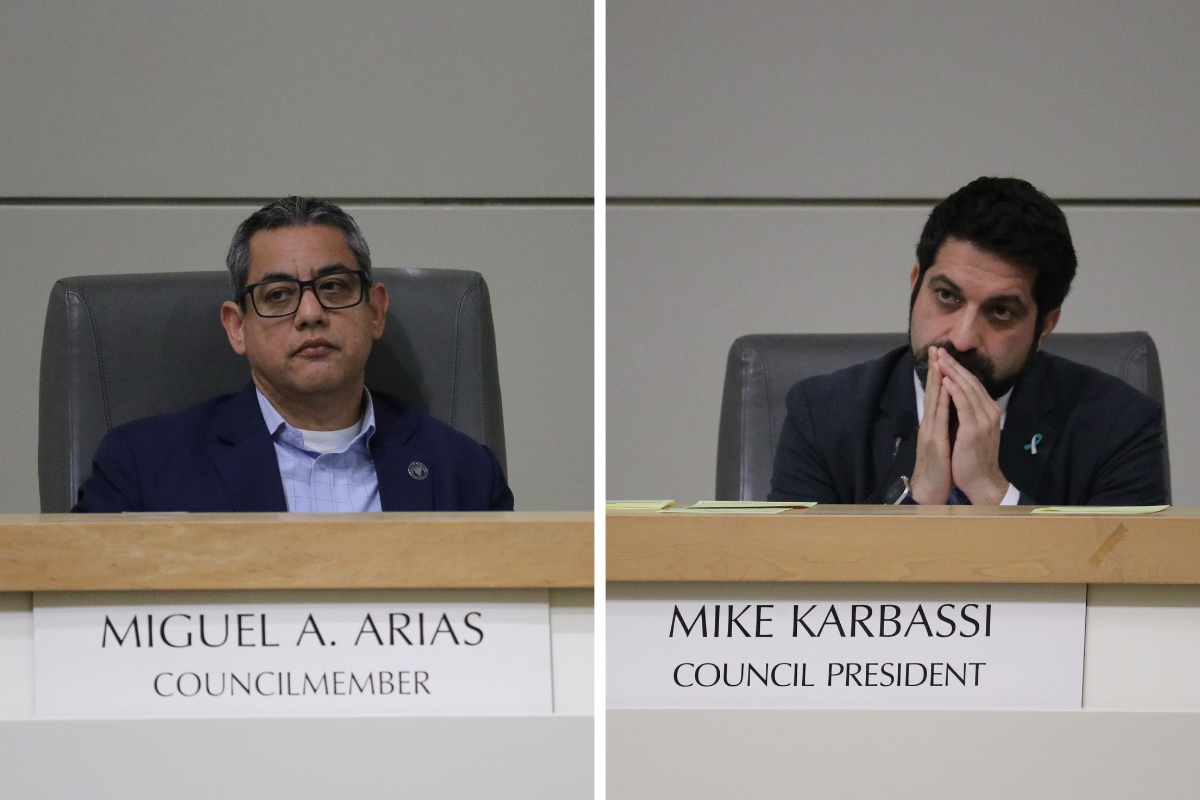
About 22 days after Fresnoland exposed transparency and accountability issues in the City of Fresno’s contracting process, the Fresno City Council moved forward with major reforms. However, that didn’t happen before some city officials challenged the reforms, including City Council President Mike Karbassi who suggested limiting their scope.
Want to dig deeper into Fresnoland’s investigation and its fallout? Join Fresnoland for a conversation next Thursday, Feb. 12 at 6:30 p.m. at Tioga-Sequoia Beer Garden. Register to attend here.
The City of Fresno is on track to be more transparent with the public than ever before regarding the dozens of contracts worth $100,000 or less that officials hand out each year.
Additionally, city leaders officially closed a “loophole” in city contracting laws when the Fresno City Council unanimously approved a set of reforms brought forward by Councilmember Miguel Arias at the Jan. 29 city council meeting.
Both actions took place less than a month after a Jan. 7 Fresnoland investigation revealed that city leaders, for years, have handed out millions in contracts worth $100,000 or less with no oversight.
Since those contracts aren’t subject to city council approval, the public doesn’t know how many city officials have handed out over the years — one of the many findings in Fresnoland’s investigation.
“I think this action today closes the loophole that some people chose to create that was outside of the intent of this governing body,” said Arias, who has credited Fresnoland’s investigation for spurring him and other city leaders to act. “It provides clear direction on what the intent is for all departments in the city, not just the city council.”
Now, the Fresno City Clerk’s Office has until Feb. 28 to come up with a plan to create an online transparency portal listing most no-bid contracts that city leaders hand out to contractors and consultants — including those exempt from city council approval and, effectively, public disclosure.
Additionally, Arias’ proposal closes what he has referred to as a “loophole” in city policy — the same one that allowed former Fresno Councilmember Luis Chavez to use $26,000 in taxpayer money on Facebook ads in 2023, and another $31,000 on more Facebook ads in the months leading up to the November 2024 election. At the time back then, Chavez was running for a county supervisor seat — a campaign he ended up winning.
Councilmember Brandon Vang co-sponsored Arias’ item, and said with more transparency, the city could lighten the number of public records requests that the Fresno City Attorney’s Office is showered with every day — especially if the city is making contracts available in a user-friendly webpage.
“This discussion came about because it took Fresnoland eight months to go through the City Attorney’s Office to get some records,” Vang said, adding that it shouldn’t take that long to obtain city records.
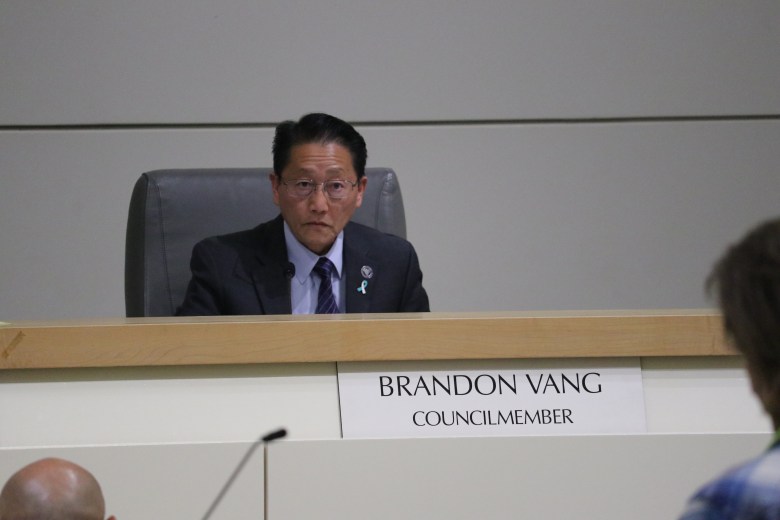 Councilmember Brandon Vang listens to public comment at a Jan. 29 city council meeting. He co-sponsored Councilmember Miguel Arias’ proposal to reform the City of Fresno’s transparency with contracts. Omar Rashad | Fresnoland
Why some city leaders objected to some of the reforms
Although the Fresno City Council unanimously approved Arias’ proposal for reforms, it didn’t happen without a few tweaks and arguments along the way, with some city leaders resisting the idea of limiting their private spending power.
During a noisy debate at the last city council meeting in January, Fresno City Manager Georgeanne White said she supports increasing transparency. She noted the “really, really good” example at the City of San Diego and its online lists of consultant contracts going back more than a decade — an example prominently featured in Fresnoland’s investigation.
Earlier at the meeting, White also acknowledged the City of Fresno’s online contracts database is not “user-friendly.” However, she said her office wouldn’t be able to make a new transparency portal for the City of Fresno in 30 days — which Arias had initially proposed.
Some councilmembers noted that the city administration was getting ready for mid-year budget review, and that a one-month timeline would be hard to work with.
“While I do believe this resolution should be a priority, to me it is not currently the highest priority next to other projects that have kind of come before,” said Councilmember Nelson Esparza. “So, I support this, but to me, it’d be ideal if we did remove those timelines.”
Arias amended his proposal to instead require the Fresno City Clerk to take on creating a new transparency portal, instead of the City Manager’s Office. He also agreed to let the City Clerk provide a plan for a transparency portal within a month, instead of requiring it be up and running during that time.
Fresno City Council President Mike Karbassi also appeared to have reservations about the reforms. He complained that Arias’ proposal came in response to what he described as “media” pressure.
“It’s not responding to public pressure, it’s media,” Karbassi said from the dais. “Just want to be clear about that.”
Karbassi, for years, has co-hosted a podcast with local real estate developer Darius Assemi, who owns local media site GV Wire.
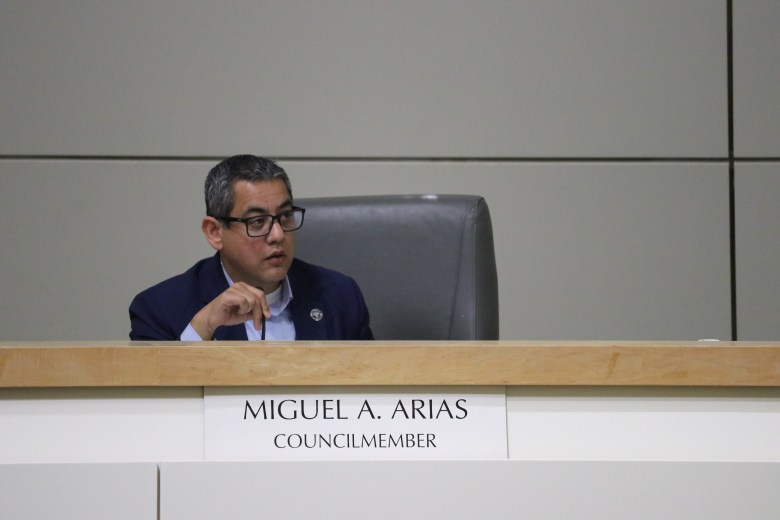 Councilmember Miguel Arias came forward with a proposal to reform the City of Fresno’s transparency with city contracts. Omar Rashad | Fresnoland
At another point during the conversation at last week’s city council meeting, Karbassi asked Arias whether he would be open to excluding the city’s administration from the increased transparency, and just limiting it to the Fresno City Council.
“Can we limit this provision to council offices and consultant contracts?” Karbassi asked Arias. “That’s the root of the issue — where the media scrutiny came from.”
“No, councilmember,” Arias said, interrupting Karbassi. “When we create rules, we create rules for all departments.”
“No one was questioning — see, this is why I wanted a committee to review this,” Karbassi countered, referring to his proposal for a private committee to come up with policy revisions behind closed doors.
A few minutes later, Arias called for the item to be voted on, which the council passed unanimously.
However, the version of the proposal that the council approved wasn’t exactly what Arias promised it would be. On Jan. 23, he told Fresnoland that it would bar the city’s administration from entering into more than one contract worth $100,000 or less with the same consultant, regardless of scope of work.
His proposal did not have that in writing. It also didn’t include what Arias referred to as a blackout provision — barring city electeds from using taxpayer money for print or digital advertisements six months before an election they’re participating in.
Additionally, Arias initially told Fresnoland his proposal would apply to all no-bid contracts, but his proposal limits it to contracts worth less than $100,000. That wouldn’t include agreements like the $100,000 contracts that Chavez awarded to a company run by political consultant Alex Tavlian for Facebook ads during an election year.
“I do believe this is a first step to the goal of every single contract in the city being available in a searchable feature,” Arias told Fresnoland in a brief interview last week.
Additionally, Arias said he plans to bring more revisions to city policy moving forward. Right now, he said, things are headed in the right direction.
“I just didn’t want to further delay approval of this policy, especially because we’re in the budget development process now,” Arias said. “I don’t want to let a whole budget cycle to go by without very clear indication to the administration … on what we expect for contracts that don’t go out for bid.”
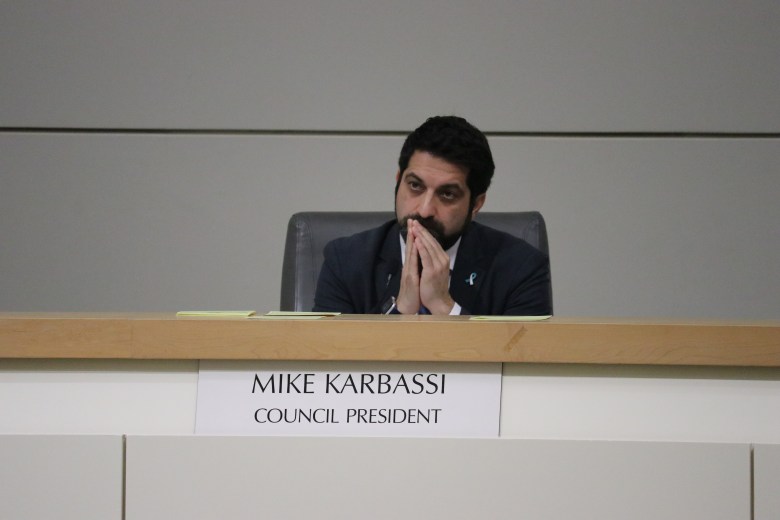 Fresno City Council President Mike Karbassi questioned why Councilmember Miguel Arias was bringing forward reforms, and whether it was because of “pressure” from the media. He also led the creation of a private committee charged with revising city policies and bringing forward recommendations to the Fresno City Council. Omar Rashad | Fresnoland
Community members object to private city council policy review committee
Before the Fresno City Council approved Arias’ proposal for reforms, it also approved Karbassi’s private, ad-hoc committee tasked with revising city policies.
Karbassi will be on the committee, along with councilmembers Brandon Vang and Nick Richardson. He previously told Fresnoland that it wouldn’t “be productive” for the committee to meet in public.
At times, Karbassi has said his proposal would create a standing committee — different from a temporary, ad-hoc committee — for the purpose of revising city policies. He did so just two days before the Jan. 29 city council meeting on the GV Wire podcast. All standing committees created by local governments have to be held in public, and are subject to California’s Brown Act.
At the city council meeting last week, City Attorney Andrew Janz noted general concern he had about the committee’s role and the policy work it’d be tasked with completing.
“My initial recommendation would be to make sure that if you’re having those conversations, they be in a public setting,” Janz said at last week’s council meeting. “I’m really concerned about Brown Act issues around this process. So just, just as long as those take place in public meetings.”
The City of Fresno is currently getting sued for allegedly violating California’s Brown Act for at least five years. The lawsuit, filed by the ACLU of Northern California and the First Amendment Coalition, was sparked by a separate 2023 Fresnoland investigation into the City of Fresno’s budget process.
During public comment, three Fresno residents also shared concern about the committee meeting in private, and not including any community members. One person said she wanted to know how Karbassi was going to include communities across California’s fifth largest city in making policy revisions that affect Fresnans.
Additionally, she questioned whether it makes sense for a committee to do policy work behind the scenes that the public would only get a glimpse of the same day the Fresno City Council considers it.
“We don’t want to come in at the last minute and you have it on the agenda and you tell us, ‘Oh, this is what we passed. This is what we did,’” the community member said during public comment. “We can’t be involved if we’re not involved from the beginning. So we want to know how you’re going to do that.”
Kristina Holmes-McIntyre, another Fresno resident who spoke during public comment, also criticized the ad-hoc committee and shared how frustrated she has become with major city policies being passed without any public discussion because they’re listed on the city council meeting’s consent agenda.
The consent agenda at city council meetings regularly include more than two dozen items on it, which regularly get approved with a single vote.
“I have serious concerns that Mike Karbassi has the ability to lead such a committee, and I really urge this board to look at that,” Holmes-McIntyre said. “I’m completely frustrated that these types of policies are being passed on consent agenda with no discussion from the community. That is not transparency.”
Related