
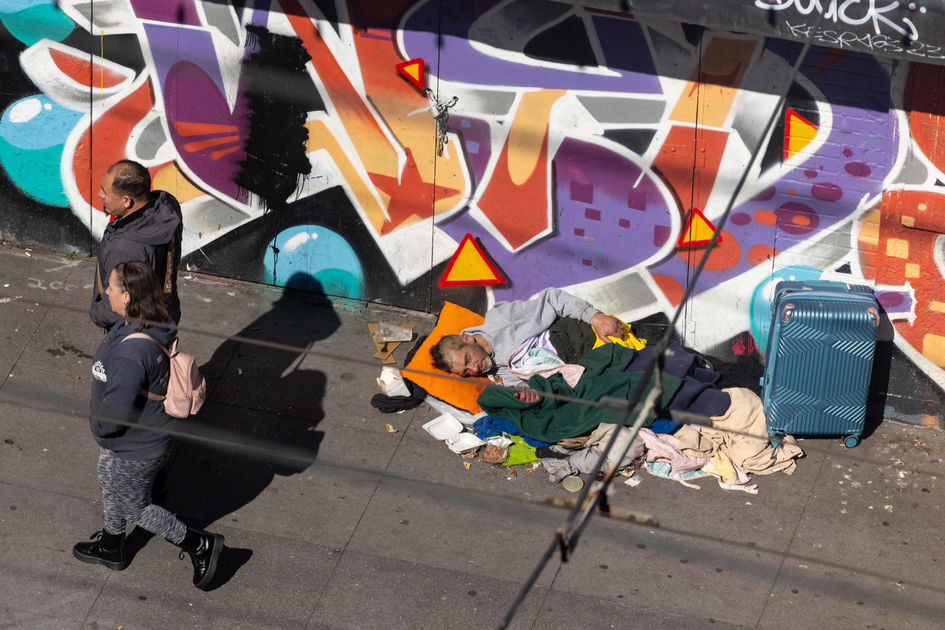
With Super Bowl 60 just days away, San Francisco is preparing for scores of unhoused people to enter the Mission.
Lydia Bransten, executive director of the nonprofit The Gubbio Project on Julian Street, said the city authorized funding for her organization to provide emergency nighttime shelter between Feb. 2 and Feb. 8.
The Gubbio Project, which usually operates only as a daytime shelter, is offering 80 beds and 14 chairs each night after 5 p.m. It also offers connections to drug treatment as well as homemade fettuccine alfredo and hot apple cider. Bransten said the amount of funding the city will provide has not been finalized.
“This is a step in the right direction,” she said. “We know people get moved during these big events, and the city has never been prepared to triage.”
Though city officials have not announced any special sweep of unhoused people or drug activity from downtown, the additional beds indicate that they anticipate migration. Bransten says it has already begun, with 67 people staying at her nonprofit’s shelter Monday night — about 30% of whom she had never seen before.
“If you walk along Mission Street, there’s a lot of new faces,” Bransten said. “The people who are here now have self-moved.”
When the Bay Area hosted the Super Bowl in 2016, San Francisco tried to tuck its homelessness crisis out of sight. City workers swept unhoused people and drug users away from downtown, inadvertently creating a “tent city (opens in new tab)” on Division Street.
The strategy backfired. Protestors hoisted tents outside the Ferry Building, decrying the city’s crackdown and cursing Mayor Ed Lee. The story gained momentum, even beyond (opens in new tab) the local press, and put the city’s crisis in the national spotlight.
Ten years later, enforcement is more consistent. One police source said there’s no need for a big crackdown because regular sweeps have become the law of the land.
Lukas Illa of the Coalition on Homelessness agreed.
“We’re in the forever sweep,” he said, citing the impact of the Supreme Court’s 2024 Grants Pass decision, which allowed cities to enforce anti-camping laws. “This has allowed every jurisdiction in the country to criminalize people living on the streets.”
Even before Grants Pass, the San Francisco Police Department was arresting people for drug use under Mayor London Breed, who took a tough-on-crime turn as the 2024 election approached. Harm reduction, a philosophy based on treating drug users with compassion, went out of vogue. The city’s approach to drugs and homelessness became more enforcement-oriented before Mayor Daniel Lurie was inaugurated and he is continuing the trend, to the dismay of homeless advocates.
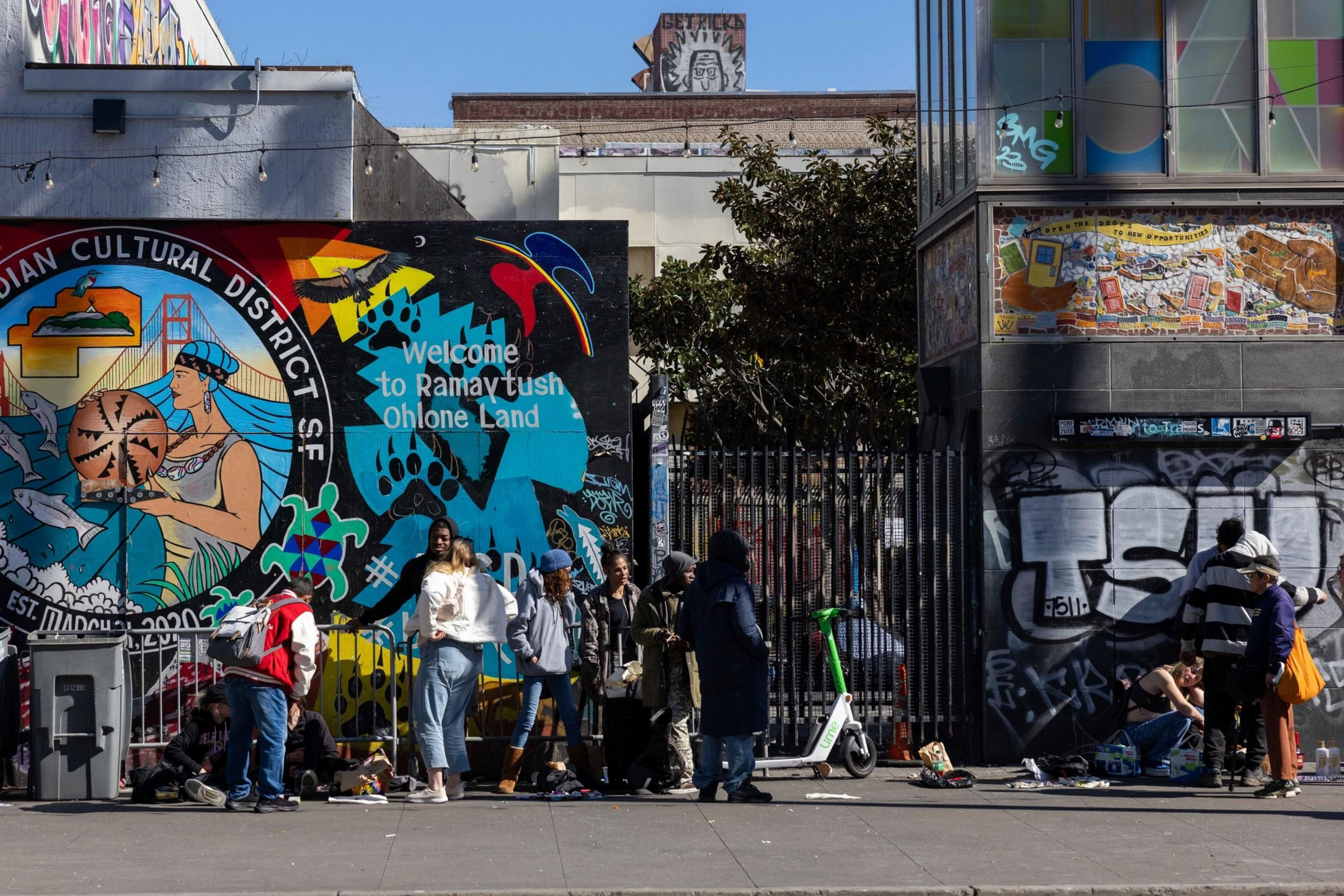 People stand around a bus stop near 16th and Mission streets. | Source: Amanda Andrade-Rhoades/The Standard
But that doesn’t mean Super Bowl week will be business as usual for the city’s homeless residents. Illa said he’d heard from people who are proactively moving away from downtown, anticipating more enforcement.
“By the city’s own admission through its funding and its choice to open a shelter, there is going to be an increase,” Illa said.
Lurie spokesperson Charles Lutvak countered by saying the mayor’s office has conducted regular outreach work for a year and plans to continue.
“I don’t understand the assumption of a crackdown or sweep,” Lutvak said. He did not explicitly say there will not be a crackdown or sweep.
Jackie Thornhill, a spokesperson for the Department of Emergency Management, echoed the message of continued investment, saying the city’s work to bring people indoors is ongoing and unchanged.
“We are leveraging existing shelter capacity and flexible resources across the system: interfaith winter shelters remain active, and the city works daily to maximize available placements under existing contracts,” Thornhill said in a statement. “The message is simple: Help is available, and today is a good day to come inside.”
The SFPD did not respond to a request for comment.