
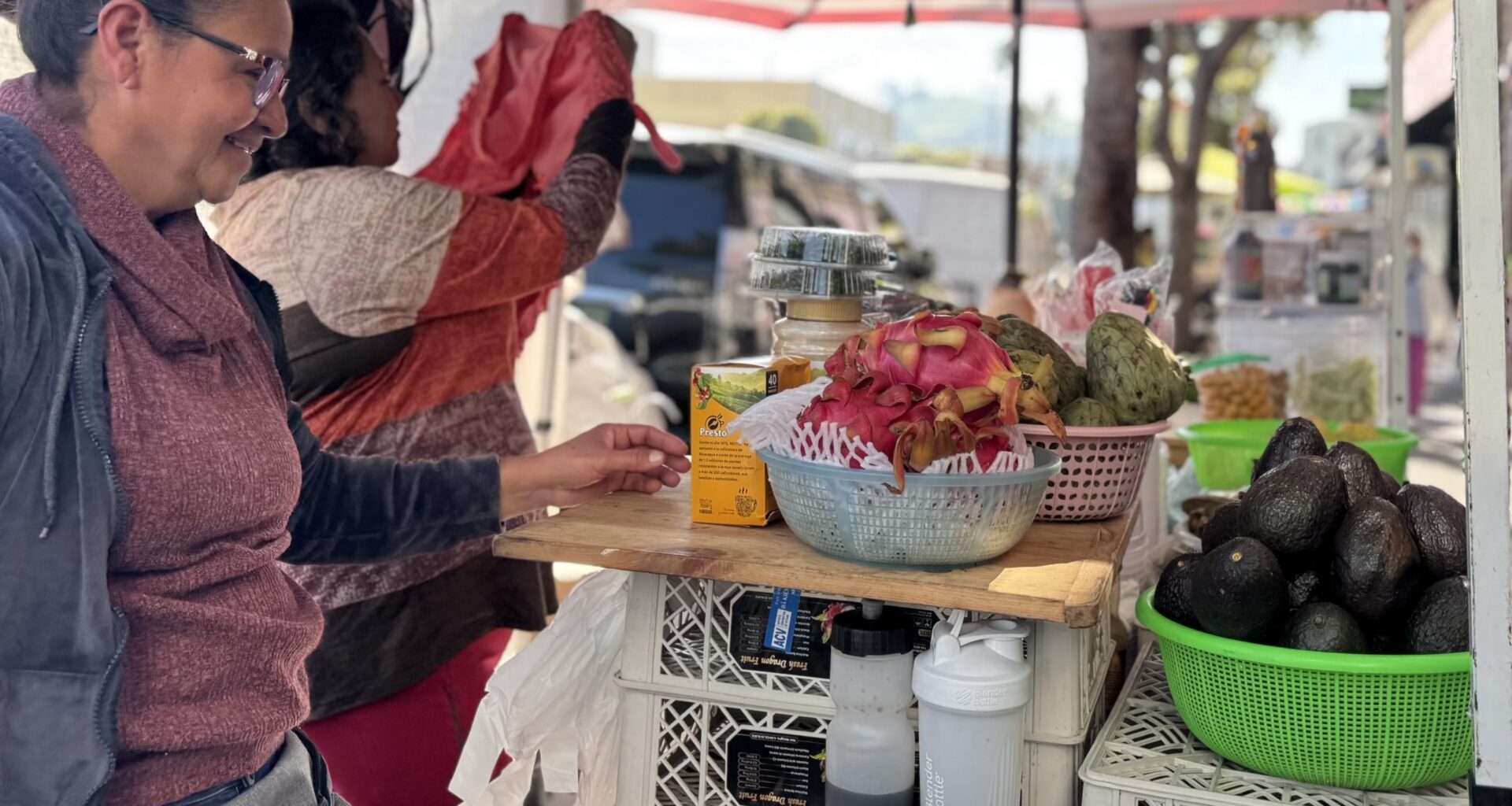
Mission District street food vendors say new regulations drafted by the Department of Public Health could run them out of business.
“Our community is already living with so much uncertainty, costs have risen and our stability is fragile,” said Rosi Villanueva, in Spanish. Villanueva was one of two dozen street food vendors who gathered on Tuesday for a rally at the 24th Street BART station.
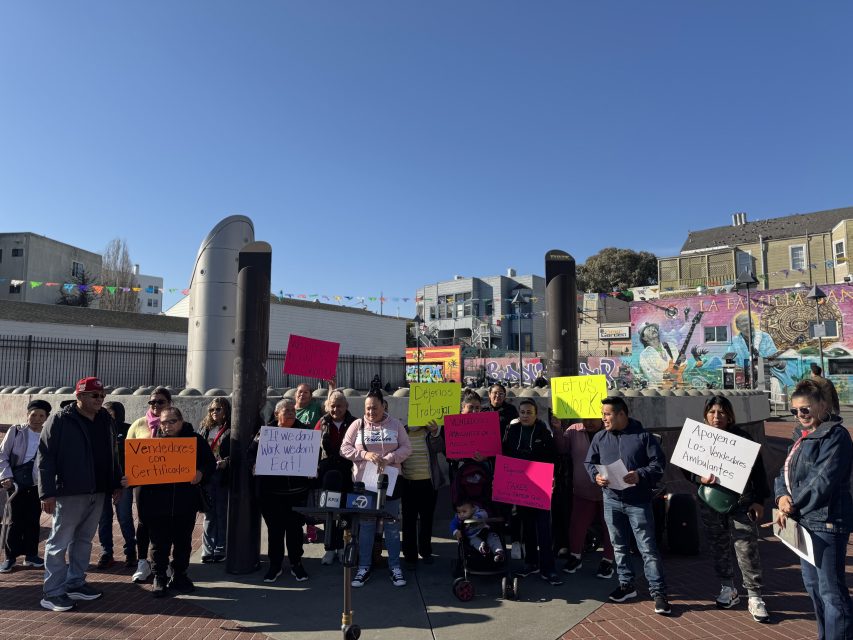 Food street vendors are asking the city to adopt programs to support them as city leaders discuss a new ordinance. Photo by Oscar Palma.
The new regulations were prompted by state legislation that passed in 2022, SB 972, which essentially decriminalized food vending in California. The law was meant to bring street food vendors — many of whom are immigrants — out of the shadows and into a position where they could operate openly as permitted food vendors.
Although SB 972 went into effect three years ago, San Francisco is only now putting in place regulations to come into compliance.
But the new regulations, Mission District vendors said, will cost them thousands of dollars. The most costly changes include obtaining a pushcart with a washing station and doing most cooking at a certified commissary kitchen. Vendors estimated those additions alone would cost as much as $40,000.
Villanueva, who sells snacks at 24th and Mission, said her profit margins were too small to afford such changes. “The carts they’re asking for are too expensive,” said Villanueva. “We just don’t have the resources.”
Villanueva and the other vendors took over a section of the southwest 24th Street BART plaza on Tuesday morning ahead of a meeting on Wednesday during which the Department of Public Health will present the new regulations to the Board of Supervisors budget and finance committee.
“We need collaboration and certainty right now. We need answers,” said Andrea Guirola, in Spanish. “We need the support from the city. We need the support from BART and any other organization willing to help us because we contribute to the economy of this country.”
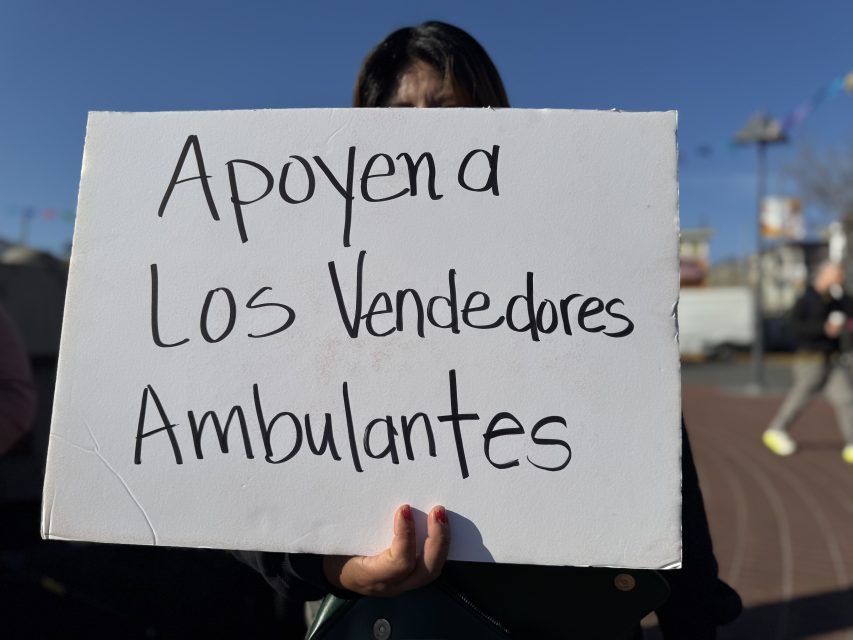 Solinda Parraga, who sells fruit at 16th and Mission, at a demonstration on Tuesday morning. Photo by Oscar Palma.
At the rally, street food vendors said that they do not oppose regulation, and have followed previous standards for obtaining vending permits. Instead, they are asking the city to adopt a different plan that would allow residents to do small scale food operations from their own homes rather than a commissary kitchen.
Nearby counties like Santa Cruz, Monterrey, Santa Clara, Sonoma, Alameda, San Mateo and Contra Costa counties follow the plan, known as the Microenterprise Home Kitchen Operations (MEHKO).
That microenterprise plan would allow vendors to comply with state law, without significant new expenses. There is a way for vendors to get a permit under that system, while still using a home kitchen.
“MEHKO is actually a part of the state plan,” said Leila Ovando, from Nuestra Causa, a Mission District nonprofit that works on political education and civic engagement.
At the rally, vendors also called on city leaders for financial support to help street food vendors comply with the new regulations. An example to follow, they said, is the city of Los Angeles. After adopting its ordinance, Los Angeles launched a $2.8 million dollar vending cart program designed to help street vendors obtain new carts.
The Board of Supervisors budget and finance committee will hear from the Department of Public Health and the public on Wednesday, leading up to a committee vote on the proposed regulations on Feb. 11. The full Board of Supervisors is expected to vote on the regulations late this month or early March.