
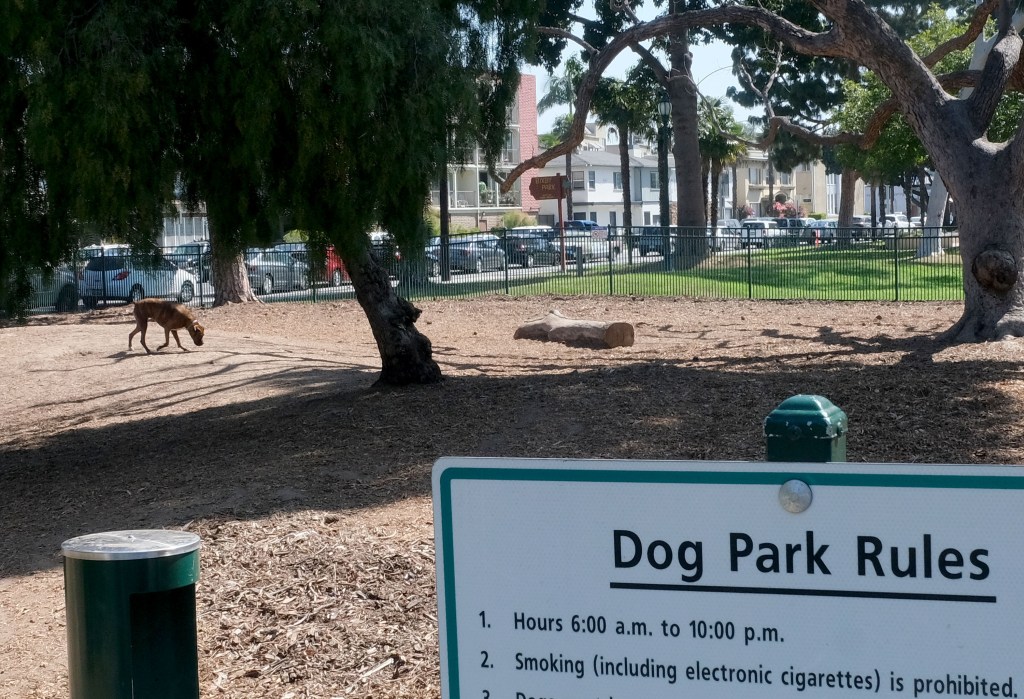
Long Beach officials want to identify additional locations to create new dog parks in downtown and citywide to meet the growing need for such spaces in the community.
The City Council directed staffers during its Tuesday, Feb. 3, meeting to look at the city’s process for designating a new dog park, evaluating the current dog park areas and finding opportunities to meet the growing need of the community.
“It’s no secret that Long Beach is a dog city; we value our dogs and see them as an important part of our community,” First District Councilmember Mary Zendejas said. “Having spaces where they can exercise, play and socialize is important.”
Long Beach opened its first dog park at Recreation Park in 1996. In 2012, the City Council approved the first comprehensive policy request that resulted in establishing the current Dog Leash Required Ordinance and subsequent dog park regulations, according to a staff report.
But it has been more than a decade, officials said, since the council has assessed potential locations and guidelines for future dog parks — with one exception: In 2023, the council directed city staffers to identify potential sites for a second dog beach, an effort that is currently in the planning stages. (Rosie’s Dog Beach is currently the only such place along the water.)
Today, the city has 11 dog parks – including El Dorado Park Dog Park, Coolidge Dog Park and Wrigley Heights Dog Park – and has more than 27,000 dog-licensed households, according to the staff report. Nationwide data shows that more than 40% of U.S. households own at least one dog, while off-leash areas are the fastest-growing segment of green space.
Pet ownership is increasing from previous years and with that, comes a demand and need for more pet-friendly city amenities, officials said. Dog parks offer a controlled and safe environment for pups to exercise, socialize and be off-leash. These settings often serve as conduits for creating safe spaces, building shared purpose and generating social capital.
There is also a trending cultural shift that indicates pets are perceived as life companions and family members, Zendejas said, and that these spaces are needed in high-density areas such as downtown.
“Unfortunately, for a long time, our city has experienced challenges in urban green space planning,” Zendejas said. “In District 1, specifically, our neighborhoods lack green spaces for recreation and environmental purposes. That means that for many years, dog parks have been an afterthought in the planning process.”
Councilmembers intend to meet the needs of the community across the city as well.
“It’s an opportunity for all of us to learn more about what needs to be done in order to bring about new dog parks in Long Beach,” Fifth District Councilmember Megan Kerr said. “We’ve expressed interest in District 5 in the past three years about what that would look like. And I think the thing I’m most excited about with this item is to come up with parameters that work for all districts.”
Councilmember Cindy Allen, who represents District 2, also asked staffers to look for low infrastructure options for additional locations so that the city could expand dog parks in a practical, efficient and equitable way.
The city’s Parks, Recreation and Marine Strategic Plan has already set out a goal to study the needs of the Long Beach dog park community in order to ensure public spaces are opportunities for connection, learning and movement. The plan also says it will identify how to enhance existing dog facilities and expand safety education opportunities.
Long Beach has also recently qualified for regional park funding and city staffers are planning to bring a new five-year infrastructure plan, which will include parks, to the City Council later this year, City Manager Tom Modica said.
City staffers will return to the council with a presentation on the dog park designation municipal process, including an evaluation of the current number of dog parks and future opportunities for additional locations, within 120 days.