
Even as the Oakland school board faces down a massive operating deficit this year, the district will also present a multimillion-dollar capital plan for its facilities, from upgrading schools to building housing or other revenue-generating operations.
This month, the district’s facilities department is expected to present a draft of its facilities master plan, a document produced every five to 10 years that assesses each of the district’s properties, analyzes enrollment trends and other demographics, and identifies maintenance and modernization needs. That plan will lay the groundwork for the district’s next facilities bond, which could appear on the ballot in 2028.
The most recent facilities master plan, published in 2020, identified more than $3 billion in facilities and maintenance needs across the district’s 108 sites. A subsequent bond, Measure Y, approved by voters that November, raised $735 million. Those dollars have been directed to repairs across the district as well as major renovations at McClymonds High School ($91 million), Roosevelt Middle School ($90.5 million), Garfield Elementary ($56.7 million), Coliseum College Prep Academy ($55 million) and the central administration building ($62 million — over the $57 million budgeted). The bond has also funded smaller-dollar upgrades at campuses for lead abatement, turf field replacement, and the installation of solar panels.
The new facilities master plan will inform the district’s maintenance and offer a road map for the district’s facilities. The goal of the vacant property analysis is that by June, the board will be able to make decisions about the long-term use of OUSD properties.
Languishing facilities
At the same time, OUSD is moving forward with a process to explore uses for several of its vacant properties — some of which have sat empty for years and have become cost sinkholes as they suffer from fires and vandalism.
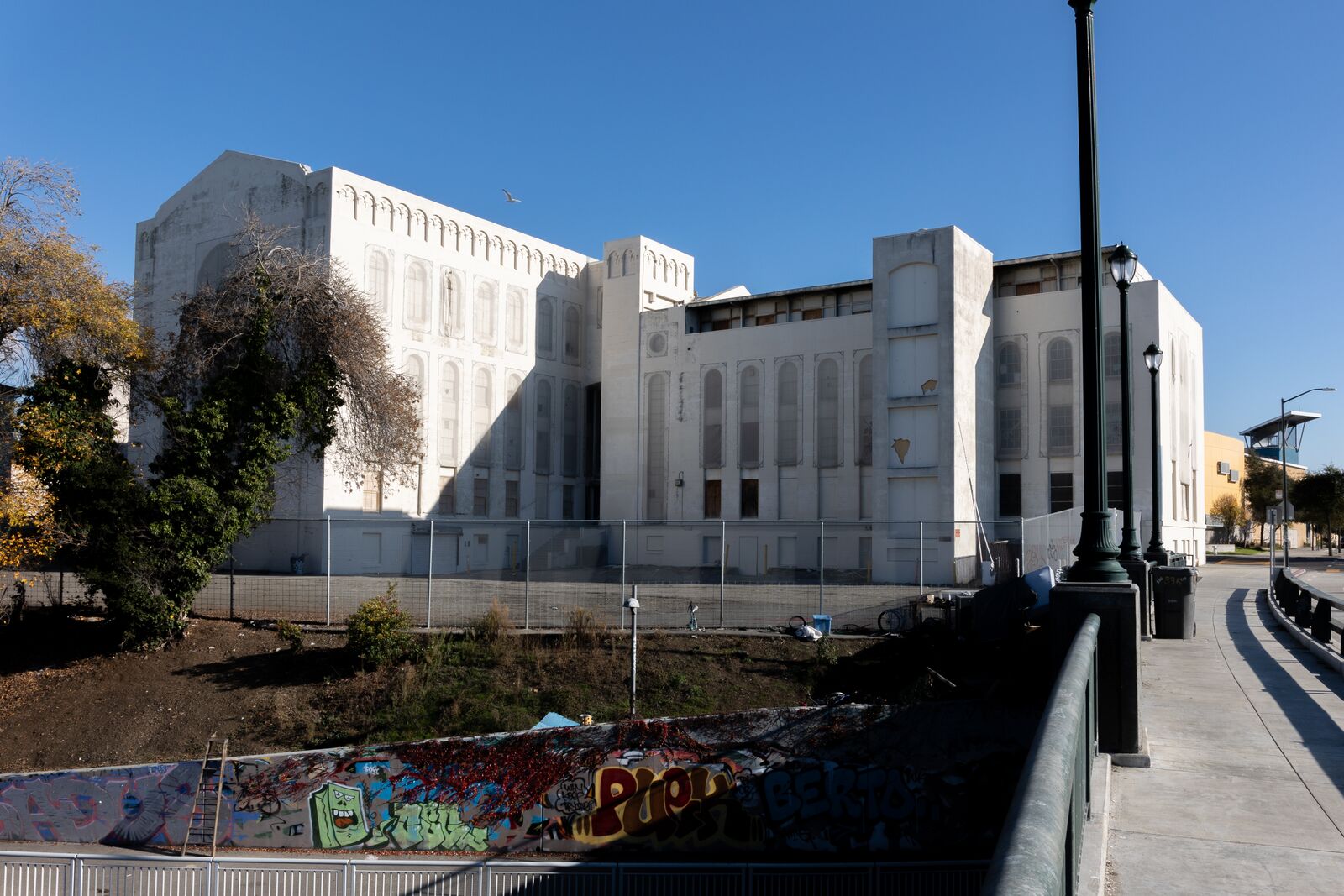 OUSD’s former headquarters at 1025 2nd Avenue has been vacant since it flooded in 2013. Credit: Amir Aziz/The Oaklandside
“Especially in these times, there’s lots of interest in helping the district get back to fiscal solvency,” said Sele Nadel-Hayes, the executive director of facilities construction in OUSD. “Finding ways to generate revenue is really important. The specific ways to do that, and the road to making a space revenue-generating, is different for all of our assets.”
Three of the district’s properties, the former Ralph J. Bunche Academy in West Oakland, the Lakeview campus near the northeast corner of Lake Merritt, and OUSD’s former headquarters at the southeast corner of Lake Merritt, are undergoing district feasibility studies to determine whether they would be suitable for workforce housing, affordable housing, or a resource center for foster youth and those aging out of the foster care system.
As the sites sit empty, OUSD has had to spend money on buildings and grounds staff to keep the buildings secure and clean up broken glass and other blight, staff told the board last year. Ralph Bunche, a West Oakland school that went up in flames in October, could cost $4 million to demolish, but it would save the district ongoing costs of $40,000 per year in maintenance. The 100-plus year old building at 1025 2nd Ave. could cost $15 million in bond funding to demolish — or $108 million to rehab.
A new headquarters waiting to be filled
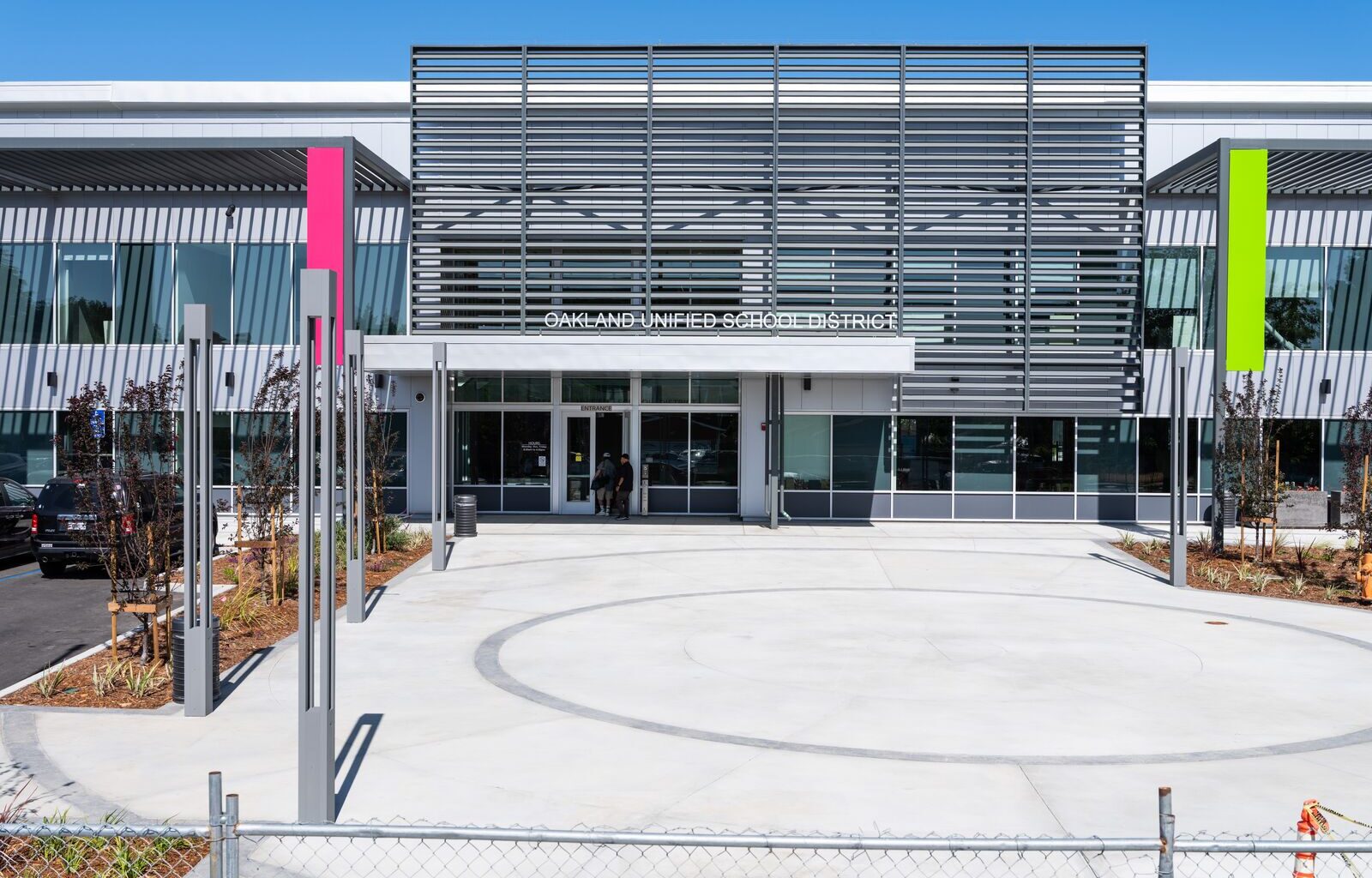
Last spring, the district completed construction on its new district headquarters in West Oakland, the Dr. Marcus A. Foster Leadership Center, around the same time it became clear that the district was facing a mounting deficit that would require deep cuts to central office staff. The second floor houses several of the district’s central office departments, including the superintendent’s office, communications, human resources, the office of equity, the legal department, and the charter schools office. But the first floor remains unoccupied and unfinished.
The district’s original headquarters, at 1025 2nd Ave., flooded in 2013. After that, staff moved temporarily to the former Cole Middle School in West Oakland and then to rented downtown offices at 1000 Broadway. Measure Y included a $50 million allocation to revamp Cole Middle School into the new headquarters, but several months after voters approved the measure, the school board voted to pursue a cheaper plan, one that would have central office staff dispersed in unused space at schools across the district. Facilities staff estimated that plan would cost about $20 million. Two months after that vote, in June 2021, the board again reversed itself and went with the full headquarters build at the Cole campus.
Central office construction cost about $62 million, including $7 million for planning for the planning phase, $50 million for construction, and an additional $5 million that was pulled from a Measure Y contingency fund for soil remediation.
At the time the school board was planning its Measure Y projects, some community members pushed back against such a big budget project that would not directly serve OUSD students.
“The sitting committee of the CBOC” — the Citizen Bond Oversight Committee — “back when they decided to do the project, was not in favor of spending previous bond dollars on an administration building when there’s such great need across the district for school facilities to be renovated,” said Andrea Dawson, a member of the committee, an appointed group of Oakland residents who oversee the district’s bond projects and spending.
Nadel-Hayes, the facilities director, sees it differently.
“Part of the story is also, how do we actually invest in all the people that support Oakland students to be successful?” she said. “There’s a lot of folks from different bargaining units who all deserve to have a place to work, and it does have an impact on the culture of the district and the sustainability of the work, especially in times like this where there’s a lot of upheaval.”
Since the headquarters was completed, the CBOC has been pushing district officials to move forward with utilizing the first floor space, which is empty. Potential uses are currently being evaluated, according to Preston Thomas, OUSD’s chief systems and operations officer.
“*” indicates required fields