
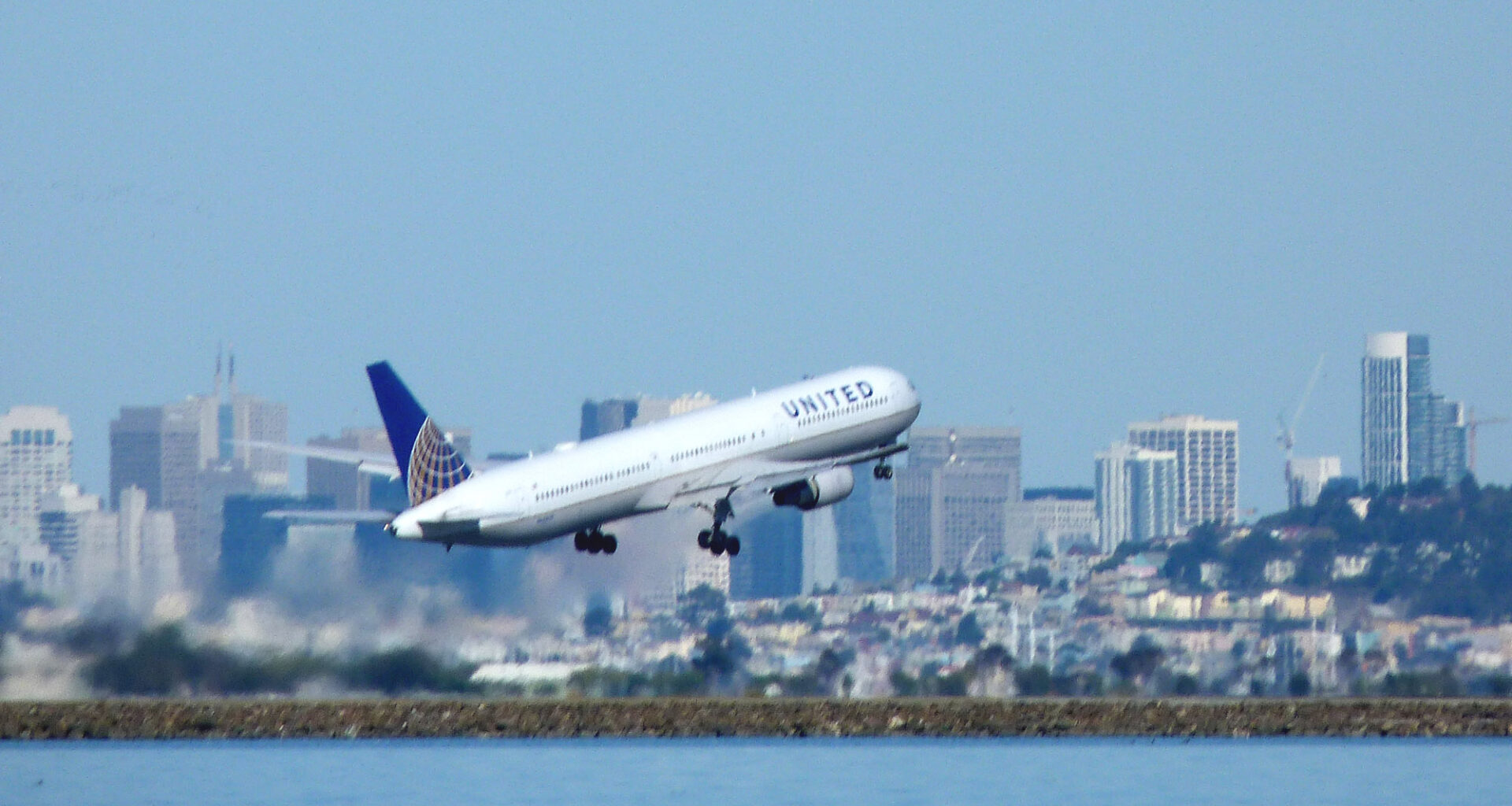
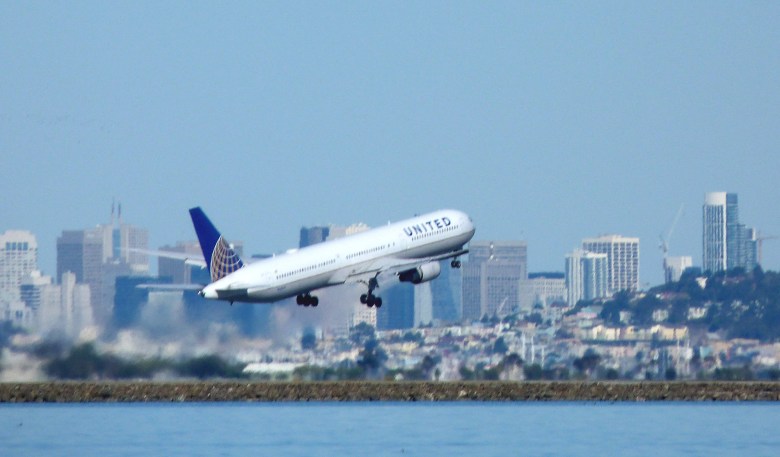
 San Francisco International Airport. Photo by Bill Larkins; obtained via Wikimedia Commons under Creative Commons Attribution-Share Alike 2.0 Generic license.
San Francisco will proceed with its airline development plan for SFO after rejecting an appeal on Tuesday from the city of Palo Alto, which argued that issues like noise and air quality were not appropriately accounted for during the environmental review process.
SFO is by far the busiest airport in the Bay Area, and three routes for arriving planes fly directly over Palo Alto. The Recommended Airport Development Plan imagines an improved airport experience that would enhance the existing terminals and landside facilities such as boarding areas and the AirTrain connections to parking and public transportation. The RADP operates under the assumption that airport traffic will increase with or without the improvements, eventually reaching a capacity of 71.1 million passengers and 506,000 flights each year.
San Francisco and SFO officials have maintained that the RADP will not induce traffic or change flight paths, the latter of which is under federal jurisdiction.
But Palo Alto argued, albeit unsuccessfully, that the plan’s environmental review “inadequately addresses environmental impacts such as noise and air quality due to its reliance on future growth assumptions rather than current conditions,” according to a staff update on the city’s website.
“Palo Alto would much prefer to devote its energy toward a collaborative resolution with SFO over its noise and other environmental concerns, including permanent, continuous noise monitoring in Palo Alto and implementation of limited reasonable (and realistic) operational changes to mitigate noise impacts suffered by Palo Alto residents,” the city’s attorney Rick Jarvis wrote in a Jan. 23 letter to the San Francisco Board of Supervisors.
Jarvis argued on behalf of Palo Alto that not only would the RADP induce greater demand at SFO, but that the required environmental review failed to properly analyze the subsequent increase in noise and air pollution.
The claim leans heavily on the 2015 Federal Aviation Administration NextGen initiative, which consolidated flight paths near the airport and sparked a barrage of noise and pollution complaints from Palo Alto residents and officials.
“Obviously, there’s some existing noise issues we want solved, but this plan exacerbates those existing noise issues, and we are legitimately, under (the California Environmental Quality Act), asking for those to be addressed,” Jarvis said at the hearing.
Before the Board of Supervisors on Tuesday, Jarvis focused much of the case on the baseline year that San Francisco was using in the environmental report to measure changes in airport noise and pollution. The environmental report did not adequately justify using 2045 as a baseline, which assumes the airport is operating at the maximum capacity of 506,000 annual flights, he said.
But representatives from SFO and the San Francisco Planning Department said they didn’t need to because the change from the baseline is zero, as the RADP will not cause any increase in air traffic.
“Regardless of which baseline you choose, we’ve clearly explained what the project’s effect would be with regard to aircraft and that effect, the emissions that would result, is zero,” San Francisco Environmental Review Officer Lisa Gibson told the board. “I think they’re kind of grasping at something here and overcomplicating.”
In response to the Jan. 23 letter, Gibson wrote that Palo Alto’s claims are unsubstantiated, which the Board of Supervisors ultimately found convincing.
“The project would have no impacts related to aircraft noise or paths. This is because implementation of the project would not alter aircraft operations, flight paths, or aircraft noise emissions,” Gibson wrote in the letter dated Feb. 2.
Additionally, Gibson argued that Palo Alto was using environmental law to delay the project for reasons unrelated to environmental protection, such as relying on flight path modifications and the NextGen initiative.
The other aspect of Palo Alto’s appeal — that the RADP would increase airport traffic — was also debunked by Gibson, who stated that the project would not expand runway capacity and therefore not be capable of inducing travel demand.
The approval process in San Francisco meant that the RADP went before the city’s Planning Commission, Airport Commission and Board of Supervisors, and each body signed off on the plan over Palo Alto’s objections.
Even without the RADP projects, airlines would continue to operate the same number of flights to meet demand, resulting in these operations occurring in more crowded and less comfortable facilities,” Gibson wrote.
Most Popular