
Tuesday night’s first major televised 2026 governor’s race debate wasn’t halfway over when its newest entrant — San Jose Mayor Matt Mahan — came under a second attack from a rival on stage.
“He just said in an interview that the thing he most admires about Gavin Newsom is his record on homelessness,” said Republican candidate Steve Hilton, a political advisor and commentator. “You’ve got to be kidding, Matt!”
“Steve, you came to San Jose just a week ago to see what’s working in San Jose because we’ve been reducing unsheltered homelessness faster than any other city in the state,” parried Mahan, a Democrat who’s criticized current governor Newsom while crediting his effort on homelessness. “I don’t know what’s changed in the last week but it seems that it’s the fact that I jumped into this race.”
Before the debate among leading candidates for California governor was done, Mahan drew a jab from a billionaire Democrat Tom Steyer who, like Hilton and himself, is running as a state government outsider — taking fire from both ends of the political spectrum in a crowded and unsettled race his late entry has shifted.
But after the two-hour debate aired on KTVU in the Bay Area and KTTV in Los Angeles featuring a half dozen Democrats and one Republican, Melissa Michelson, a political science professor at Menlo College, told TV interviewers she felt “Matt Mahan did very well.”
The mayor also fended off criticism from Steyer, an entrepreneur and environmental advocate who has been vocal about other billionaires and corporations needing to pay their fair share in taxes. Mahan, who comes from the tech sector, has been critical about a proposed tax on the state’s billionaires that he says would drive high-paying jobs out of California.
“Right now the big tech CEOs are terrified about the idea of paying their fair share. Right now they’re supporting Matt, that’s where they are,” Steyer said. “Who have I got? I’ve got the nurses, I’ve got the bus drivers, I’ve got the cafeteria workers, I’ve got the custodians.”
Mahan responded that he supports closing tax loopholes on the wealthy but that the proposed wealth tax would hurt the state and said “our politics has been oversimplified” by “populists on both sides and you deserve real answers not easy answers.”
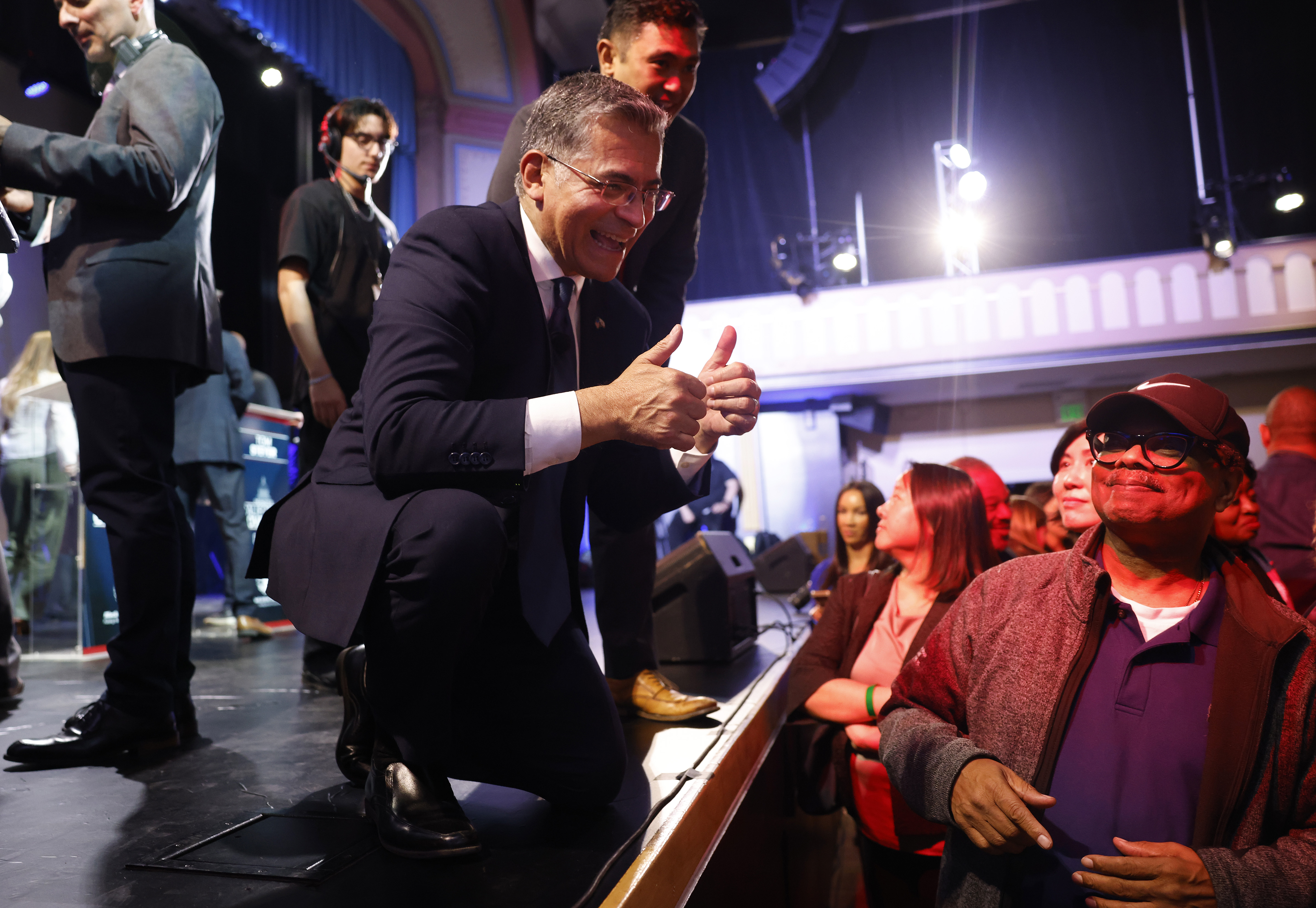
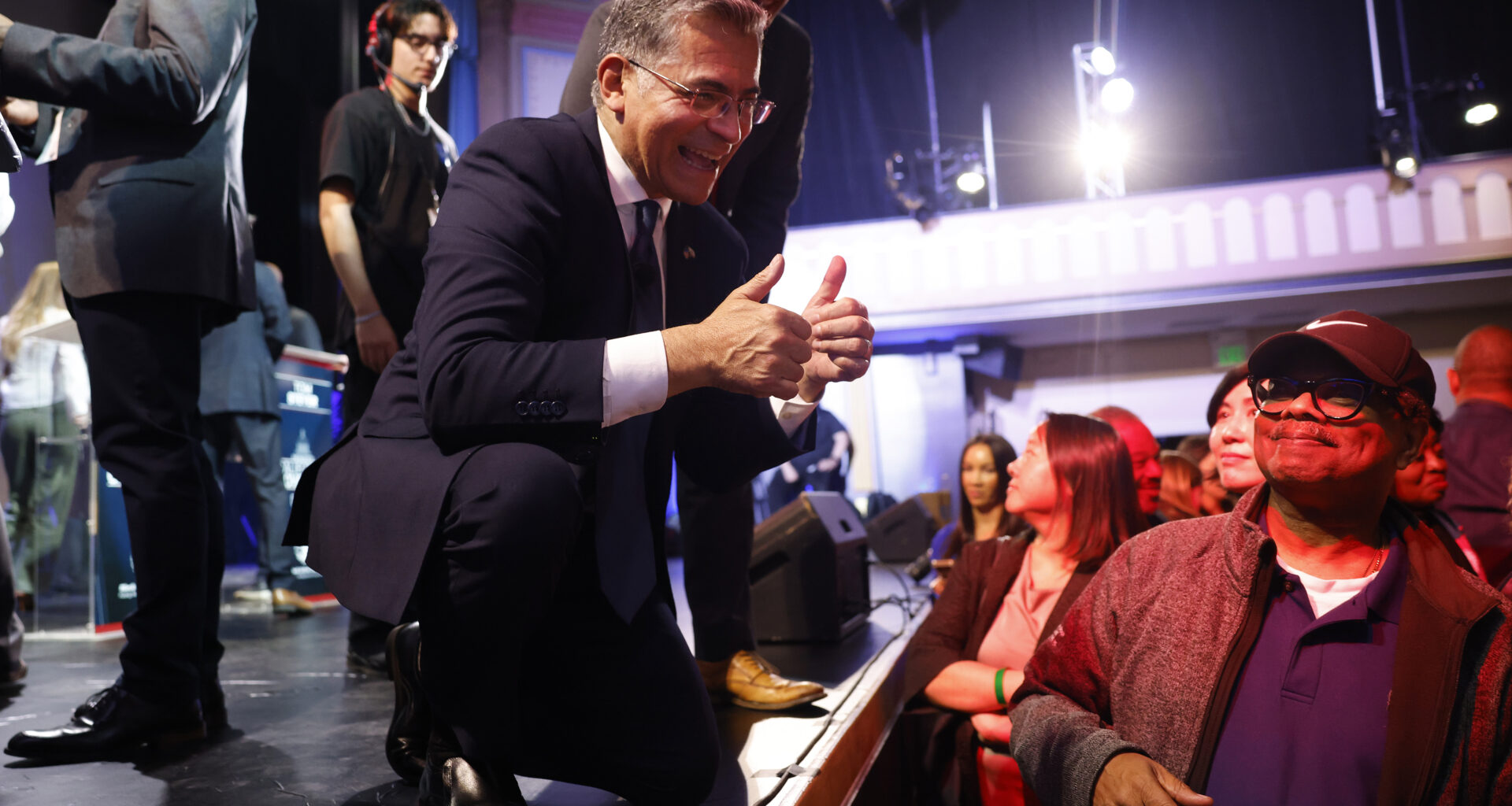
Gubernatorial candidate Xavier Becerra, former U.S. Secretary of Health and Human Services and Attorney General of California, gives a thumbs up after “The Race for California Governor” gubernatorial debate presented by the Black Action Alliance at The Bayview Opera House in San Francisco, Calif., on Tuesday, Feb. 3, 2026. (Nhat V. Meyer/Bay Area News Group)
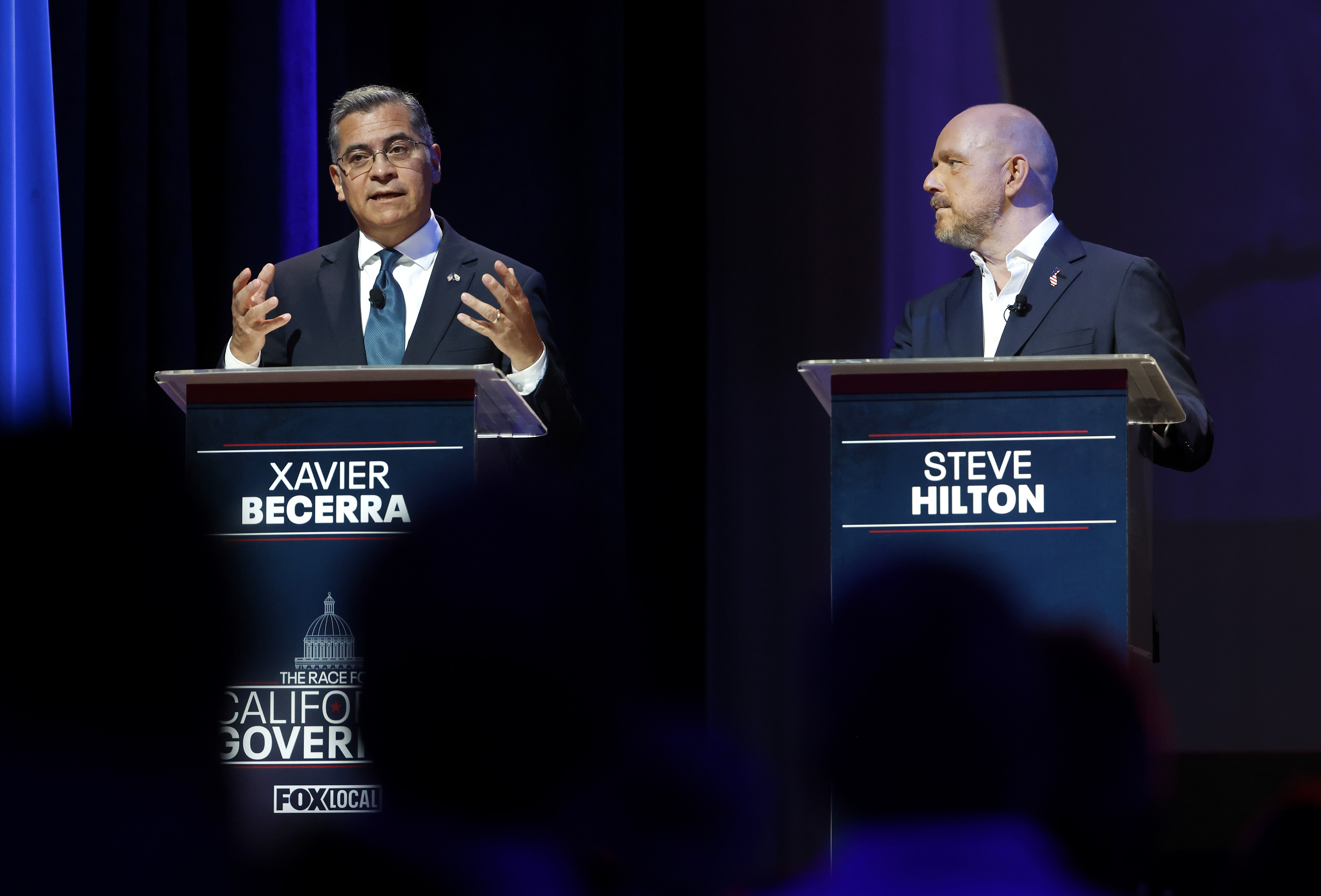
Gubernatorial candidate Xavier Becerra, left, former U.S. Secretary of Health and Human Services and Attorney General of California, speaks as Steve Hilton, political commentator, listens during “The Race for California Governor” gubernatorial debate presented by the Black Action Alliance at The Bayview Opera House in San Francisco, Calif., on Tuesday, Feb. 3, 2026. (Nhat V. Meyer/Bay Area News Group)

From left to right, Tony Thurmond, Antonio Villaraigosa and Betty Yee participate in the California gubernatorial candidate debate Tuesday, Feb. 3, 2026, in San Francisco. (AP Photo/Laure Andrillon)
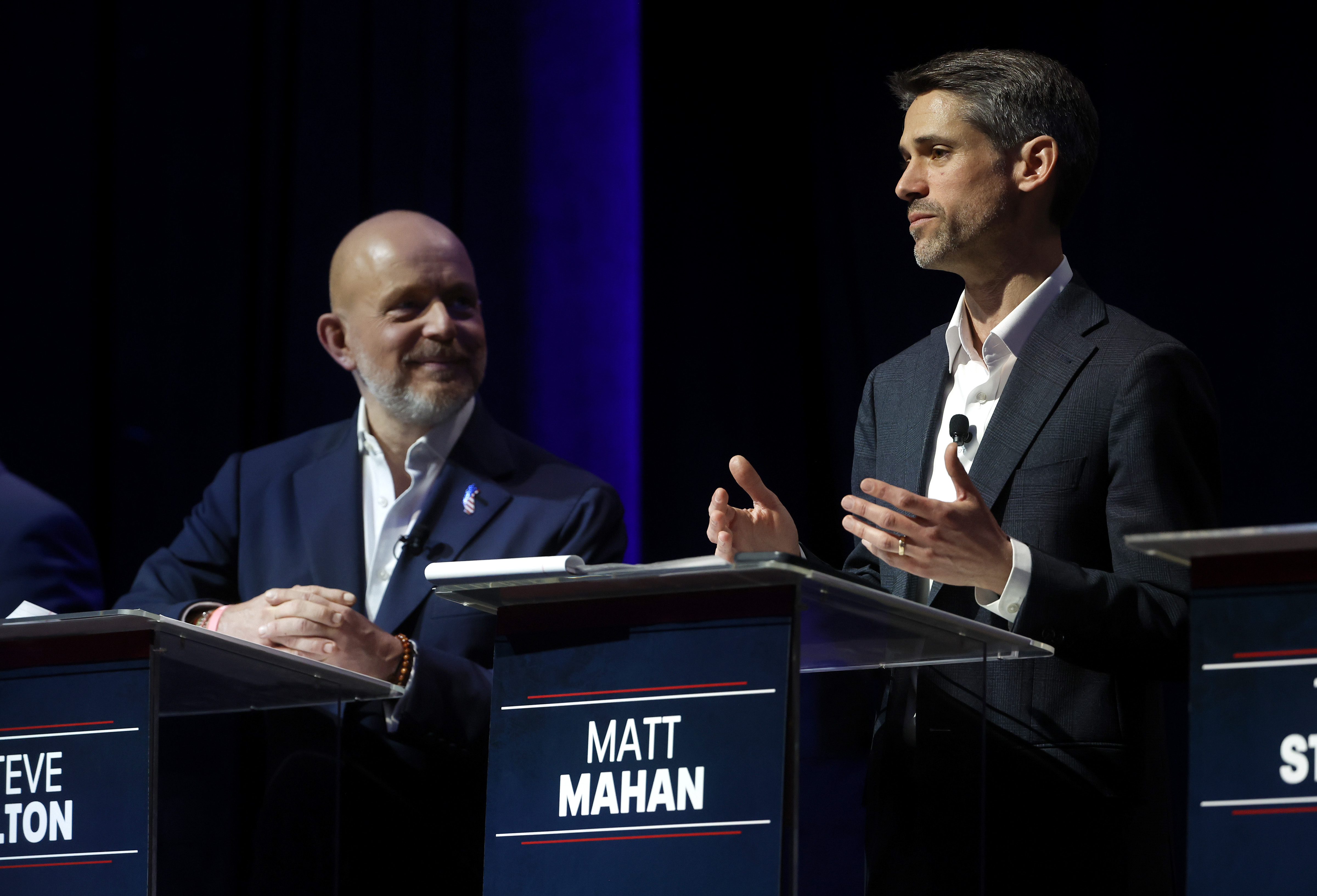
Gubernatorial candidate Matt Mahan, right, San Jose mayor, responds to a comment by Steve Hilton, left, political commentator, during “The Race for California Governor” gubernatorial debate presented by the Black Action Alliance at The Bayview Opera House in San Francisco, Calif., on Tuesday, Feb. 3, 2026. (Nhat V. Meyer/Bay Area News Group)

Gubernatorial candidates Steve Hilton, left, political commentator, shakes hands with Matt Mahan, San Jose mayor, at the end of “The Race for California Governor” gubernatorial debate presented by the Black Action Alliance at The Bayview Opera House in San Francisco, Calif., on Tuesday, Feb. 3, 2026. (Nhat V. Meyer/Bay Area News Group)
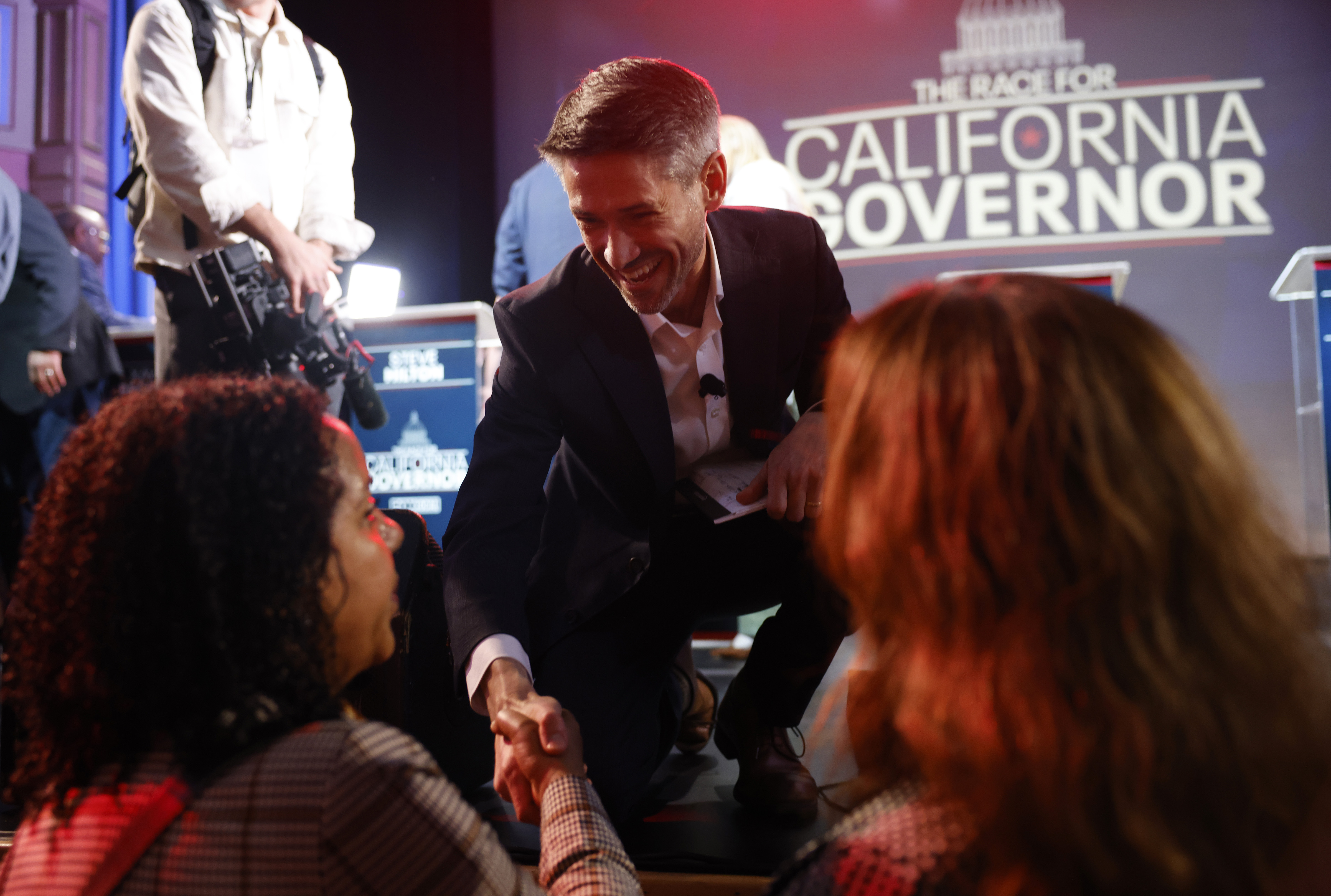
Gubernatorial candidate Matt Mahan, San Jose mayor, shakes hands with audience members after “The Race for California Governor” gubernatorial debate presented by the Black Action Alliance at The Bayview Opera House in San Francisco, Calif., on Tuesday, Feb. 3, 2026. (Nhat V. Meyer/Bay Area News Group)
Show Caption
1 of 6
Gubernatorial candidate Xavier Becerra, former U.S. Secretary of Health and Human Services and Attorney General of California, gives a thumbs up after “The Race for California Governor” gubernatorial debate presented by the Black Action Alliance at The Bayview Opera House in San Francisco, Calif., on Tuesday, Feb. 3, 2026. (Nhat V. Meyer/Bay Area News Group)
Some of the biggest names in the race weren’t on the debate stage: Republican Riverside County Sheriff Chad Bianco, Democratic former Rep. Katie Porter, and Democratic Rep. Eric Swalwell. Organizers said all three cited schedule conflicts. Swalwell’s campaign said he chose to stay in Washington, D.C. to vote against Immigration and Customs Enforcement funding.
Hilton called Bianco a “RINO” — it stands for “Republican In Name Only” — and criticized him for not showing up to the debate “to face these Democrats or his record.”
“Chad Bianco has more baggage than LAX,” Hilton said.
Other Democrats in the debate were state Superintendent of Public Instruction Tony Thurmond, former health secretary and Attorney General Xavier Becerra, former state Controller Betty Yee and former Los Angeles Mayor Antonio Villaraigosa.
Experts the network interviewed afterward differed on how much the candidates who didn’t participate would be hurt by it. Jasmyne Cannick, a Democratic Party delegate in Los Angeles, said it would have some impact. Michelson however noted that those candidates all are leading in polls and could afford to skip. Recent polls show Porter, Hilton, Swalwell and Bianco in the lead followed by Becerra, Villaraigosa, Steyer, Yee and Thurmond.
Dan Schnur, a former GOP strategist who worked for Gov. Pete Wilson, told the Bay Area News Group that Bianco’s absence from the debate stage could hurt him as it gave Hilton the sole opportunity to use “the rest of the field as a foil to cement his status among Republican voters.”
“Bianco’s campaign said he had a scheduling conflict,” Schnur said. “I hope it was something really important.”
Democrats are heavily favored in California where they outnumber Republicans 2 to 1 in voter registration. But many of the six Democrats on stage, some Sacramento veterans and others outsiders, struggled to separate themselves from the pack as they denounced the Trump administration and pledged to make California more affordable.
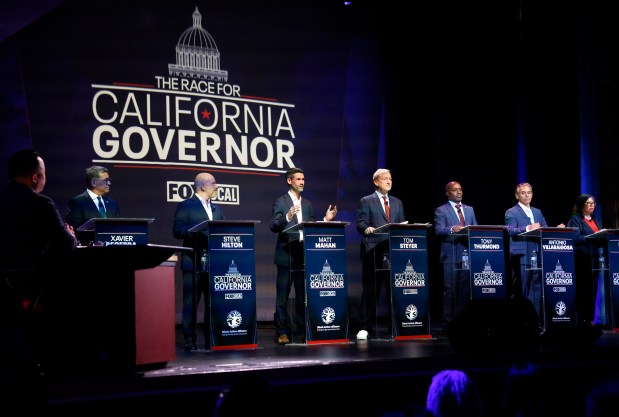 Gubernatorial candidate Matt Mahan, center, San Jose mayor, speaks during “The Race for California Governor” gubernatorial debate presented by the Black Action Alliance at The Bayview Opera House in San Francisco, Calif., on Tuesday, Feb. 3, 2026. (Nhat V. Meyer/Bay Area News Group)
“The assignment for all of them was to distinguish themselves,” Michelson said after the debate. “At the end they were trying to answer that question…and many of them talked about being ready to go on day one, this is no place for job training, you’ve got to be a fighter, but if you all say the same thing, you’re not distinguishing yourselves.”
Schnur said that larger fields of candidates are often divided up along ideological lines, but during Tuesday’s debate, he said candidates seemed to position themselves as either an “insider” or an “outsider.”
“Those candidates who have had the longest careers in public service are competing against each other in terms of experience, those who are running against the system are positioning themselves as insurgents so it wouldn’t be surprising to see one insider and one outsider emerge,” he said.
The debate came as the candidates reported their latest campaign fundraising hauls. Steyer, who spent $27 million in the race last year, nearly twice the combined spending of the other top contenders, aired several ads leading up to and during the televised debate, though they have yet to propel him to the front of the pack in polls.
The debate remained civil throughout with little mud-slinging in a race that has seen few attack ads. Yee closed by calling herself “the adult in the room.” Villaraigosa said he’s “a proven problem solver.” Thurmond talked about his struggles with poverty in his youth. Becerra talked about his experience as attorney general taking on the Trump administration and saying the governor’s office is a “place where you have to fight.”
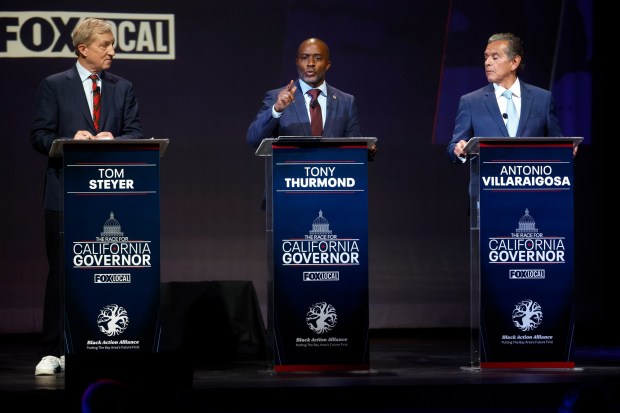 Gubernatorial candidate Tony Thurmond, center, California’s state superintendent of public instruction, speaks as Tom Steyer, left, entrepreneur, and Antonio Villaraigosa, former Los Angeles mayor, listen during “The Race for California Governor” gubernatorial debate presented by the Black Action Alliance at The Bayview Opera House in San Francisco, Calif., on Tuesday, Feb. 3, 2026. (Nhat V. Meyer/Bay Area News Group)
Michelson said that Mahan, who jumped into the race less than a week ago, had the most “unique vision” among Democrats, presenting a message that appeared to resonate with viewers.
“He absolutely has a shot,” Michelson said of the mayor, who will need to build his name recognition in a state where half of all voters live hundreds of miles from the city he leads.
So who ultimately came out the winner? It might come down to who gets the most likes or retweets after the fact.
“For better or worse we live in a much different era than the time of the Lincoln-Douglas debates because most people won’t watch these events live, they’ll rely on legacy and digital media,” Schnur said. “The best things the candidates can do is try to create a moment that goes viral after the debate ends.”