
By: Sena Christian, Keyshawn Davis, Cristian Gonzalez, Lindsay Oxford, Marie-Elena Schembri, Macy Yang, Katerina Graziosi, Solving Sacramento
Ask anyone what constitutes art or why does art matter, and their answers will run the gamut. Historically, art documented existence, myth and folklore, and spiritual beliefs. The arts move us emotionally and intellectually. They help us connect to our communities. Through art we make sense of the world, our shifting societies and our place within it. People have been making art since the dawn of time.
That doesn’t mean making art is easy. Many of the arts-focused businesses, nonprofits and venues in Sacramento are struggling. They have not recovered since the pandemic, whether due to shifting consumer habits, increasing costs of doing business, hardships related to finding reliable employees or lack of community investment. This struggle, we have found, applies across the board and includes live music venues, theater groups, performance arts, galleries, and does not discriminate between small and new or legacy organizations.
But sometimes we don’t miss something until it’s gone. Here, Solving Sacramento and its news partners spoke to representatives of six local arts organizations to see how they are surviving the times — and what would be lost to our city if one day they went away.
~ Sena Christian
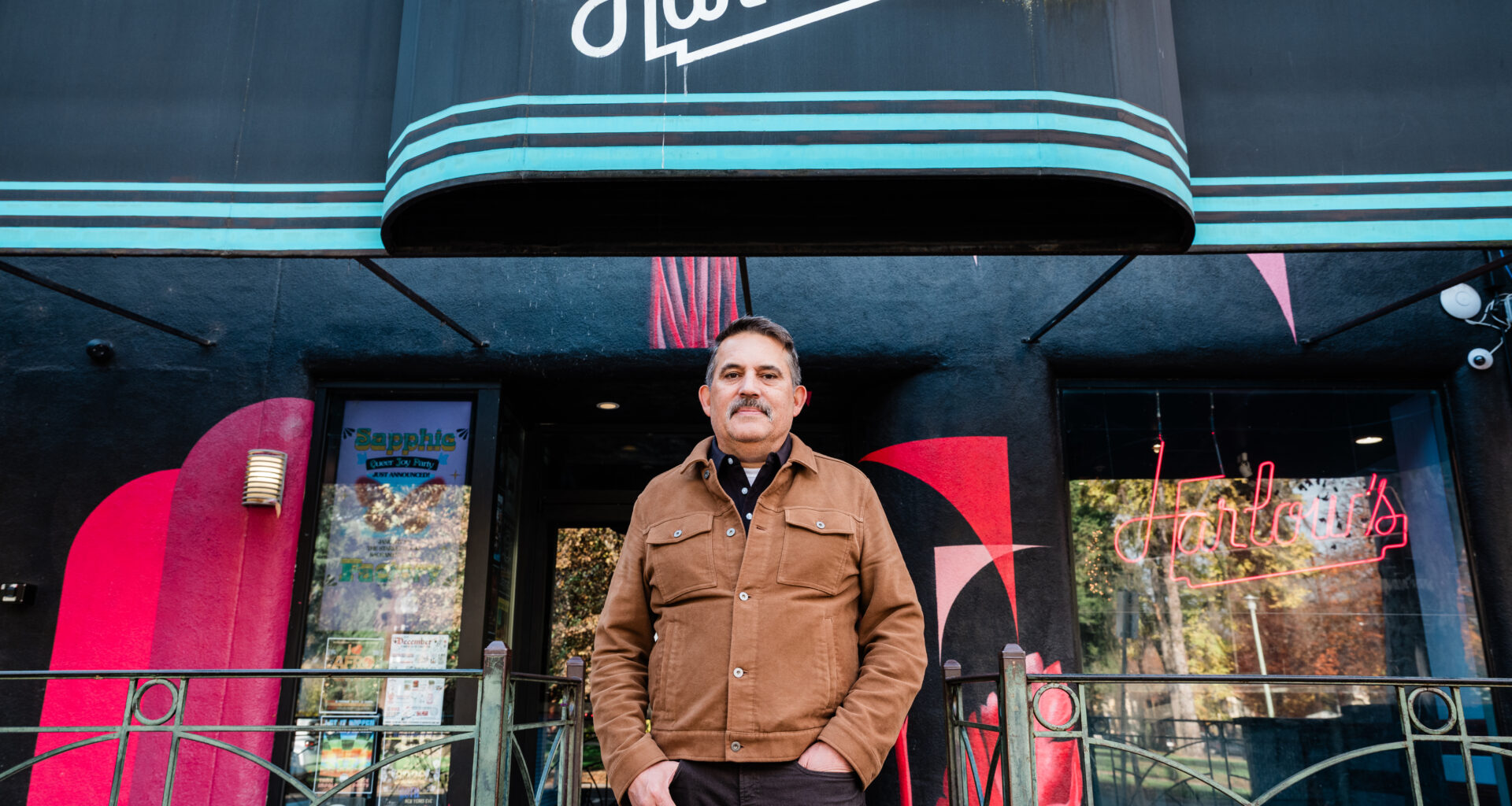
Harlow’s
On J Street in downtown Sacramento sits the music and entertainment venue Harlow’s and, upstairs, The Starlet Room. The ground-level venue has been around since 1982 and is a cornerstone of Sacramento’s arts and culture scene.
For the last four decades, Harlow’s has grown from a local music spot to a nationally recognized venue for artists and touring acts. International artists such as Phoebe Bridges and Jack Harlow, as well as local music heroes like Hobo Johnson & The LoveMakers have graced the stage.
But like many other music venues in town, Harlow’s and The Starlet Room are facing financial challenges. Owner Jim Cornett, who also is part owner of Cafe Colonial (and helps manage the Colonial Theatre), says none of his establishments make a profit.
Cornett is also the co-director of the California Capitol Venue Coalition, which is a local nonprofit that helps the music and entertainment scene.
“Most music venues don’t make much money as it is, and now … no one’s making any money,” he says, noting a survey of arts groups conducted by the National Independent Venue Association and released in 2025. “It showed that only 36% of the venues are profitable right now all across the United States.”
Harlow’s is considered a smaller venue with a 500-person capacity, which makes things harder, according to Cornett. He also mentions the high costs of rent, insurance, and talent and touring, along with a decline in alcohol and concession purchases at his venues.
“Right now, even with ticket sales doing OK, our expenses have gone way up, rent’s gone way up. Insurance has gone through the roof for us all, our expenses have gone up, and with music venues, we share our income with talent — almost 50% of our income goes to paying talent out,” he says. “So, as busy as you think we are, half our income goes off to someone else, which, without them, we can’t do shows.”
Cornett is booking 450 bands and shows a year at Harlow’s and The Starlet Room, and 250 bands at Cafe Colonial.
Cornett says there are ways to alleviate some financial struggles through grants and community support, enabling more people to see shows at Harlow’s. “Honestly, the best thing you can do is support. Go to shows.”
~ Keyshawn Davis, CapRadio
Celebration Arts
 Corie and Paul Bratter, played by Jasmine Washington and Donald “DJ” Lacy, are newlyweds in the play “Barefoot in the Park,” which ran at Celebration Arts in April 2025.(Photo courtesy of Celebration Arts)
In a time of intense restructuring in 2025, some suggested that Celebration Arts, the 40-year-old nonprofit theater that has focused on showcasing Black stories, playwrights and directors, should just close its doors and celebrate what it was able to accomplish with a going away party. Instead, Executive Artistic Director Erinn Anova decided to continue fighting for its survival.
This commitment was largely fueled by a respect for the work of mentors like Founder James Wheatley and the organization’s first artistic director, Myrtle Stephens, as well as theater pioneers like the late Woody King Jr.
“These people didn’t do all this work for theaters to close,” Anova says.
Celebration Arts doesn’t just stage theater productions. It also educates the next generation of actors, directors and stage managers in programs like Kids Time and Teen Magic. Now, Anova is working toward making the theater a “third space,” opening its doors to other theater groups and museums to become a hub where art, wellness and cultural history work in tandem to serve underrepresented communities.
The fight to sustain Celebration Arts has been difficult, including a board restructuring in November that prioritized members focused on coming up with fundraising solutions to cement the theater’s fiscal sustainability. The 100-seat theater can only make so much from ticket sales, so it has to rely on donors and grants to fund staff, production and facility costs, according to Anova.
In 2025, the community joined the fight in force. For the 2025 Big Day of Giving, Celebration Arts was able to fundraise $18,000. Then, after setting a $40,000 fundraising goal by the end of June, 2025, supporters donated $57,000 to the theater.
Thanks to community support, Celebration Arts is able to offer programming through 2026 with productions like “Don’t Touch My Hair” by Douglas Lyons and “us & the rest of ‘em” by Anthony D’Juan, as well jazz concerts in May and October, and a new Chautauqua (historical theater) series and the “916 New Plays Festival” in March.
“What would it be like if the one Black [theater] organization that’s been here for 40 years was just gone? What would that be saying to the community? It’s not OK,” Anova said. “The community has spoken. She [Celebration Arts] belongs to the community.”
~ Cristian Gonzalez, Solving Sacramento
Axis Gallery
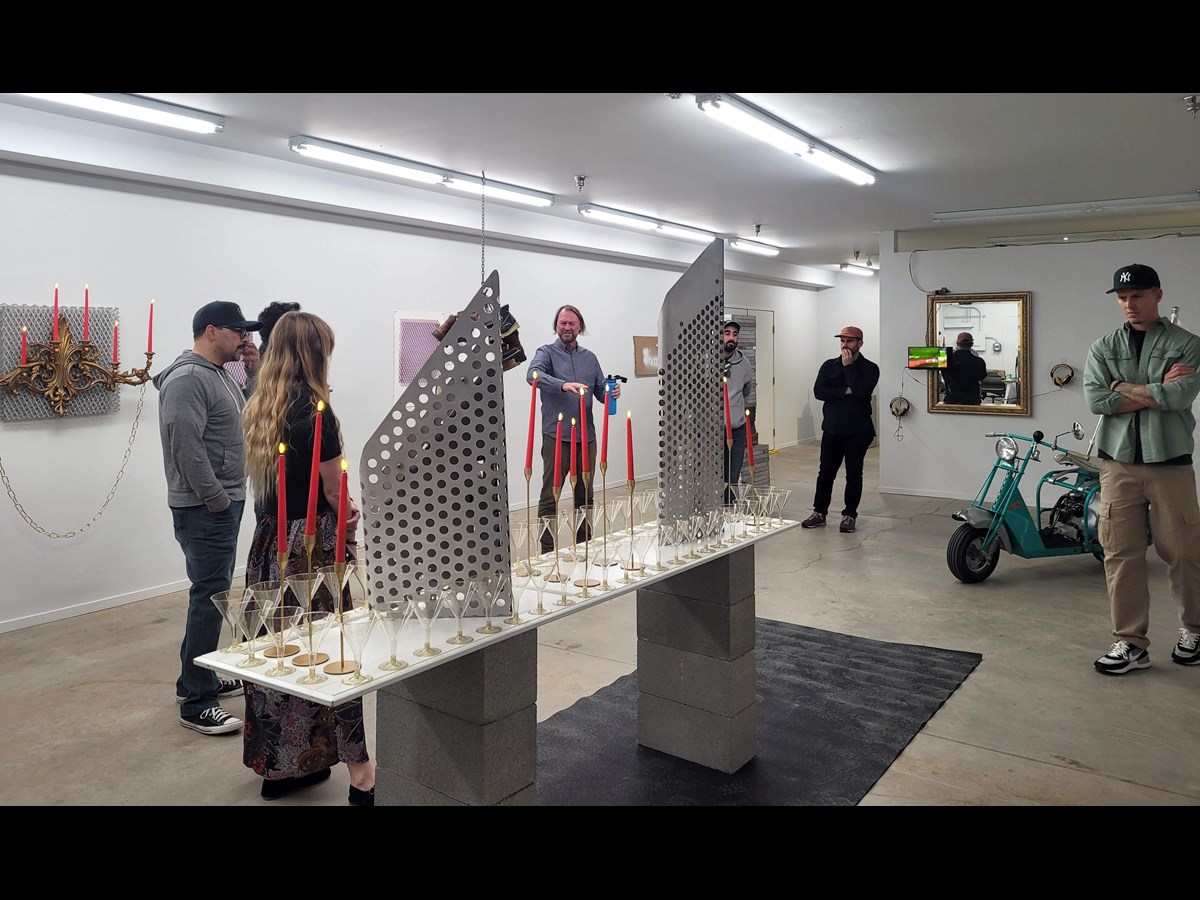 Axis Gallery is an artist-cooperate-run gallery with 20 members who each pay a monthly rent for the gallery space.(Photo courtesy of Axis Gallery)
Axis Gallery is home to art that gallery Vice President Heather Hogan calls “challenging.”
“We show modern art that is challenging and different and, frankly, weird,” Hogan says.
Founded 35 years ago, the artist-cooperative-run gallery, at 625 S St. in Sacramento (located here since 2014), sublets its space from the larger Verge Center for the Arts. Each of its 20 artists pays a monthly rent on the gallery space, ensuring them a month-long show in the gallery once every two years. Those shows have no parameters, giving artists complete freedom over how they use the space.
“There’s no gatekeeping. … There’s no curator to tell you ‘no.’ There’s no financial burden to make money off the art you’re showing,” Hogan says.
While the cooperative model is designed to keep Axis self-sustaining, it’s far from immune to declining funding for the arts, and from general government budget cuts as well. Hogan says a $10,000 city grant in 2024 helped sustain the gallery when its rent doubled. But with budget cuts, those assists from the city are becoming increasingly limited.
No artist at Axis financially sustains themselves on their art alone. Many are educators or have other arts-adjacent jobs. “A lot of our members are teachers, a lot of professors at Sac State,” Hogan says. “I’m also a professor at Sac City College. We have professors at other colleges around the region. We have people who work at other museums, the Crocker or the Shrem.”
So it’s not just arts funding that keeps Axis running; it’s education budgets as well. “If support for the arts was suddenly gone, support for arts education would be gone,” Hogan says, noting that arts positions in higher education are among the first cut when education funding decreases. And as those cuts impact individuals, things like gallery membership can be among the first to go.
If that combination of economic factors continues, it has the potential to disarm what Hogan says is an important community asset. “It’s complete freedom to explore your creativity.”
~ Lindsay Oxford, Sacramento Business Journal
Teatro Nagual
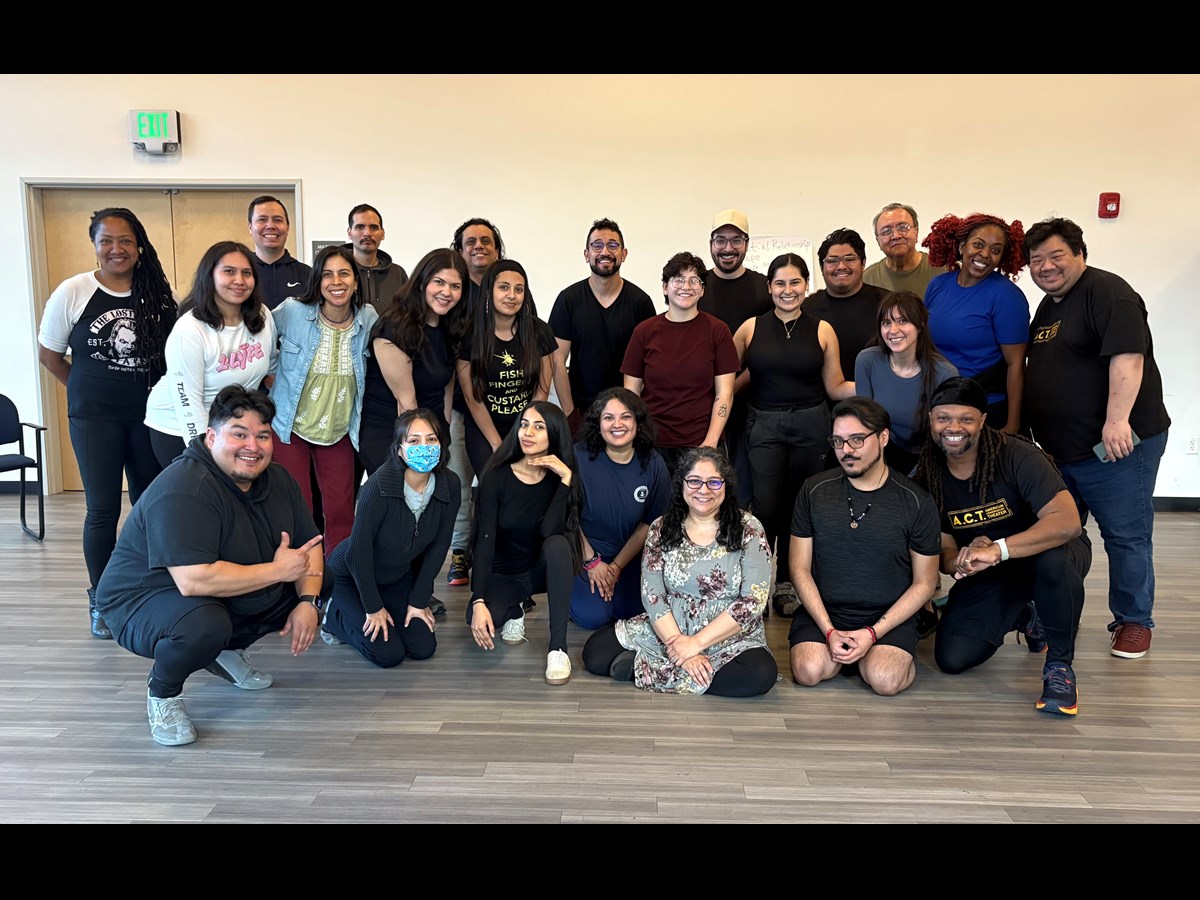 Richard Falcon founded the Latinx theater nonprofit Teatro Nagual on the principles and work of activist Cesar Chavez.(Photo courtesy of Richard Falcon)
Anchored by a list of 10 core values and guided by the principles of activist Cesar Chavez, Teatro Nagual (TeNa) is not just another Sacramento theater group. Founded in 2006 by Richard Falcon, the nonprofit is celebrating its 20th year of bringing Latinx-centered theatrical programming to the region.
For Falcon, the mission goes far beyond a love of the stage. He sums up the work with three pillars: creating quality theatrical programming; mobile social justice theatrical experiences; and growing the next generation of Latinx art educators. Whether focused on community healing or civic education, programming at TeNa includes theater workshops for youth and adults, hosting community pop-up activations and collaborations with other organizations for its 100% mobile productions.
In 2025 TeNa also co-hosted the first regional Theater-con, showcasing how the collective can work together to promote the arts. Falcon is proud that the organization is also known for paying its actors; something that is rare in community theater. For last July’s production of “El Borracho” at The Sofia, lead actors, the director and the stage manager were each paid $2,000. This was made possible by a generous donation from a union-represented actor.
Twenty years in, the financial landscape has shifted but TeNa is doing what it always has — finding new ways to get its programming into the hands of the people. This includes diversifying its productions, collaborating with others and accepting the fact that government funding isn’t as reliable as it once was.
“I was part of so much when it comes to developing the things that the city and county of Sacramento are doing today, and they have not come to fruition,” Falcon says. “We’ve got to fix that. … We need to put the power in the hands of the artists and help the community to realize a return on investment.”
While grants may be fewer and farther between, Falcon is hoping to lead artists to new opportunities in cross sectors of health, immigration and science. Diversifying is key for artists and nonprofit organizations to become sustainable, according to Falcon.
“We will survive this,” Falcon says. “We will survive it because we, as a people, are resilient and we refuse to give up. Will there be pain? Will there be heartache along the way? Yes. [Is it] going to get worse before it gets better? Yes. But the one thing I have learned, especially as a Latino, as a proud Latino, as a Chicano, because we fight, is that we don’t give up.”
~ Marie-Elena Schembri, Solving Sacramento
Hmong Youth and Parents United
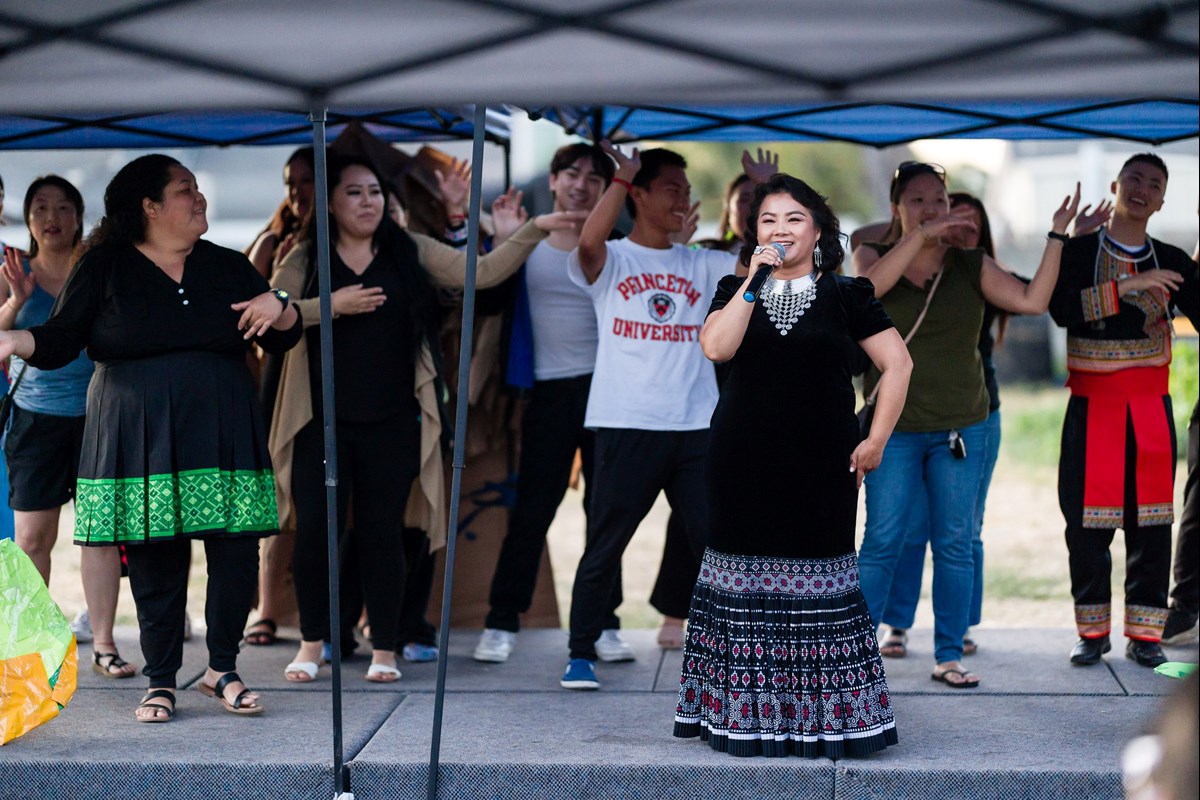 Local Hmong singer Tsab Mim Xyooj performs during Hmong Youth and Parents United’s art festival in 2024.(Photo courtesy of HYPU)
Cultural arts preservation has been important to Hmong Youth and Parents United (HYPU) since it was established in Sacramento in 2008. Preserving art and culture allowed the Hmong people to hold on to their identity and stay deeply connected to their heritage, even as they rebuilt their lives and adapted to a new country after the Secret War, when the U.S. covertly bombed Laos in the 1960s and ’70s.
Cultural arts “is what really brings the community together. HYPU is a grassroots organization created by the families of Sacramento who really wanted to do cultural enrichment programming for their children,” says Director of Program Douagee Cheng. Families approached Sacramento City Unified School District, which is how they started Hmong Saturday school and then a summer enrichment camp.
HYPU’s cultural arts program includes language preservation, dance and performance arts — including community performers, singers, painters and cultural fashion shows that both celebrate artistic expression and promote local artists. Each year, the center serves about 140 students, reaching over 5,000 youth during the lifespan of the program.
Cheng says that despite recently receiving $600,000 over three years for its cultural arts program, HYPU has been unable to secure additional funding to maintain the program. Fundraising is a challenge, she says, because of lack of investors or big donors to Hmong-related causes.
HYPU has been able to maintain its cultural dance program through the reliance on volunteers, according to Cheng. “We have so many community members who constantly come back to HYPU and say that they are willing to volunteer their time — willing to make sure that a dance program survives here.”
But without funding, HYPU is unable to continue supporting other cultural arts programs, including an annual art exhibition called “The Hmong American Who Journeyed” that takes place at its center in North Sacramento. The exhibition showcases local Hmong artists, including artist Ashlyn, fashion designers Mang and Shang Thao from Hill Tribe Fusion, and senior artist Ly Tou. HYPU has canceled the exhibition this year.
Even with financial challenges, HYPU continues to demonstrate commitment to cultural preservation. One of the organization’s primary goals is to continue to support cultural enrichment by developing partnerships with new Hmong artists and art programs.
“We still want to open our doors to any community members or any artist who wants to collaborate,” Cheng says. One of HYPU’s partners is Culture Through Cloth, a community studio dedicated to preserving and promoting the Hmong textile art called “paj ntaub” or flower cloth, which hosts its workshops at HYPU’s headquarters in North Sacramento.
“Our team is not making any money from it, we’re not getting paid to do it. … [the] paj ntaub circle is providing a service for the community, to bring people together and we’re opening our doors for people to come in and do collaborative work.”
~ Macy Yang, Hmong Daily News
Latino Center of Art & Culture
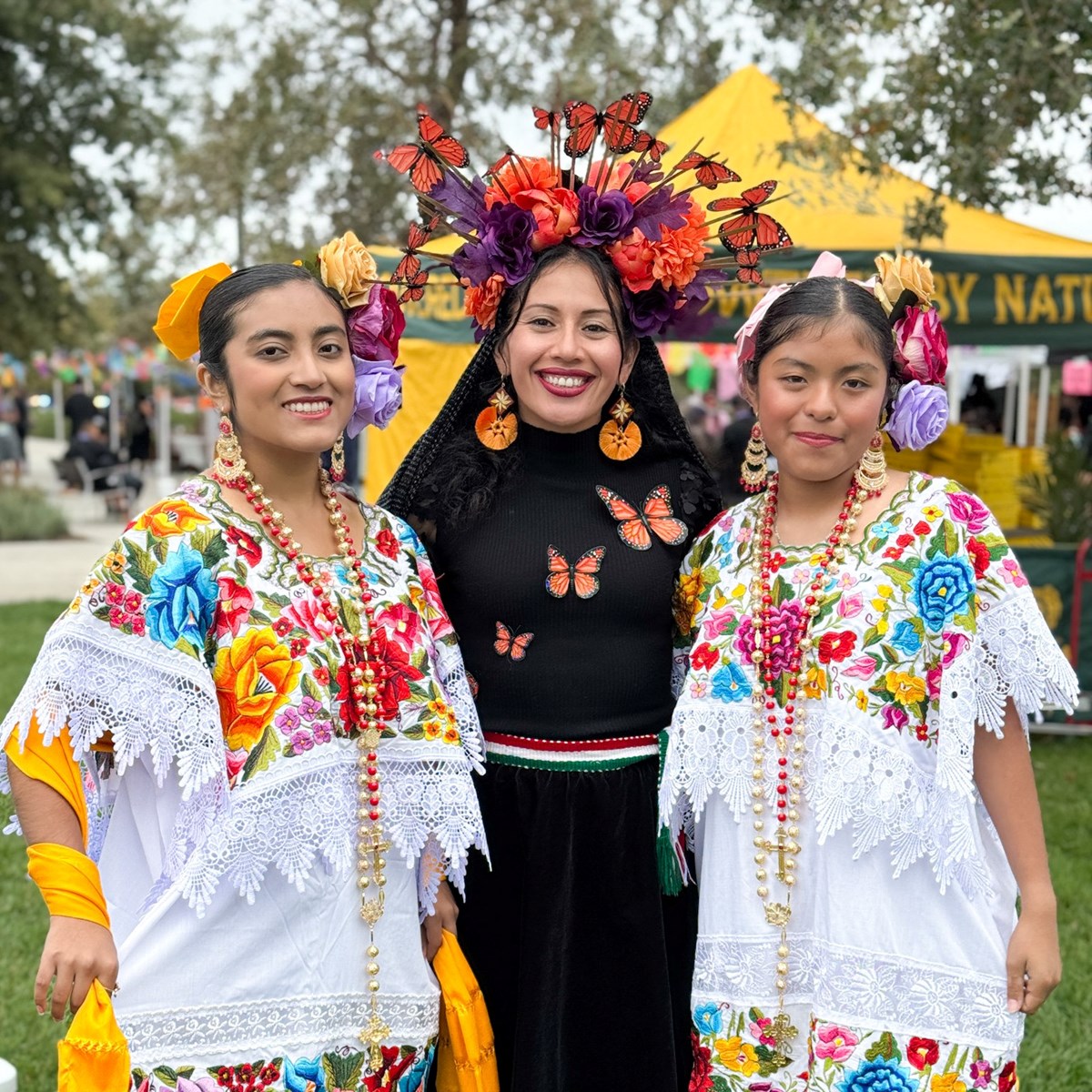 Latino Center of Art & Culture Board Chair and Interim Executive Director Alma López (center) stands with two participants of the center’s Cultura es Fuerza youth program during the Dia de Los Miles 5K event in Elk Grove in October 2025.(Photo courtesy of Alma López)
When the Latino Center of Art & Culture in Sacramento faced a federal funding cut last year, the nonprofit quickly mobilized its community through a dance fundraiser in order to start recuperating the funds lost. The center partnered with a DJ and local businesses to host a successful night of philanthropic support and dance as a form of resistance and resilience.
While the center still has a ways to go in raising the rescinded funds, that kind of community support is what has enabled LCAC to grow throughout the years, according to Board Chair and Interim Executive Director Alma López.
“LCAC has demonstrated that with commitment, with a lot of creativity, but most absolutely with community will is what has allowed the Latino Center to thrive” she says.
Founded in 1972, LCAC has been housed in its current location on Front Street since 2012, and serves as a cultural anchor for the community, hosting a variety of arts programming, including workshops, exhibitions and vibrant events like the annual Day of the Dead celebration El Panteón de Sacramento.
LCAC is largely volunteer run and currently relies on one part-time contractor to sustain day-to-day gallery operations and visual arts programs, down from a staff of five prior to the grant retraction last year, according to López. The center has also seen its fair share of leadership transitions, most recently in 2024 and again in 2025 with former Executive Director Bridgétt Rangel-Rexford stepping down in September. López has served as interim executive director during both transitions and recognizes the need for more operational funding as the center seeks new leadership and to develop supporting roles like HR and fundraising.
“There’s more opportunity for program-specific funding,” López says, pointing to a lack of funds that go toward personnel and organizational management. “That’s been the big challenge, that the commitment for the organization to be kept running is much larger than what we are able to afford. And so, I think, for our board and also our volunteers, it’s also realizing that aspect of, how do we make sure that we have a structure that’s also taking care of the people and not burning them out.”
Despite the challenges, López sees this time as an opportunity for growth, and adds that investment — both from funders at large and community involvement — continue to be key.
“Giving back financially is a big aspect of help, but oftentimes, too, sharing our posts or spreading the word … those aspects go a long ways in terms of the possibility of supporting monetarily,” she says, adding, “I would say, always continue to show up.”
~ Katerina Graziosi, Solving Sacramento
This story was funded by the City of Sacramento’s Arts and Creative Economy Journalism Grant to Solving Sacramento. Following our journalism code of ethics and protocols, the city had no editorial influence over this story and no city official reviewed this story before it was published. Our partners include California Groundbreakers, CapRadio, Hmong Daily News, Russian America Media, Sacramento Business Journal, Sacramento News & Review and Sacramento Observer. Sign up for our “Sac Art Pulse” newsletter here.
Follow us for more stories like this
CapRadio provides a trusted source of news because of you. As a nonprofit organization, donations from people like you sustain the journalism that allows us to discover stories that are important to our audience. If you believe in what we do and support our mission, please donate today.