
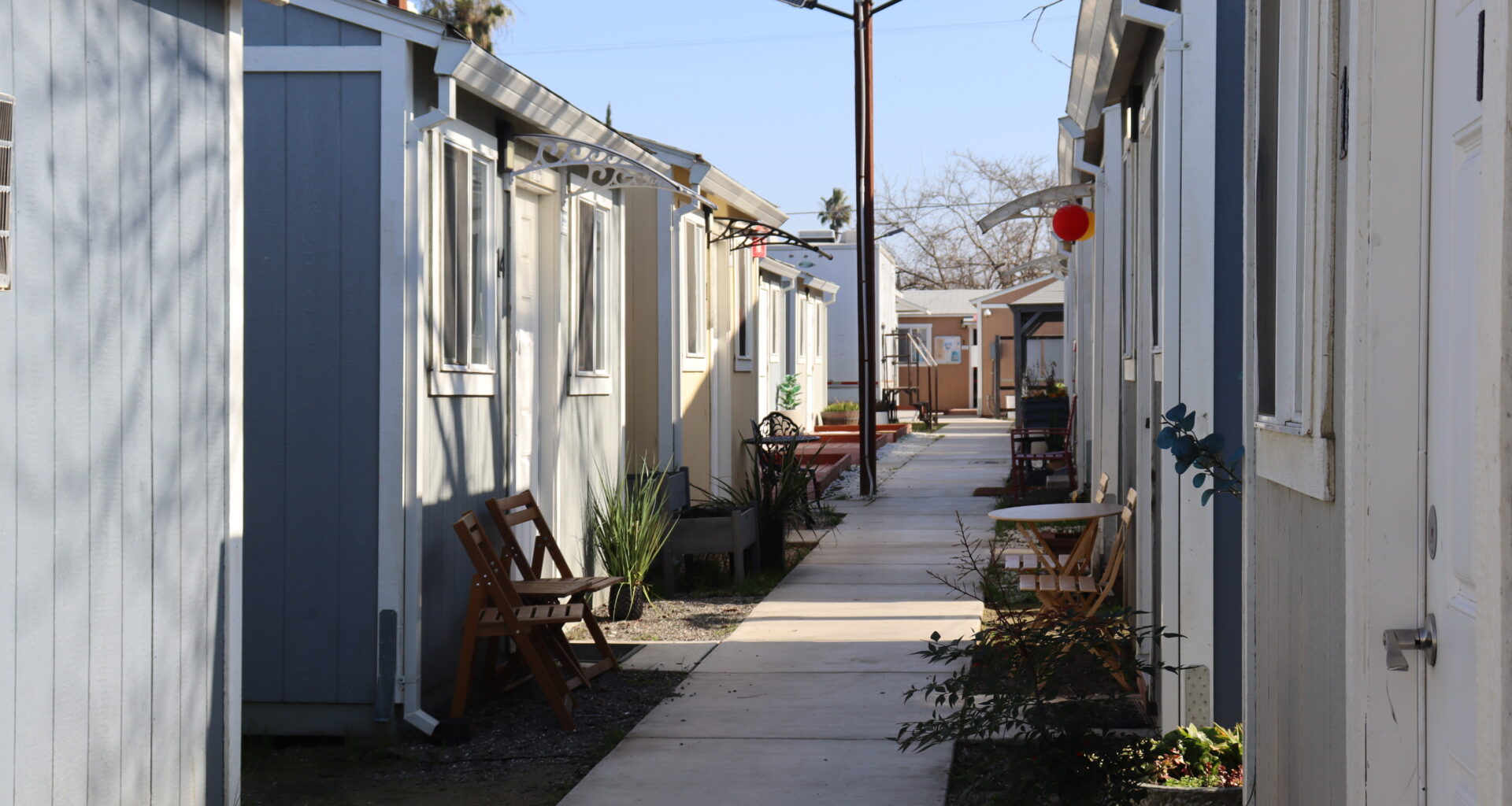
Last year, a shelter in North Sacramento helped over 100 unhoused young adults move into permanent housing.
The Grove is a cabin-style transitional housing site operated by the nonprofit First Step Communities. They are currently hosting their annual Adopt a Cabin campaign. The location serves young adults ages 18 to 24. Currently, all 50 cabins at the location are filled, and there is a waitlist.
In 2025, they set a record for the number of residents who transitioned from the shelter to permanent housing, according to First Step Communities.
They are calling on willing donors to adopt a cabinwith a $2,000 donation. This money would be used to sponsor an individual cabin shelter and resident services.
Brittney Gandy, a spokesperson for the nonprofit, says last year’s milestone reflects the effectiveness of the program.
“We were lucky enough and blessed to be able to see 109 individuals leave The Grove and transition to permanent housing last year,” said Gandy. “And so we hope to do the same, and even more, this year.”
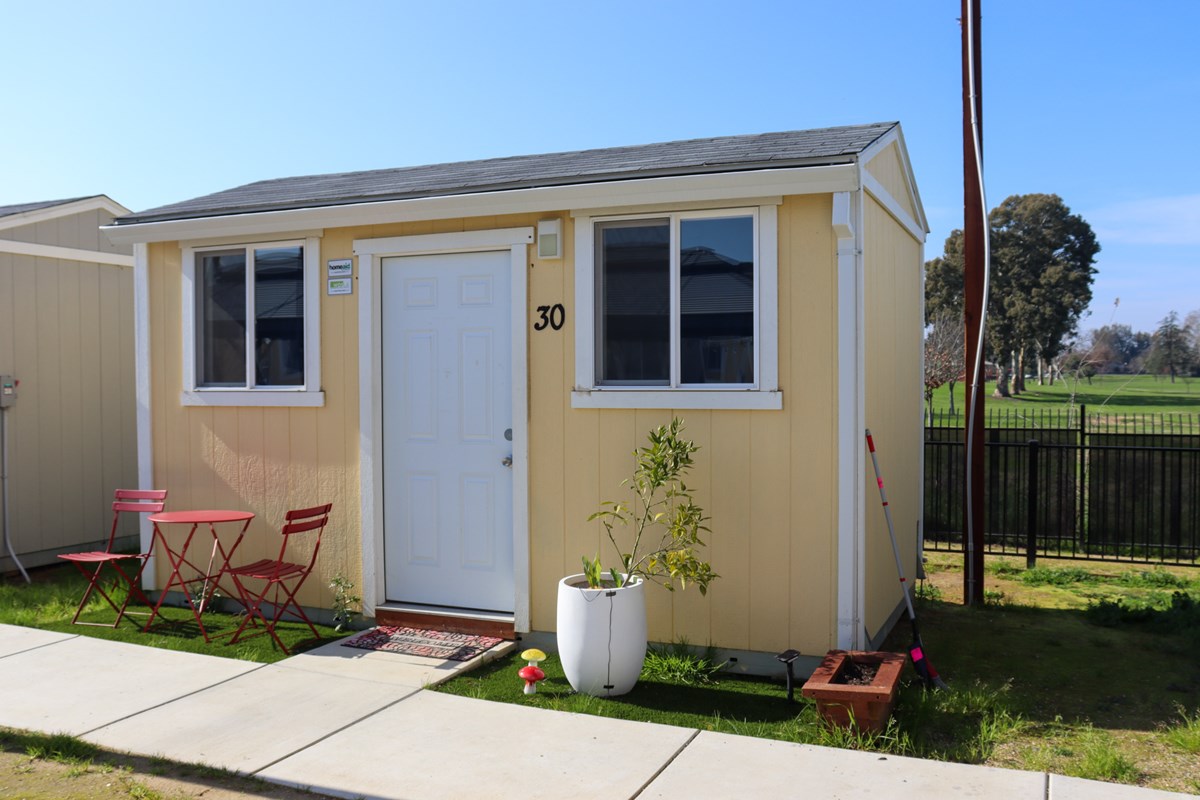 A cabin at The Grove, a transitional housing site for young adults experiencing homelessness in North Sacramento, is pictured on Tuesday, Feb. 3, 2026. The site provides residents with private living spaces.(Tony Rodriguez/CapRadio)
According to Gandy, this shelter, being specifically for young adults, helps the organization reach people at an early age before homelessness becomes long-lasting.
“Because they are young, a lot of them have not been homeless for a very long period of time,” Gandy said. “So they’re able to bounce back a lot faster.”
Unlike traditional shelters in the region, The Grove offers private spaces for residents, with each cabin having a bed, desk, seating, and heating and air conditioning. Residents also have access to private bathrooms, shared kitchens, and more on-site resources.
Gandy said the private unit is not the only way the shelter differs from others. She says they get creative with how they can help.
“They host game nights, and I believe they’re planning a prom,” Gandy said. “It’s a community. As we walked by, someone was giving someone else a haircut.”
Kaylee Glaspell, a case manager at The Grove, said that while enrichment is offered, the ultimate goal is to kick-start a success plan for the person.
“As soon as they step in … that case manager is working with them to create an individual plan that meets their specific needs,” Glaspell said. “Mental health tends to be a need for almost everyone, getting connected to health care.”
Glaspell said case managers meet with residents multiple times a week to address employment, mental health, budgeting, and other barriers to housing.
“Our ultimate goal is housing,” she said. “Maybe somebody comes in is pretty stable, so we’re just going to go straight into creating a resume, and I’m taking them out there to apply for jobs.”
For some, that means stabilizing mental health before pursuing work. For others, it means jumping straight into resumes and job applications.
For Nevaeh Hardison, a 20-year-old who has been living at The Grove for about a month, having her own space has been critical after experiencing homelessness and unsafe housing situations.
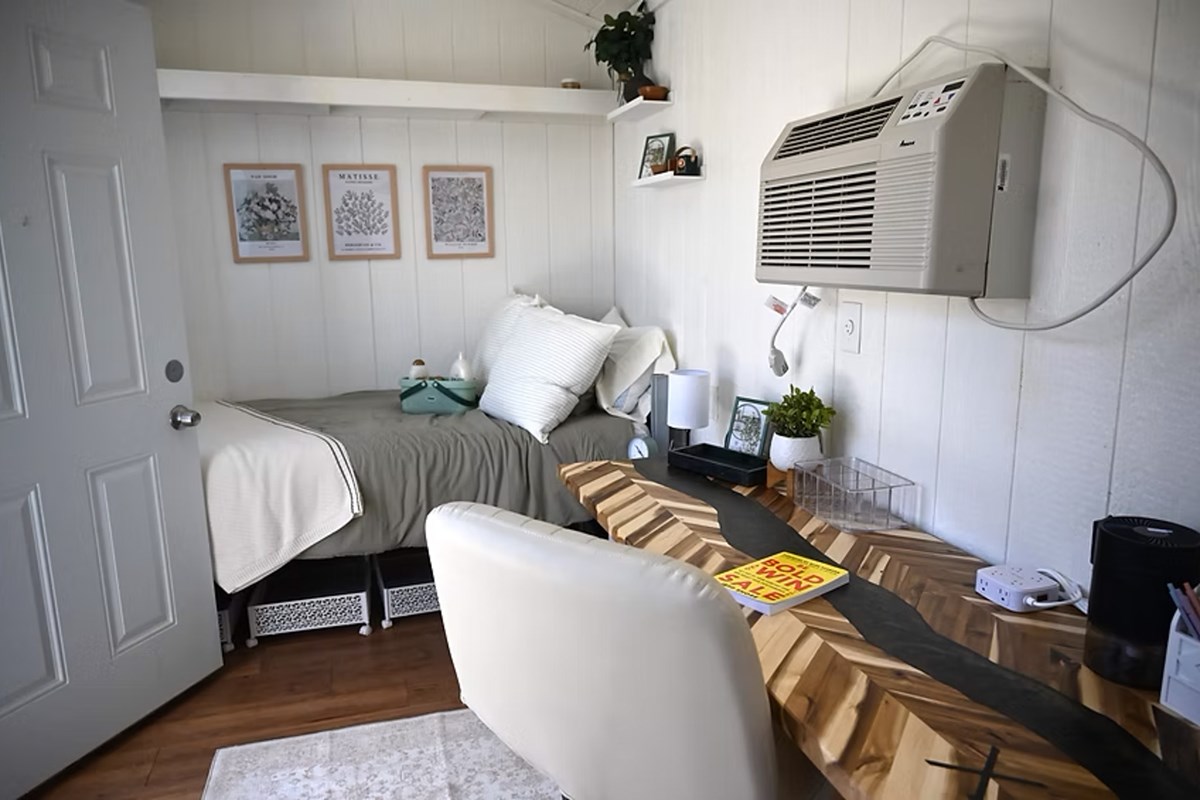 The inside of a cabin at The Grove in North Sacramento.(Photo courtesy of First Step Communities)
“Being able to sleep in a room by myself and feel more at home was really nice,” Hardison said. “Like I can lock my door and know that I’m safe and I’m okay and I can sleep at night.”
Hardison said she has met with her case manager one to two times a week while working to replace her identification documents, stabilize her mental health, and prepare for employment.
“They’re really helping me with that,” she said. “Today, I had a case manager sit in urgent care with me for about three hours just to make sure I get my medication.”
Glaspell said that level of involvement is what they aim to offer at this location.
“It’s texting reminders, it’s knocking on their cabin and saying, ‘Hey, how did that interview go?’” she said.
For Jackson Stanek, 19, who has been staying at The Grove since October of last year, the shelter has provided stability while he waits for permanent housing placement.
“I’ve been homeless for a few years,” Stanek said. “It was bad.”
Stanek said staff regularly help residents prepare for job interviews and check in beyond paperwork. He has a job collecting signatures for petitions and says additional support from staff is helping him stabilize.
“They go through interview questions and all types of stuff,” he said. “If you’re working and stuff, they have a lunch that they pack for you.”
Staff says that many residents transition to permanent housing in about six months.
“We only have six months with them,” Glasspell said. “So it’s, ‘what can we do right now to make you stable in six months?’”
The site is entering its fifth year of being open. The staff say maintaining the cabins and funding services has become increasingly important.
“As you can see, some of these cabins need maintenance,” Knox said. “Paint touch-ups, new chairs, windows, there’s constant services [needed].”
Adopting a cabin would cover maintenance, a full interior refresh, and services for the young adult living there.
Glasspell said continued community support will directly benefit a resident by funding the upkeep of a space.
“109 folks stepped into housing [last year] … is wild, because there’s only 50 cabins,” she said. “The more support we can get from our community, the more success we can see.”
For residents like Hardison, this support feels like a push into long-term stability.
“I’m definitely looking forward to being able to save enough to get housing,” she said.