
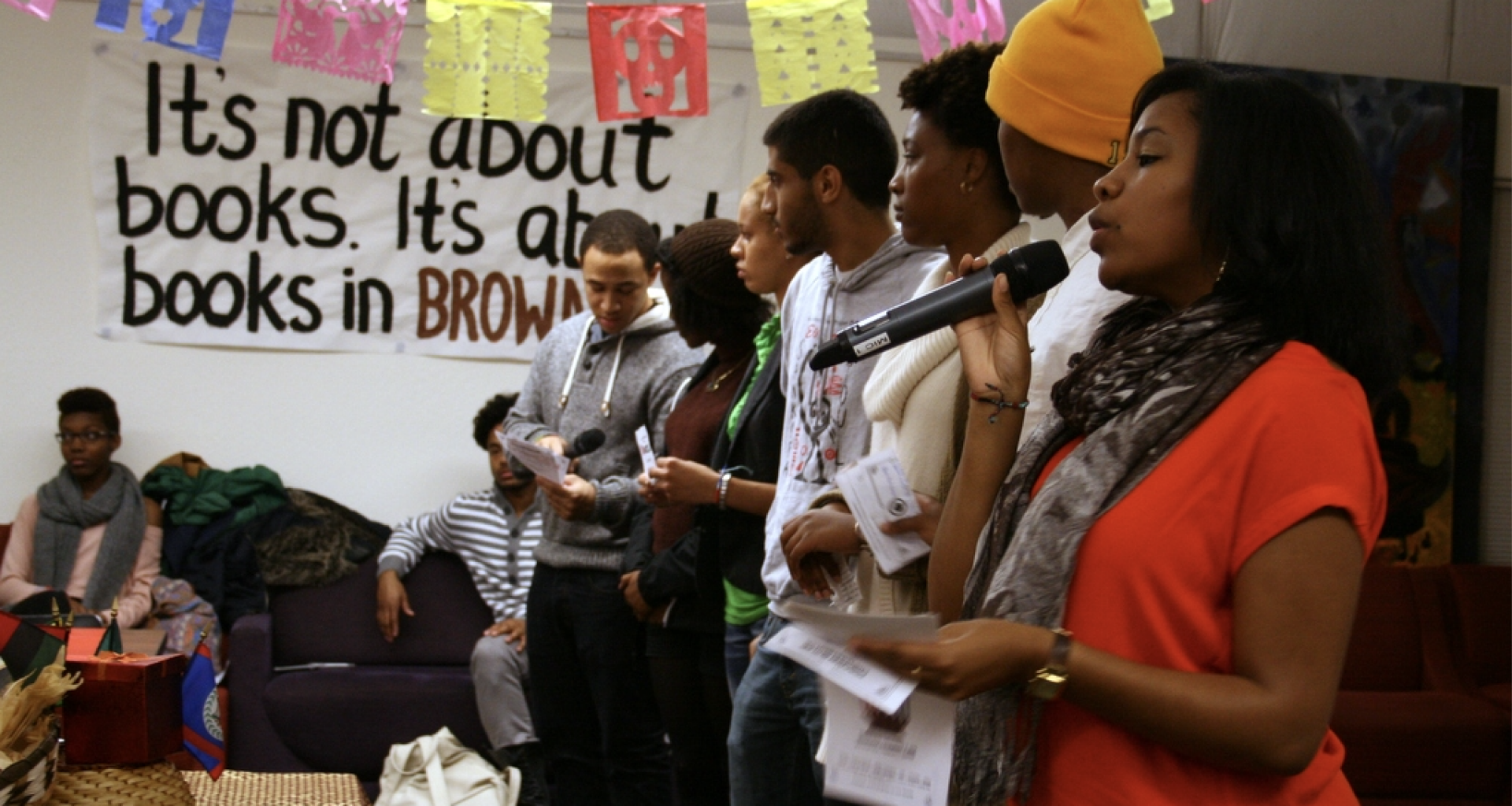
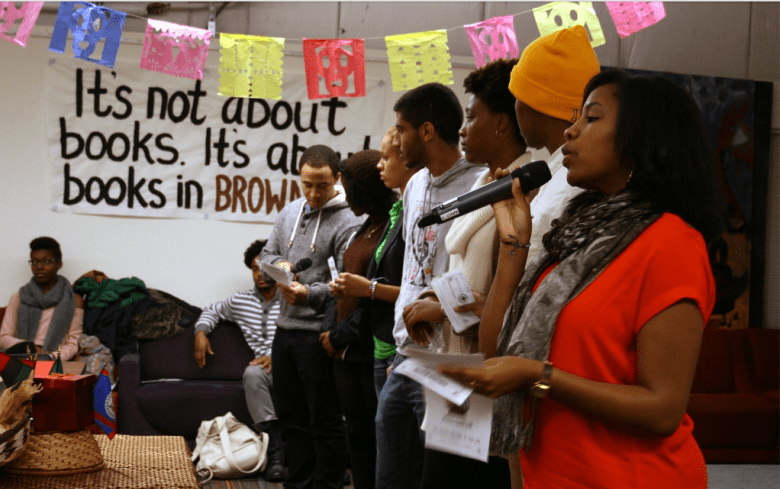
 The African American Office of Student Development hosts a Kwanzaa celebration at UC Berkeley’s Multicultural Community Center in 2012. Credit: Reginald James via Flickr
UC Berkeley’s Multicultural Community Center, a more than 20-year-old, student-run space with roots in the ethnic studies movement that offers cultural programs and support services, will reopen this spring, Chancellor Rich Lyons said Tuesday in an interview with Berkeleyside.
The spacious, airy center inside the Martin Luther King Jr. Student Union has been closed since last summer, with events paused and student interns offering snacks and services like free printing on a nearby outdoor patio during the fall semester.
News of the closure had sparked an outpouring of concern among students and alumni on social media, with some sharing that the center had provided a critical safe space for community and grassroots organizing, and a few even saying they would not have graduated from UC Berkeley without the support structure it provided.
“It was just, like, a huge testament to the possibility of community in a big place like Berkeley,” said Jess Reyes, who attended UC Berkeley from 2012 to 2016 and interned at the center. She said the space was especially important for first-generation college students like her who sometimes struggled to find their place at the university.
UC Berkeley had shared little information about the reasons for the closure, leading to speculation among some students and staff that it was connected to ongoing federal investigations into whether the university was adequately combating antisemitism on campus.
The center’s walls were festooned with pro-Palestinian and anti-imperialist art, alongside rotating exhibits that had included a tribute to the poet June Jordan and one marking the 50th anniversary of hip-hop, said a staff member in the university’s Division of Equity and Inclusion, who asked to remain anonymous because they were not authorized to talk to the press.
Prior to closing the center, university administrators had asked student interns to take window signs with political messages that had faced onto Sproul Plaza and turn them inward.
“It really does feel like they are acquiescing to the Trump administration,” the staff member said about the closure. “I worry we’re losing that focus on the students that are most at risk.”
Speaking with Berkeleyside on Tuesday, Lyons gave more detail about the university’s reasoning. He said some students had complained that they felt unwelcome in the center.
“Berkeley, like any public institution, we need to be welcoming in all of our spaces,” he said. “And we were hearing from some people, some groups, that it’s not even that I felt unwelcome in that space, but some felt threatened.”
He said the complaints involved images and messages posted on the walls that included but were not limited to a sign saying “Free Palestine.” He described some of the political signs previously hung at the center as “very aggressive.”
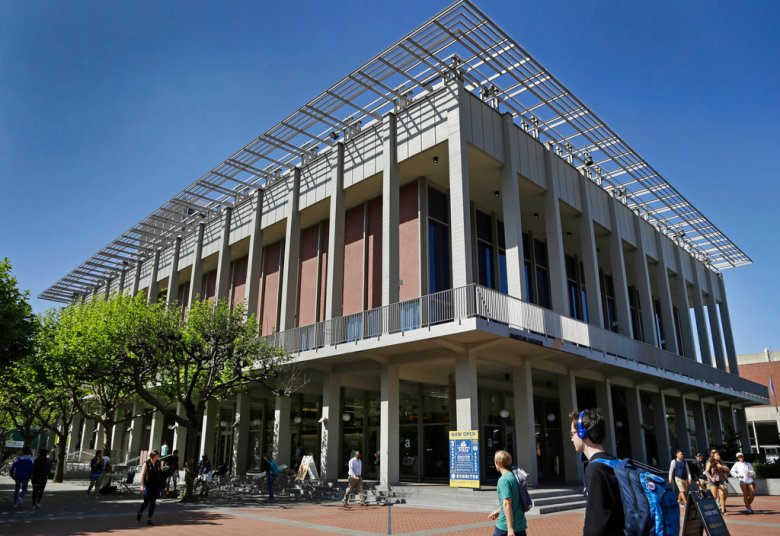 Students walk past the Martin Luther King Jr Student Union at the University of California at Berkeley. Credit: AP/Ben Margot
Lyons said the university’s Interim Vice Chancellor of Equity and Inclusion, Fabrizio Mejia, was leading the revamp in consultation with students and staff. Speaking on behalf of Mejia, university spokesperson Dan Mogulof declined to give details about changes to the center, but said those discussions were underway.
“We are going to do our very best to do the right thing for our community writ large, and I think we can land in a place where people with all kinds of views on all different issues will say ‘I now feel welcome,’” Lyons said. “We have to reopen the Multicultural Community Center and we felt like we have to make it more welcoming, not less.”
While the chancellor did not give a specific date for the reopening, a post on the center’s Instagram page invited community members to a “People’s Potluck” at the center on Feb. 13. Week of Cultural Resistance, an annual event combining music and dance performances, speakers and art workshops, will also return this year, according to another post.
Berkeleyside partners with the nonprofit newsroom Open Campus on higher education coverage.
“*” indicates required fields