
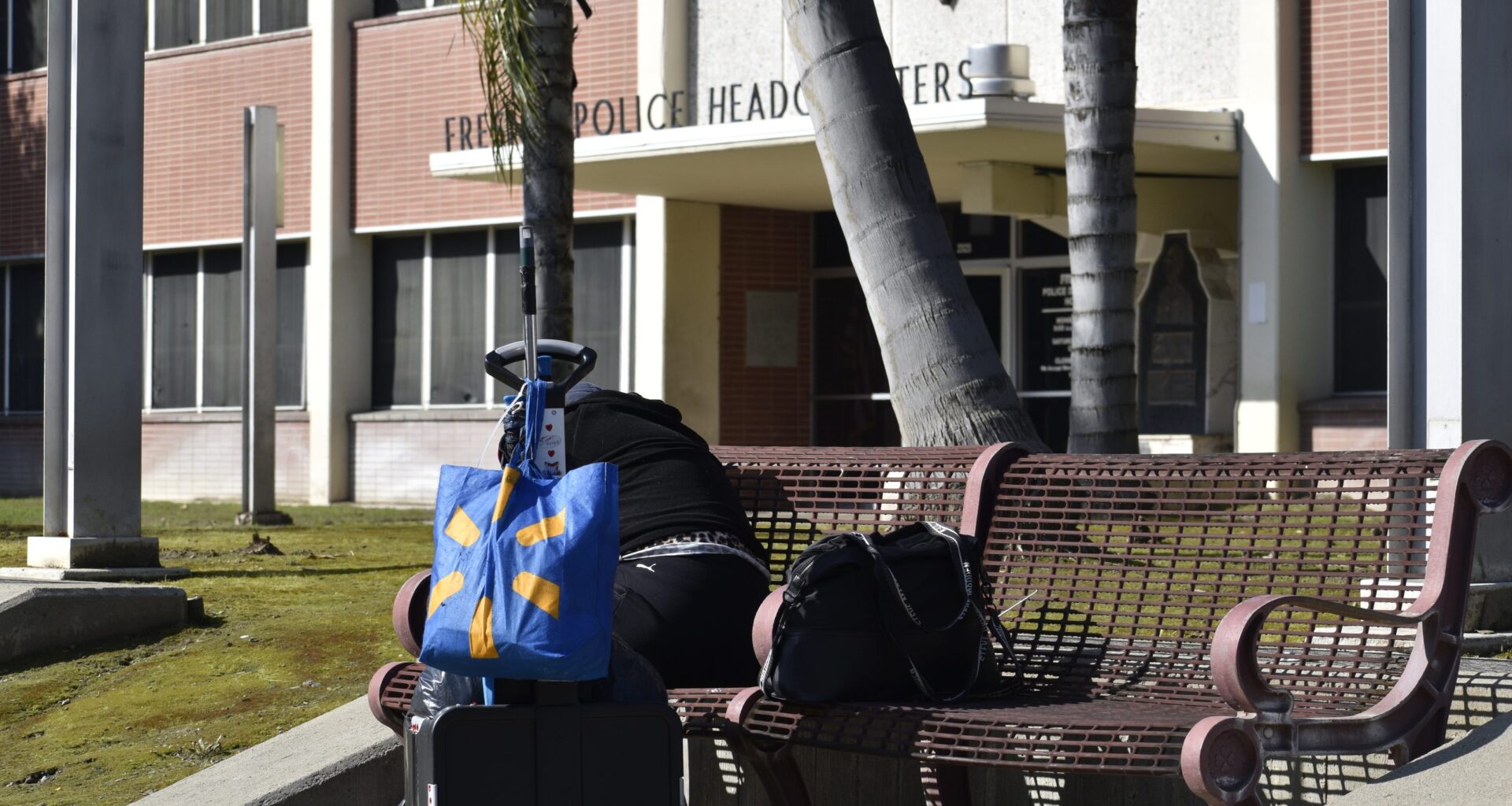
What’s at stake?
The city has no tangible wins to show for its anti-encampment ordinance well over a year since its been implemented.
It’s criminal diversion program has a poor performance within its own meager metric of success; the city has lost all challenges against their the law that have gone to court; business owners are starting to feel gains made from the law were short-lived.
Responding to overwhelming criticism in the fall of 2024 that their new anti-encampment law would criminalize the homeless, Fresno leaders called a news conference to introduce a “creative solution” that they said would create a streamlined system to prevent the criminalization of the local homeless population.
They called it the “Treatment First Program.”
City leaders pledged to Fresno’s unhoused population, virtually the only demographic targeted by the anti-camping ordinance, a way out of their criminal camping arrests if they committed themselves to drug or alcohol treatment provided by a trio of local faith-based service providers.
“If they choose that approach,” Fresno Mayor Jerry Dyer said at the Sept. 23, 2024, news conference, “the police report would be held in advance, and if they completed a program as determined by the treatment provider, that report would be disposed of.”
Now about 16 months later, City Hall can’t say whether anyone has completed any such program.
Fresno City Councilmember Miguel Arias, who since 2024 has emerged as the most staunch defender of the law and who was present at the Treatment First Program’s rollout, told Fresnoland that “I wouldn’t call it a ‘program.’”
There are few numbers or success metrics tied to Fresno’s Treatment First Program.
And, more than a year later, nobody can agree on what these numbers mean — if anything.
Between September 2024, and the end of January this year, Fresno police say a total of 826 arrests or citations were issued under the city’s anti-camping law.
Of the hundreds of bookings, just 18 alleged campers opted into the city’s Treatment First program.
What happened next to those 18 people is unclear, and city leaders gave contradictory answers.
Arias told Fresnoland that it was his understanding all 18 people had successfully completed a treatment program and, subsequently, had their arrest records expunged. But, he acknowledged he had no proof.
On Jan. 29, a Dyer spokesperson, in an emailed statement to Fresnoland, said they “have not been advised that any of the 18 individuals referred by (Fresno police) have completed the Treatment First Program.”
Of the treatment providers that spoke to Fresnoland, none could say whether they even received anybody from the city’s new program.
On top of hard-to-spot success stories for the Treatment First Program, the city initiative never led to any specific service agreements between the city and treatment providers.
Kevin Little is a Fresno attorney who has successfully defended homeless individuals against the anti-camping ordinance. He expressed frustration with both the paltry results from the program, and the city’s decision to not seriously implement any metrics for success.
“If you really are interested in learning how efficacious your solutions are, you would have some tracking,” Little said. “It sounds like all the city knows is that 18, a desultory number when you’re talking a total of about 850…18 people have been referred to for services…we don’t know anything more than that 18 people were dropped off at a location. We don’t know what happened to those folks.”
‘I cannot safely, confidently walk into my business’
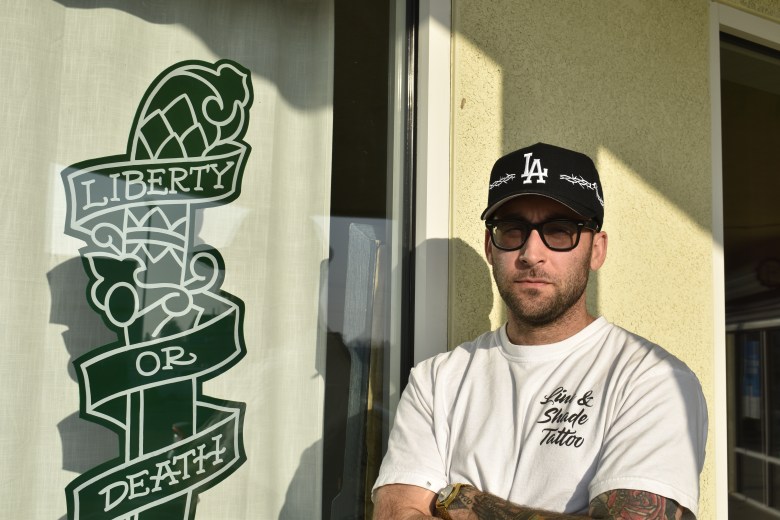 Cameron Phillips. Pablo Orihuela | Fresnoland
Cities and counties across the country gained the ability to criminalize camping following the Supreme Court’s ruling in the Grants Pass case in 2024 — a trial that the federal judicial branch heard at least in part following pressure from some of the country’s leaders like California Gov. Gavin Newsom.
In 2024, Dyer, Arias and other local politicians and business leaders hailed their new legislative powers as a critical new tool to help the city’s beleaguered shop owners, many of whom faced daily challenges from unhoused or encampment residents interfering with business one way or another.
That, they said, was among the problems this ordinance would fix.
Nobody likes arresting the unhoused, city officials and business leaders noted at the time, especially when there’s no place for them to safely go. The Supreme Court, notably, said cities and counties are no longer obligated to provide beds or shelter for the homeless.
There are not enough supportive services for local homeless residents nationwide.
But too many of the city’s business owners were upset, moving to Clovis or closing up altogether. And, six months after the law passed, business owners told Fresnoland that the law, while not popular, was changing things for the better.
“I don’t have people camped out here in the morning,” one business owner told Fresnoland last spring. “I can go days without cleaning up.”
In a Jan. 29 email, the mayor’s office told Fresnoland that, “Business owners have communicated appreciation for the ways the City is responding to their needs. While homelessness, mental illness, and addiction are complex issues, the business community recognizes that the City is supporting them more than ever.”
Not everyone agrees.
Cameron Phillips, a 33-year-old tattoo artist and business owner of Line and Shade Tattoo near Herndon and Polk Avenues in northwest Fresno, said he’s so fed up that he’s closing his shop and moving his family to the coast.
“I cannot safely, confidently walk into my business without worrying about being approached by somebody who has a weapon, and then putting myself in a position where I may have to draw my concealed firearm and take someone’s life, potentially,” Phillips said in a Feb. 2 interview with Fresnoland. “I don’t want to be in that position.”
Phillips said that, in no uncertain terms, the anti-encampment law has been useless in protecting his business.
And, he said, he’s even considering suing the city for lost wages for what he described as “severe emotional distress” for its failure to address the public safety issues he reported to authorities repeatedly, when unhoused residents at a nearby encampment clashed with his customers.
“I’m working with an attorney because of their inadequacy to properly deal with this problem and respond to it.”
The failed attempts to prosecute the unhoused
Fresno also has had little success prosecuting the unhoused residents who refuse treatment.
Its two highest profile attempts at prosecuting the unhoused who refuse treatment have embarrassed Fresno City Hall. In both cases, the unhoused residents walked out of court without accepting either treatment or a criminal conviction.
In the first case, city prosecutors tried to force news reporters to testify in court — aiming to beef up their evidence before a judge ultimately threw it out for violating an unhoused person’s Fourth Amendment right to a speedy trial.
The City Attorney’s Office also lost its first jury trial late last year, and, in a statement to The Fresno Bee, blamed “jury nullification,” when jurors refused to enforce a law they say is unjust.
City Hall will face another legal challenge to its anti-encampment law from Little, the city rights attorney, who filed federal civil rights lawsuit in December. He was the defense lawyer in the city’s first major defeat.
Little is looking to end the city’s enforcement of the law entirely. He said the city should look to invest money toward the other means of homelessness support, rather than what he calls criminalization.
“And so when you create this criminalization machine, it comes at a cost,” Little told Fresnoland. “It comes at a cost where those funds could be diverted to services, could be diverted to shelters, could be diverted to more advocates out there in the field, could be given to nonprofits for people who are already out there dealing with our unhoused community.”
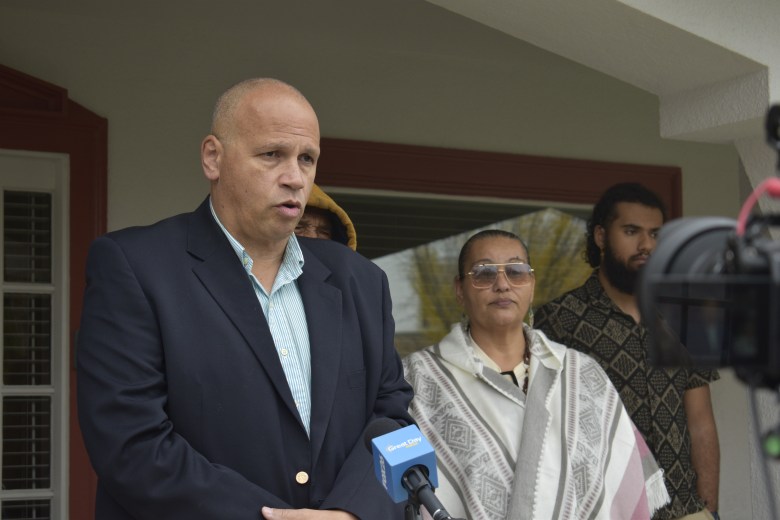 Fresno attorney Kevin Little answers questions from the media following the announcement that he would challenge the city’s anti-encampment ordinance in court. Pablo Orihuela | Fresnoland
Better than nothing?
Of all the original advocates of the city’s Treatment First approach, only Arias is still willing to discuss it in 2026.
Dyer’s office provided some information, but declined an interview. Councilmember Tyler Maxwell, who co-sponsored the city’s anti-camping law with Arias, refused to respond to numerous requests for comment dating back to late last year.
When Arias was asked how he would respond to people who see the data and come away feeling that the only thing the city and county’s anti-encampment ordinances have done is criminalize homelessness, he didn’t disagree.
He said he believed people would come away either thinking the program should be left as is, expanded, or done away with altogether.
“They’re all right,” Arias said, before adding that he believed one of the few things those groups might have in common is that “they all call us the very next day asking us to clear the encampment in their neighborhood.”
But, he said, he stands by the program and says it’s too soon to call it a failure. He said the city does not invest any significant money into it, as it’s just an added task for Fresno police officers interacting with unhoused people.
Arias also argued that 18 unhoused people completing drug and alcohol treatment — if true — is not nothing.
Treatment programs still out of reach for many
Two of the three local homeless supportive services that partnered with the city for the program —the Fresno Mission and the Salvation Army — said their programs and services work and they have the receipts to show it. Their services largely operate independent of the city, and are not directly connected to the ordinance or even Treatment First.
“There’s nothing that’s been tailored specifically for the camping ordinance,” Dildine said of the Mission’s treatment options.
The Poverello House, the biggest treatment service provider of the three, did not respond to multiple requests for comment dating back to last year.
Major David Pierce, an administrator of donor development with the Fresno Salvation Army, said the organization offers six-month programs that offer housing, food and other faith-based supportive services.
The Fresno Mission offers even more services to residents — from warming centers to 12-month programs that include six months of transitional housing.
The Mission’s CEO, Matt Dildine, told Fresnoland the 12-month program, which is the highest tier of recovery they offer, helps people prepare to reintegrate into the community.
“Every single person that leaves that program, leaves with a job, their GED and a place to live,” Dildine said. “It’s produced incredible results.”
Pierce told Fresnoland that the success rate for the Salvation Army’s program hovers slightly below 50%. Dildine said that the 12-month program has a success rate “in excess of 80%” for individuals who stay past the first three months.
The only catch?
There’s typically no room available in any local programs, with lengthy waiting lists and no additional funding to expand services in the wake of the city’s crackdown on camping.
The mayor’s office told Fresnoland in an email on Jan. 29 that there was an understanding between City Hall and the three service providers that the latter group had the capacity to take on Treatment First enrollees in spite of no additional funding.
The Fresno Mission held a fundraiser over this winter to help keep their warming centers running.
Dildine told Fresnoland on Jan.26 that the Fresno Mission’s crisis housing for families has a waitlist of about 150, down from about 200 he said.
The Salvation Army’s rehabilitative program capacity tops out at a little over 100, Pierce told Fresnoland, though enrollment is on a rolling basis.
Also, neither group could say whether any of the 18 referrals even made it to one of their programs. There is no indication that they’re tracking that data, either.
‘A myopic view of a very complex problem’
What would it take to make it work — or at least work better — in Fresno?
Arias, who will term out as a councilmember in just under a year, said complaints about the policy are valid, but he argued that the policy is not the real problem.
Arias suggested that at least part of the problem is the fact that local governments can only incentivize — not force — people to accept treatment services.
“But it’s voluntary,” Arias said. “I don’t know how to force people to do things that are in their interest when it’s voluntary.”
The state passed the Lanterman-Petris-Short Act in 1967, a landmark policy that established strict guidelines to force people into treatment. Efforts to force individuals into treatment have been met with stiff opposition from advocates for patients with disabilities.
California’s CARE Court system, launched at the same time as Fresno’s anti-camping law with a similar approach, slightly relaxed some rules for treatment enforcement, but the state’s program hasn’t fared much better than Fresno’s policy.
Arias said he remains open to suggestions – either from City Hall or local advocates — and encouraged more public debate. But he also said he’s not hopeful that a more elegant solution could emerge.
“What I will tell you is,” Arias said, “once they understand that it’s voluntary, and that we cannot mandate it under state law, it really removes our ability to make a difference.”
Little has long argued that the city’s approach toward unhoused residents is, at best, unsophisticated and indifferent. Focusing only on substance abuse treatment, Little said, addresses just a small fraction of the unhoused community.
“It reflects a myopic view of a very complex problem,” Little told Fresnoland.
He said the city’s paltry stats and disorganized approach to treatment are only further evidence that the law doesn’t work and the city isn’t interested in making it work. If City Hall wanted the laws to be effective, Little said, “you would have some tracking.”
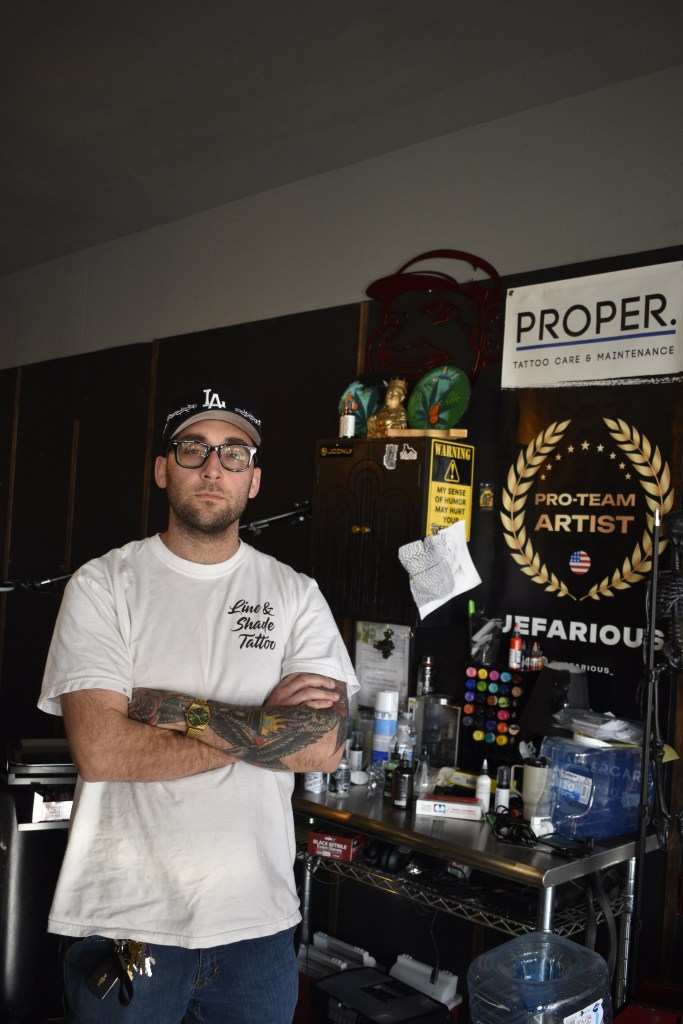 Cameron Phillips. Pablo Orihuela | Fresnoland
“We don’t know anything more than that 18 people were dropped off at a location,” the attorney reiterated. “We don’t know what happened to those folks.”
Meanwhile, Phillips, the westside tattoo shop owner, says he can’t wait around any longer just hoping the city might one day make the lives of small business owners easier.
“Those numbers tell the whole story,” said Phillips.
Dildine, the Mission’s CEO, said accepting treatment, ultimately, will always be up to the individual’s frame of mind, regardless of the carrots and sticks government officials try to manufacture to force the issue.
“I think when you have somebody that’s in a tent, they’re not going to move, and their only other option is to be arrested, there’s a good chance that person isn’t just simply ready for treatment,” Dildine said. “To choose that option, you have to be ready for it.”
Related