
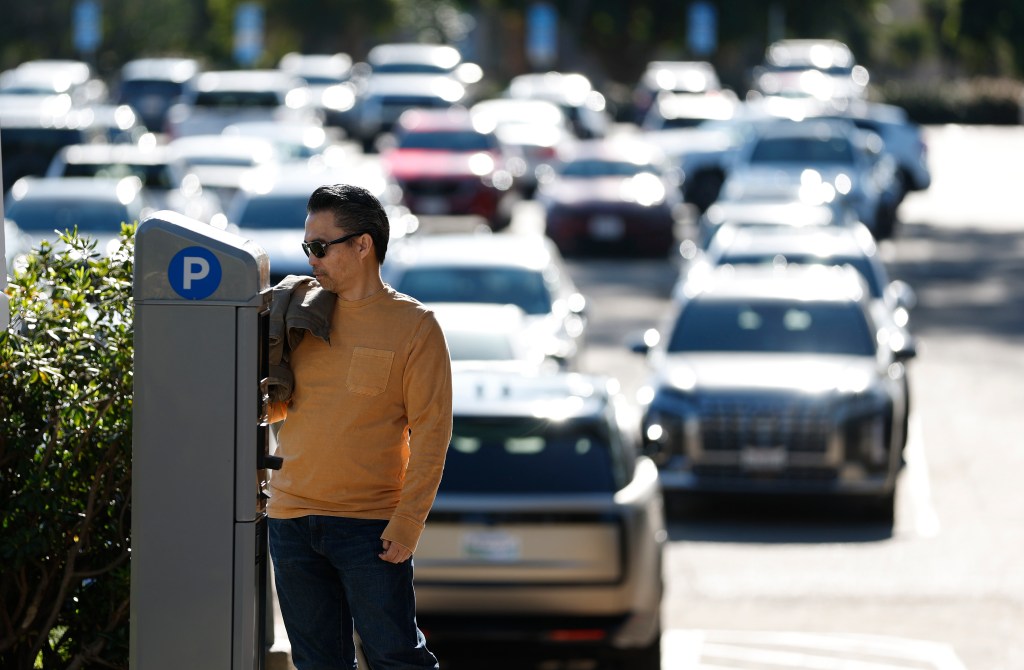
The debate over parking in Balboa Park has reached a turning point, and San Diegans deserve clarity about the choice before them.
On Monday, the City Council will consider two very different approaches to the same problem. Council President Joe La Cava is proposing a suspension of paid parking. I am proposing the Balboa Park Parking Access and Fairness Ordinance, which fully repeals paid parking and replaces it with a long-term, equitable solution.
The distinction matters — not just procedurally, but philosophically.
A suspension is temporary by design. It pauses enforcement, but leaves the underlying ordinance intact. It allows paid parking to return at any moment, without a new City Council vote. It maintains uncertainty for workers, volunteers, families and visitors, and offers no clear directive on how thousands of residents who purchased annual parking passes will be reimbursed — or whether they will be at all.
My proposal takes a different approach. Repeal means ending the policy completely. It removes the enforcement system, restores free access permanently and requires the city to fully refund all annual pass holders. It closes the door on confusion and ensures the same rules apply to everyone.
This debate is often framed as being about convenience. It isn’t.
I live near Balboa Park, but this issue has never been about saving myself a few dollars. It’s about equity. It’s about who absorbs the cost when the city looks for quick revenue. Paid parking doesn’t fall hardest on those with the most flexibility. It lands on working families, foster youth visiting museums with group homes, older adults on fixed incomes and workers whose jobs depend on consistent foot traffic.
Since paid parking went into effect, those impacts have been visible. Businesses inside the park report fewer customers. Museum attendance has softened. Volunteers from neighboring cities face new barriers to participation in a park that serves the entire region. Families now make cost calculations before deciding whether a visit is worth it.
That reality is why my proposal secured the support of more than 120 restaurant workers from across Balboa Park, along with the California Restaurant Association. These are the people on the ground — servers, cooks, managers, and staff — who are seeing firsthand how paid parking affects foot traffic, hours and jobs. They have made it clear they do not support a temporary suspension. They are calling for a full repeal.
That perspective matters.
A suspension delays the issue. It keeps the city in limbo and invites the same debate to resurface months from now. A repeal resolves it and allows the city to move forward with a funding model that aligns with San Diego’s values.
That’s why my ordinance is paired with a second proposal: the Marston Balboa Park Partner Program.
This program would create a voluntary, philanthropic pathway to fund park infrastructure and maintenance without charging people to park. San Diego has a long tradition of civic generosity. Our hospitals, universities, arts institutions and cultural landmarks are supported through partnerships between the public and private sectors. Balboa Park should be no different.
Through this program, individuals, businesses, foundations and institutions could contribute directly to park improvements — restrooms, pathways, landscaping, lighting and long-overdue maintenance. In return, partners would be recognized through tasteful plaques, signage and honors throughout the park, celebrating civic leadership rather than hiding revenue collection behind parking meters.
This is not a tax. It is an invitation to invest in a shared asset.
Cities across the country fund their great parks this way, generating sustainable revenue while preserving free access. Paid parking does the opposite.
Historically, San Diego understood that public spaces thrive when access is protected. Balboa Park itself — including landmarks like the Organ Pavilion — exists because civic leaders believed it should be open to all, not parceled out by ability to pay. Treating the park as a fiscal backstop undermines that legacy.
On Monday, the City Council will be asked to choose between two paths. One pauses a policy and hopes the controversy fades. The other ends it, refunds residents and replaces it with a model that reflects who we are as a city.
San Diegans deserve more than a temporary fix. They deserve a permanent solution — one that keeps Balboa Park accessible, equitable and true to its purpose.
That is the vision behind my proposed Balboa Park Parking Access and Fairness Ordinance.
Harris is CEO of S Harris Communications and the San Diego Public Advocate organization. He lives in Bankers Hill.