
Why this matters
Pollution in the Tijuana River has for decades impacted communities on both sides of the U.S.-Mexico border. As officials seek solutions, the public health crisis continues to plague residents.
Keep inewsource tracking sewage, health impacts, and cross-border transparency.
Give $10
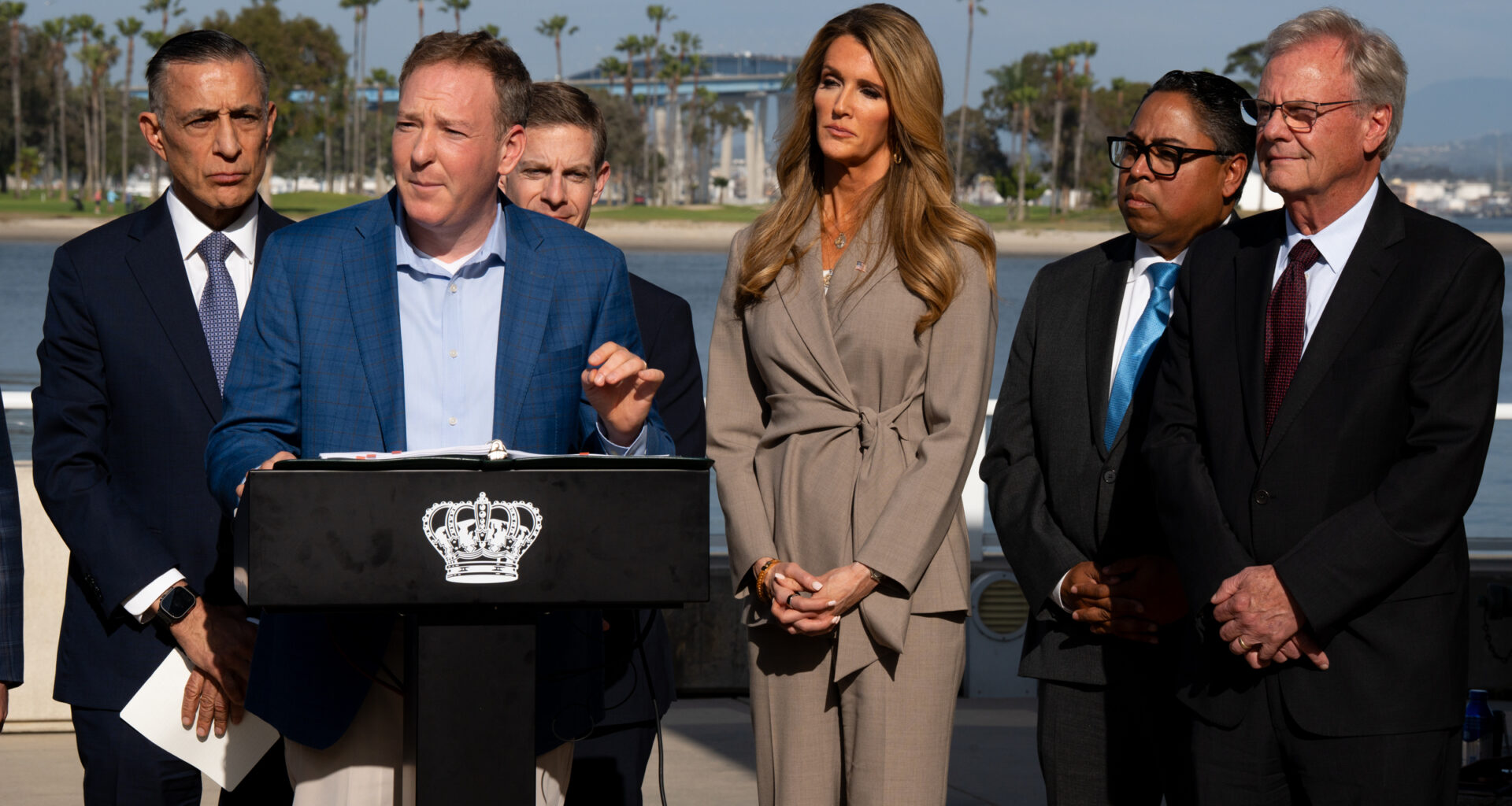
The head of the Environmental Protection Agency visited the San Diego border for the second time in 10 months on Thursday to get a closer look at the Tijuana River sewage crisis that has closed beaches and caused health problems for residents, Navy SEALs and others for years.
EPA Administrator Lee Zeldin met with local politicians and small business owners in the South Bay, accompanied by Small Business Administration Administrator Kelly Loeffler. At a news conference in Coronado, Zeldin summarized efforts to date, and added that several projects in Mexico are slated to be finished this year, including a critical sanitation pipeline Mexico agreed to complete in 2026.
“Progress has already started, and we will stay on top of Mexico to make sure that they all get done,” Zeldin said.
Zeldin toured the Tijuana River valley in his first trip to San Diego in April when he met with elected officials and SEALs, toured the South Bay International Wastewater Treatment Plant and traveled over the Southern border by helicopter to see the valley from the sky.
On that trip, he also met with Mexican officials on behalf of the Trump administration to begin a process that led to a new agreement between the U.S. and Mexico in December.
The agreement renewed commitments made by the Biden administration, and added additional provisions such as a binational sewage monitoring system as well as plans to account for future population growth in the region.
Over the last several decades, billions of gallons of untreated wastewater laced with chemicals have flowed into the Tijuana River and into the Pacific Ocean, plaguing communities along the way and up the coast, including Coronado.
 Wastewater foam froths in the Saturn Boulevard hotspot in the Tijuana River on Nov. 19, 2025. (Philip Salata/inewsource)
Toxic gasses emanating from the river have also contaminated the air in the South Bay, impacting schools and neighborhoods near the river.
Last year inewsource carried out a months-long investigation into the chronic public health impacts related to the sewage, interviewing more that 100 people living and working in the Tijuana River valley. Nearly all complained of gastrointestinal and respiratory symptoms or had family members or friends who have gotten sick and attributed their illnesses to the pollution.
Following the investigation and calls from doctors, scientists and advocates, San Diego County government officials committed to funding a multi-year epidemiological study of the long-term effects of exposure to toxicants from the river.
The county will also work to repair what’s been called a “hotspot” in the river known to be aerosolizing pollutants, sending chemicals into the air and exacerbating problems.
County Supervisor Paloma Aguirre, who has called for changes for years, first as mayor of Imperial Beach and more recently on the Board of Supervisors, was not initially invited to Zeldin’s planned events this week.
She sent a letter to Zeldin on Wednesday offering to host a meeting with impacted community members and then, instead, agreed to a private meeting with the EPA administrator. Aguirre, who represents the South Bay, published her letter on Instagram.
After her meeting, Aguirre told inewsource that her conversation with Zeldin was productive, and she praised his efforts toward addressing the sources of the pollution crisis.
“The most important thing that I wanted to make very clear to him, and I think it was well received,” Aguirre said, “is that all of these efforts are very appreciated but they’re longer term solutions that won’t bring the immediate relief that our residents who are suffering need.”
Aguirre said that she flagged several projects to him that she believes the federal government should prioritize, including diverting and treating the river entirely on the U.S. side of the border. She highlighted county efforts to address impacts of the Saturn Boulevard hotspot and to study economic impacts on businesses in the region.
Aguirre said she and Zeldin agreed that transparency between all parties involved on both sides of the border is critical for long-lasting solutions.
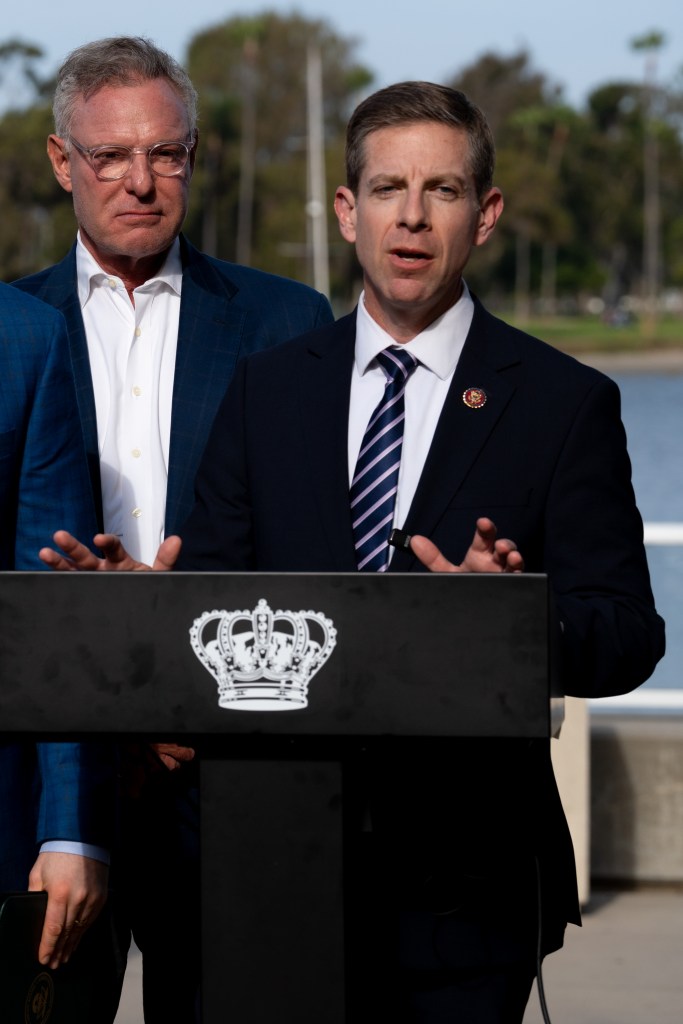 Rep. Mike Levin speaks at a press conference held by EPA Administrator Lee Zeldin in Coronado, Calif. on Feb. 5, 2026. (Philip Salata/inewsource)
Though Zeldin and Loeffler’s agenda included meetings with local businesses, much of the focus of this year’s press conference underlined the impact of the pollution on the defense sector. One of the two businesses they visited was a defense manufacturer, the other was a hospitality business.
Coronado Mayor John Duncan attended Zeldin’s news conference. “This issue has a massive effect on the health of the region, the environment, also on our businesses, our military,” he said. “It’s a true environmental disaster. It has to be stopped. We’re making progress.”
Local congressional members at the news conference included Republican Darrell Issa and Democrats Mike Levin and Scott Peters.
Issa, whose eastern San Diego County district includes 80 miles along the U.S.-Mexico border, said, “I now am confident that if we continue to press our partners … we’ll be able to have the reforms that we need to keep our beaches open, to keep our Navy SEALs safe, so they can keep us safe around the world.”
Levin, who represents northern San Diego County and southern Orange County, applauded Zeldin’s bipartisan cooperation with local leaders.
“I wish there were more issues like this where we could all work together, roll up our sleeves and get good things done for the people we serve,” Levin told inewsource after the press conference.
Levin added that his next focus is on how to get permanent funding for the South Bay International Wastewater Treatment plant, something local advocates have been calling on for years. He said that negotiating permanent funding through the United States-Mexico-Canada Agreement could be a solution.
Repairs at the plant are subject to the yearly congressional funding cycle, making it difficult to fund regular maintenance, one of the causes of its failures over the years.
inewsource asked Zeldin about what resources the federal government could provide to address the current public health crisis in the South Bay and the hotspot at Saturn Boulevard. He said he would offer whatever help he could legally offer.
“There have been a number of specific asks that have come up today that may or may not have included topics that you brought up,” Zeldin said. “I look forward to going back to D.C., sitting down, assessing today’s asks, and finding out any other possible way that we can help.”
Several members of a coalition of advocacy groups working under the umbrella of the Tijuana River Coalition also attended the press conference. The group includes more than 60 organizations that have banded together to streamline efforts on both sides of the border to advocate for the river.
In a press release issued by the coalition, San Diego State University public health researcher Dr. Paula Stigler Granados said high hydrogen sulfide levels near the river triggered an alert the day Zeldin visited. The gas is one of the byproducts of pollution in the air that scientists are monitoring.
“This is no longer an abstract environmental problem; it is an ongoing public health emergency that needs coordinated action on both sides of the border,” Stigler Granados said.
The coalition also reiterated Aguirre’s invitation to meet with community members, advocates and scientists in the South Bay. One of its members, Waylon Matson, director of 4 Walls International, said that the solution to the crisis needs not only long-term funding but also regional community partners in the decision-making process.
Another member, Carmen Penaloza Valdez, a policy and research intern at Youth Will who grew up in both San Diego and Tijuana, called the problem “an inhumane public health crisis that harms thousands beyond ‘borders,’ and a politicized issue that is now in the hands of both political powers to act.”
Update, 6:30 p.m. Thursday, Feb. 5: This story was updated with comments from several attendees and community members.
Type of Content
News: Based on facts, either observed and verified directly by the reporter, or reported and verified from knowledgeable sources.