
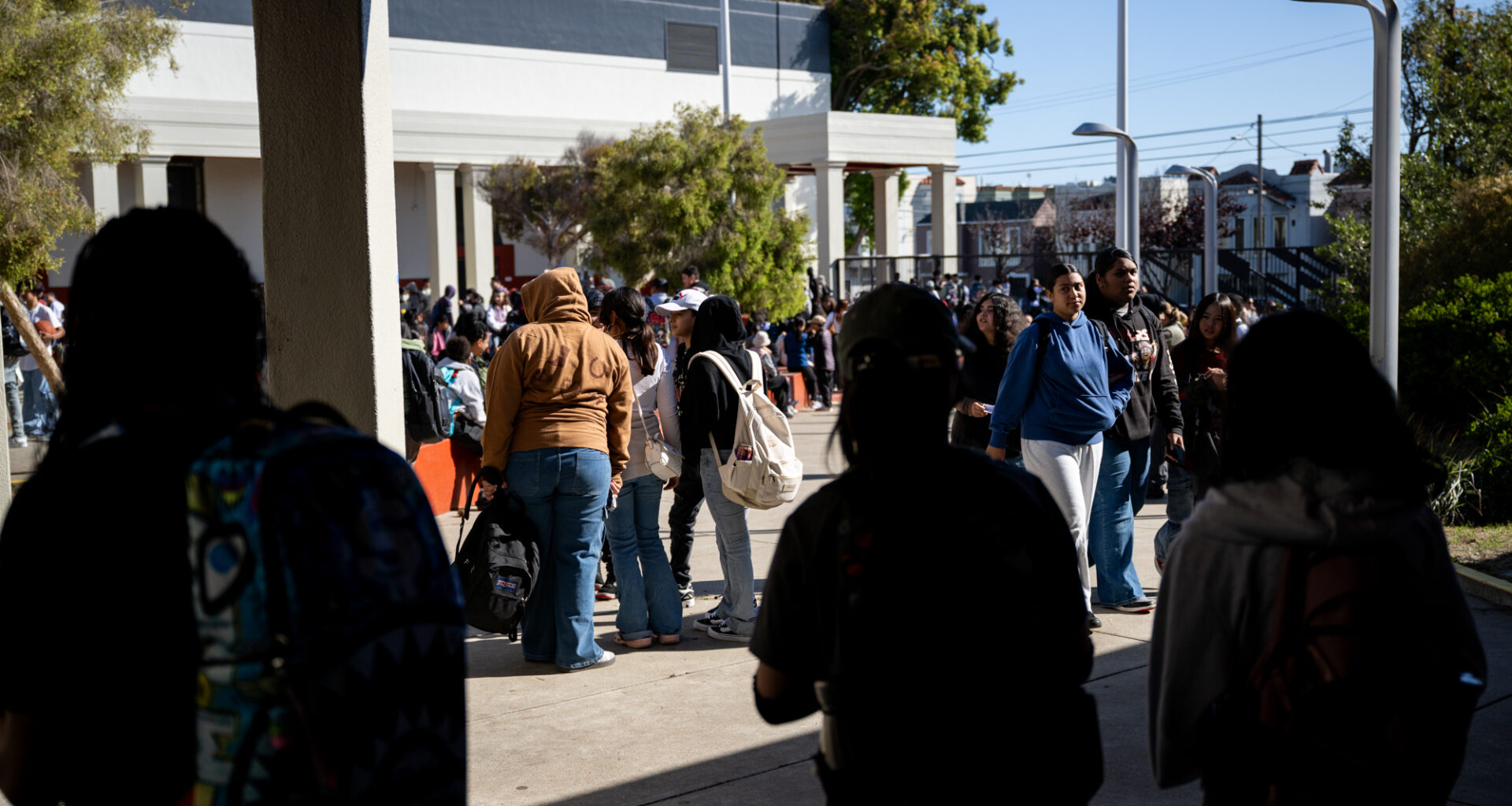
Public libraries will remain open, Lurie noted, and children older than 8 are able to access the facilities without a parent or guardian.
The strike set for Monday comes after nearly a year of unsuccessful contract negotiations between the union and district leaders. Currently, educators are working under a deal that expired in June.
It’s not yet clear how the city plans to support families should the strike extend beyond Monday. Lurie said he’s still hopeful an agreement can be reached, and that he was grateful that UESF and SFUSD had returned to the bargaining table Thursday night.
“Even though there are details to work out, I know that everyone at the table, including every hardworking educator, shares a dedication to our students,” he wrote.
But UESF President Cassondra Curiel said in a statement after Thursday’s bargaining session that the union was disappointed by an apparent “lack of urgency” from district negotiators.
Su had said Thursday that the district planned to make a proposal to the union that met its top demand — fully funded health care for educators with families — and offered wage increases within its means, but Curiel said no such proposal was made that night.
“All week we have been bombarded with the message that the district was prepared to come to the table and give us a serious proposal — and our members were ready to negotiate tonight,” Curiel said. “We aren’t sure what happened tonight when the district’s team — minus Dr. Su — came to the table without such an offer.”
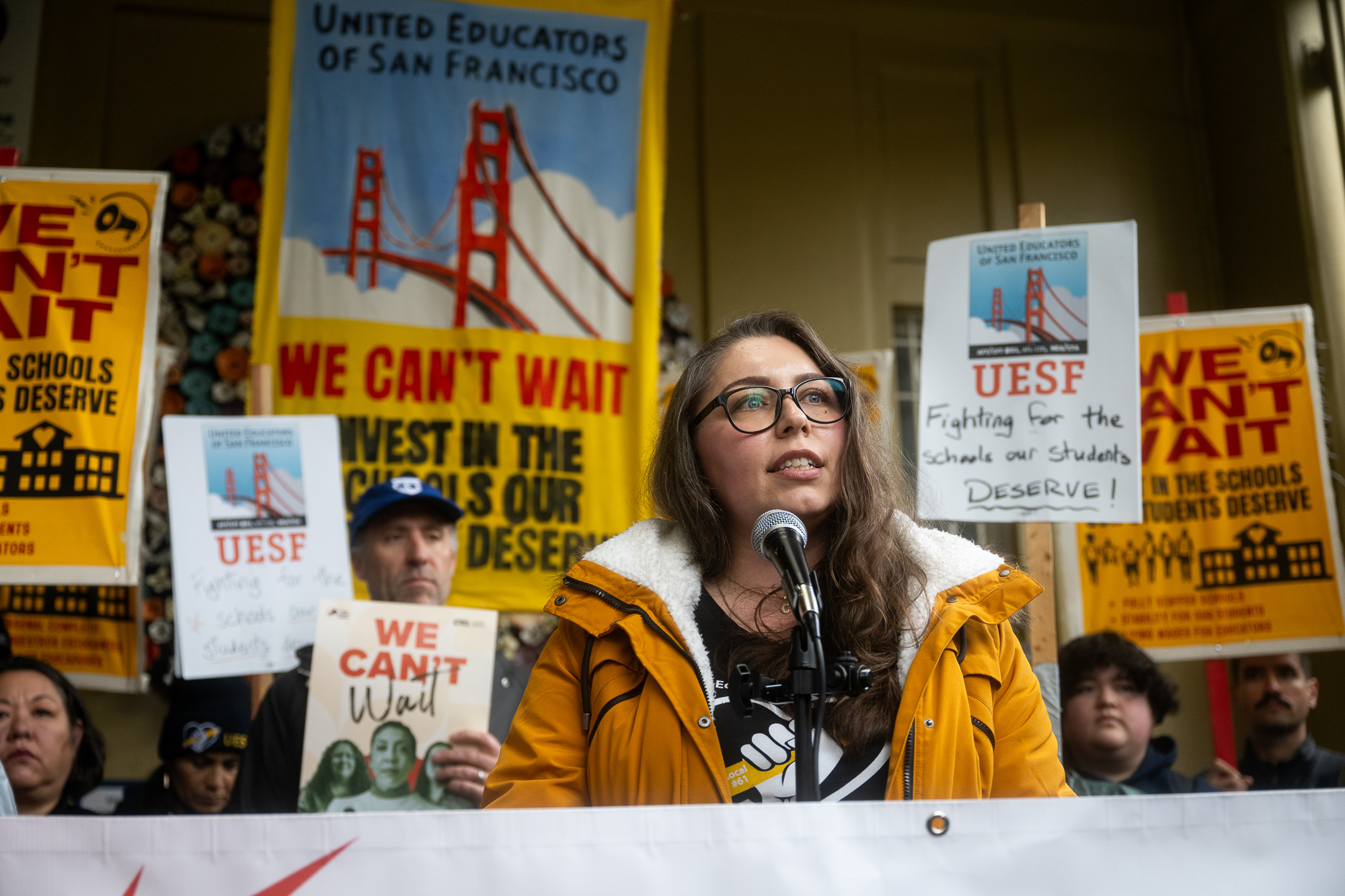 Cassondra Curiel, president of United Educators of San Francisco, speaks during a press conference at Buena Vista Horace Mann K-8 Community School in San Francisco’s Mission District on Feb. 4, 2025. (Beth LaBerge/KQED)
The union has said it will not accept a contract that doesn’t cover health care costs, which rose this year. Educators with families on their health care pay about $1,500 per month — up to 40% of some of their paychecks, according to Curiel.
UESF has also requested raises of 9% and 14% over two years for different members, and to transition special education staff from a caseload to a workload model, to alleviate overloading the hard-to-staff positions.
SFUSD has said repeatedly that it can’t meet the union’s demands because of its budget shortfall. Su said that Thursday night, the district maintained its offer for 6% raises over three years, with concessions from educators, which it made in October. She said the district is also offering two health care benefit options: one to cover 75% of premiums, and another to give educators a $24,000 annual stipend for health care costs.
A neutral mediator earlier this week found that that wage offer — which fails to match the state’s cost-of-living adjustment — is too low, and recommended a 6% raise over two years, along with fully funded health care for the next three years, using parcel tax funding.
The district suggested resuming negotiations Friday morning. The union has agreed to bargain Saturday at 2 p.m., saying that would “allow the district time to make preparations on an offer.”