
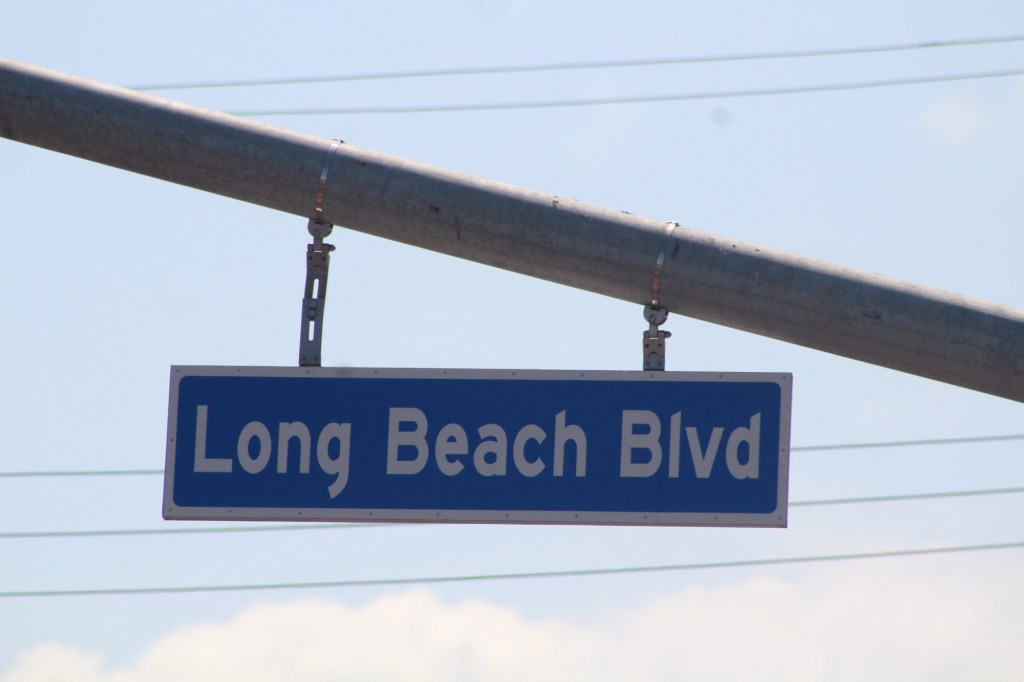
Long Beach has taken another step in addressing human trafficking and other public safety concerns along the Long Beach Boulevard corridor in the city’s north.
The City Council this week unanimously approved adopting a new strategic plan that will be used as the city’s comprehensive strategy to enhance public health, public safety and human trafficking response along the corridor.
The plan, dubbed the R.E.A.C.T. Strategic Framework, includes community input, builds on existing city work, and provides a pathway forward for addressing a complex and interconnected issue, officials said. R.E.A.C.T is an acronym for the different pillars of the plan: report, economic investment, advocate, community budget, and tri-city and Los Angeles County partnership.
“It’s not just a policy action, but is a commitment to how we as a city approach human trafficking with the seriousness it deserves,” Ninth District Councilmember Joni Ricks-Oddie said during the Tuesday, Feb. 3, council meeting. “At its core, this framework helps destill and clarify how we assess and address human trafficking across Long Beach. It provides guidance, both internally and externally, on what the city is doing now and what we will be doing moving forward, and how these actions connect to one another.”
Addressing the human trafficking and public safety concerns along the Long Beach Boulevard corridor – near several businesses, houses and elementary schools – is being spearheaded by Ricks-Oddie and Eighth District Councilmember Tunua Thrash-Ntuk.
Commercial sex operations have been identified as a persistent concern along Long Beach Boulevard for several years, and are not isolated to North Long Beach, officials said.
In the past, Long Beach has tried to address the issue in different ways, including legal guidance, survivor support, enforcement, outreach and environmental design, according to city staffers.
In April, Long Beach leaders and staff began revisiting ways to address human trafficking along the corridor, as well as the public safety and public health concerns North Long Beach community members shared. The City Council directed staffers to work on a comprehensive report assessing the scope of trafficking activities, current city efforts and programs, barriers to effective response, updating ordinances, opportunities for regional coordination, and more, according to the staff report.
The council has already OK’d $150,000 in anti-human trafficking corridor funding as part of the fiscal year 2026 budget. This allocation is part of a broader investment of economic redevelopment proceeds, generated from former redevelopment agency land sales, which aims to support inclusive economic development and neighborhood revitalization across Long Beach.
Since then, the Eighth and Ninth Council District offices have continued relaying residents’ concerns to staff, and underscoring the community’s urgency for the requested assessment and a data-driven path forward, according to the staff report.
In August, the city released a comprehensive report that detailed the city’s existing efforts, interdepartmental coordination, regulatory tools and recommendations for strengthening the city’s response. The assessment identified persistent challenges, including limited enforcement mechanisms, resources and capacity constraints, and gaps in regional coordination and data collection infrastructure.
The Eighth and Ninth Council District Offices subsequently convened community engagement sessions in October to gather direct testimony from North Long Beach residents, survivors of human trafficking, business owners and community stakeholders.
The human trafficking town hall and summit, the latter held in partnership with the Long Beach Human Trafficking Task Force, documented the impacts of commercial sex activities on neighborhood quality of life, business viability and youth safety, the staff report said. Participants identified the need for a greater community voice in resource allocation, strengthened regional partnerships to prevent displacement of illicit activity, and sustained investment in corridor improvement and economic development.
Long Beach’s assessment also showed a marked increase in service calls along the Long Beach Boulevard corridor. Preliminary data from the Long Beach Police Department showed an increase in service calls pertaining to sex work, rising from 126 calls in the first half of 2024 to 453 in the corresponding period in 2025.
“The community has consistently asked for a response that is coordinated, transparent and data-driven, not fragmented,” Thrash-Ntuk said during the council meeting. “In response, this item provides a policy architectural design to address the gaps identified in the city’s assessment and respond directly to the community’s needs.”
The R.E.A.C.T. framework organizes the city’s response into the five pillars that aim to advance public safety outcomes, support survivor-centered services and enhance community resilience, according to the staff report.
The R.E.A.C.T. Strategic Framework includes:
Report: Establishing mechanisms for enhancing data collection, community reporting infrastructure and information-sharing protocols. The objective is to improve the city’s capacity to identify patterns of illicit activity, measure the effectiveness of interventions and inform evidence-based resource allocation.
Economic investment: Prioritizing corridor vitality and business resilience as foundational elements of sustainable public safety. This pillar will help leverage existing economic development tools, infrastructure investments and zoning incentives to transform conditions that enable illicit activity.
Advocate: Coordinating the city’s legislative advocacy and intergovernmental engagement to advance policies that strengthen local enforcement tools and expand survivor support resources. This pillar will focus on aligning state and federal legislative priorities with community-identified needs while positioning the city as a regional leader in evidence-based anti-trafficking policy.
Community budget: Establishing a participatory budgeting mechanism that empowers community stakeholders to direct a portion of allocated anti-trafficking resources toward locally identified priorities. The mechanism will establish processes for community input, evaluation criteria and accountability measures that inform resource allocation decisions.
Tri-city and LA County partnership: Formalizing the city’s commitment to regional coordination with neighboring jurisdictions, including Compton and Lynwood, to address cross-jurisdictional dimensions of human trafficking and related activity. The objective is to prevent displacement of illicit activity across municipal boundaries through aligned enforcement strategies, shared information protocols and coordinated service provision. Long Beach will evaluate existing partnership mechanisms, identify formal coordination structures and develop mutual-aid frameworks.
“This is about being intentional, intentional in how we communicate, how we organize our response and in how we align city operations under a common strategy,” Ricks-Oddie said. “One of the strengths of this framework is visibility. It highlights the work that is already occurring across departments, and helps us keep this issue at the forefront – not episodic, not reactive – but consistently top of mind.”
The council voted 8-0, with Councilmember Daryl Supernaw absent, to adopt the framework.
City staffers will report back to the council within 45 days on the high-level implementation of the R.E.A.C.T. Strategic Framework.