
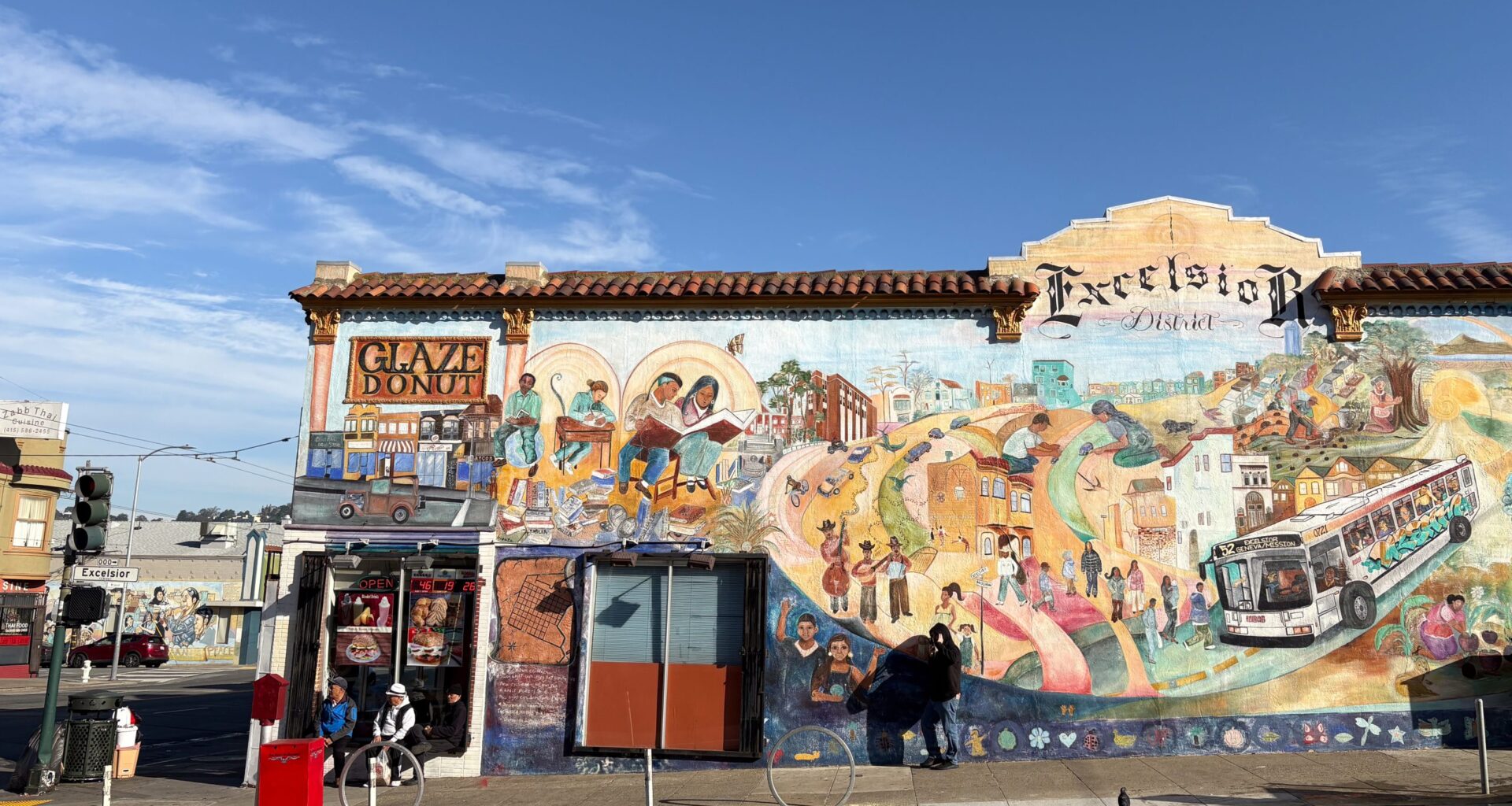
If you’ve ever wanted to open a storefront in the Excelsior District, now’s your chance.
The city is offering one-time grants between $50,000 (for relatively uncomplicated businesses like boutiques) and $100,000 (for permit-heavy businesses like full service restaurants and bars, or pharmacies) to fill empty storefronts in Excelsior business corridors.
The grants, launched in late January by the San Francisco Office of Economic and Workforce Development, are a prayer answered for Ben Bleiman, the co-interim executive director of the Excelsior Action Group, a nonprofit helping with the community benefit district that covers the Excelsior’s commercial corridors.
“The Excelsior is a neighborhood that’s strapped for resources,” Bleiman said. “And lo and behold, they announced that grant, which is fantastic!”
Since he joined the Excelsior Action Group a year ago, Bleiman has been on a quest to figure out why local storefronts have stayed empty. He’s talked to many owners and city officials because he’s also president of the Entertainment Commission, and manages the Discover Polk Community Benefit District in Polk Gulch and Nob Hill.
His conclusion: the high cost of plumbing and electrical upgrades.
Before a new business can open, its owners have to prove that they are in compliance with all the current city codes. In the case of older buildings, which the Excelsior has no shortage of, that can mean a complete overhaul of plumbing (old pipes), electrical, ventilation — you name it.
In some situations, a landlord with an out-of-date storefront might be motivated to bring it up to code to attract tenants. But in the Excelsior, many commercial buildings have been owned by the same families for generations. That significantly reduces the financial pressure to keep a storefront occupied, despite the city’s commercial vacancy tax on landlords who leave a storefront vacant for over six months.
As a result, many landlords can afford to leave the spaces vacant rather than make expensive repairs, or leave it up to the tenants to take on the costly property maintenance and upgrades.
Andrea Ferrucci experienced that particular scenario firsthand. She spent 15 years battling plumbing issues after opening Dark Horse Inn, a gastropub on Geneva Avenue near Mission Street, with her partner Sean Ingram in 2011.
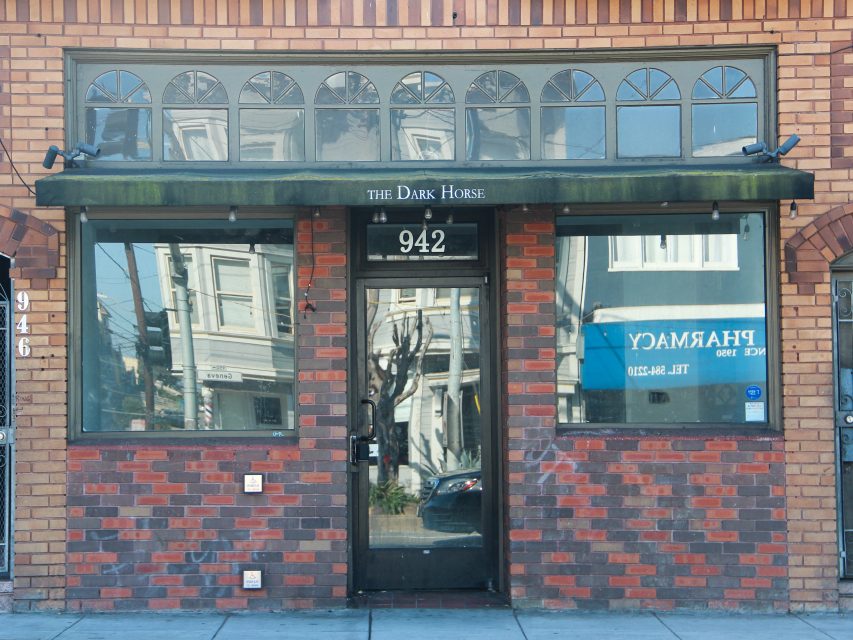 Dark Horse Inn closed in March 2025. Photo by Xueer Lu. Feb. 6, 2026.
For Ferrucci, plumbing was the biggest problem. The management company of the building, Makras Real Estate — owned by Victor Makras, who was sentenced in 2022 to three years’ probation and a $15,200 fine for bank fraud — “refused to do anything about it.”
Each year, old pipes cost them thousands of dollars, from hiring plumbers to snaking and jetting the drains, buying equipment to handle minor fixes themselves, and cleaning up the backup mess in the bathroom.
It’s tough, Ferrucci added, to explain to a customer that they can’t use the restroom halfway through a meal because the plumbing is broken, again.
For the most part, customers were understanding because “it’s such a widespread problem,” Ferrucci said. But it got to be too much for her. When their lease ended in March 2025, she and Ingram decided not to renew it.
“We just weren’t going to deal with the building anymore,” she said.
Bleiman has spent the past year working with Eddy Martinez, a real estate broker contracted by the Office of Economic and Workforce Development, and April Gubatina, the Excelsior corridor project manager at that office.
He found out that some landlords are actually well-meaning but don’t have the resources they need to bring their building up to code. Commercial rent in the Excelsior is often half, or even a quarter, compared to fancy and more desirable areas like the Marina, and that affects their ability to fund renovations too.
“They can’t afford to do the work. So what could they do? They could sell it to an evil company,” Bleiman said. “Or they just have to sit around and wait for the perfect tenant. And those tenants don’t necessarily come along.”
Lupe Oropeza, a retired social worker who opened Love & Light Yoga and Wellness two years ago at 4877 Mission St. between Russia and France avenues, says such grants work to the benefit of everyone. Oropeza received $25,000 from OEWD two years ago to help launch her studio. Martinez helped her find the space and negotiate her lease.
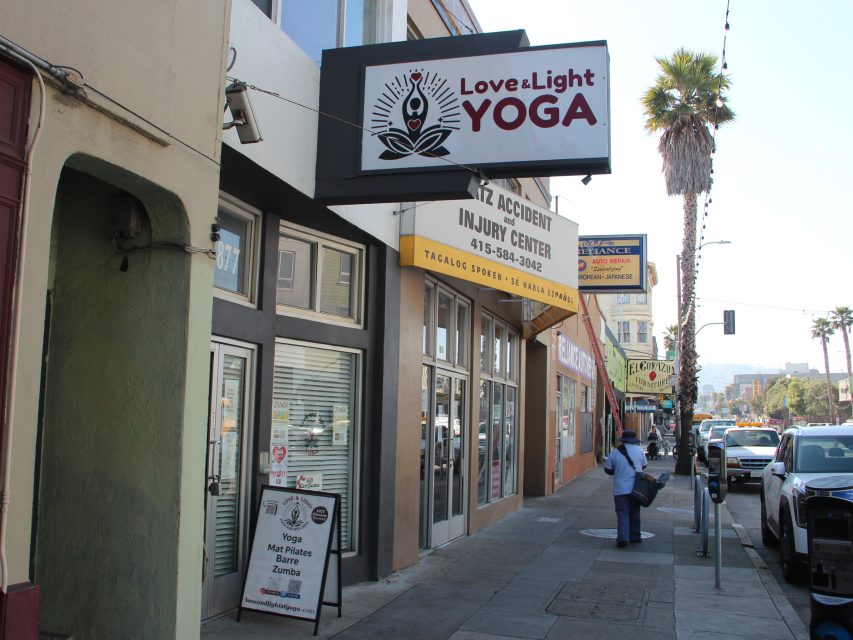 Lupe Oropeza, a retired social worker, opened Love & Light Yoga and Wellness two years ago at 4877 Mission St. between Russia and France avenues. Photo by Xueer Lu. Feb. 6, 2026.
So far, her experience with the building’s owner has been good. “He has been very supportive from the very beginning,” Oropeza said. When plumbing issues arise, he fixes them quickly. When the roof leaked when it last rained in January, he responded fast.
“He really listens to the concerns and acts upon them right away,” Oropeza said.
The grants are available to individuals or organizations that have operated a business in San Francisco for at least three years. It’s limited to storefronts on Mission Street between Geneva and Mt. Vernon avenues, and well as on Geneva Avenue between Alemany Boulevard and Naples Street.
It will also be offered in the Tenderloin from Geary to McAllister streets and from Van Ness Street to Mason Street, as well as in Visitacion Valley on Leland Avenue between Bayshore Boulevard and Cora Street.
According to data from the mayor’s office of economic and workforce development, there are currently about 29 empty storefronts in the Excelsior — down from a pandemic-era high of 60 in 2022. While vacancies have decreased, the underlying challenges remain. Deferred maintenance — especially plumbing and electrical upgrades required to meet city code — continues to prevent many spaces from being leased.
Although Ferrucci and Ingram chose not to apply for the current grant, Bleiman remains optimistic.
Bleiman remains optimistic. He sees this as a promising pilot program. “I think it’s genius. It is actually addressing a problem and not throwing money around at something we think is a problem,” Bleiman said. “If it does work, I think there’s a model there to expand it.”
Eligible recipients will be awarded $50,000 for retail and personal services such as salons, gyms or pet stores; $75,000 for coffee shops, bakeries, juice bars and small cafes, and $100,000 for full-service restaurants, bars and neighborhood-serving pharmacies.
The application is open and the deadline is Friday, Feb. 13 at 5 p.m.