
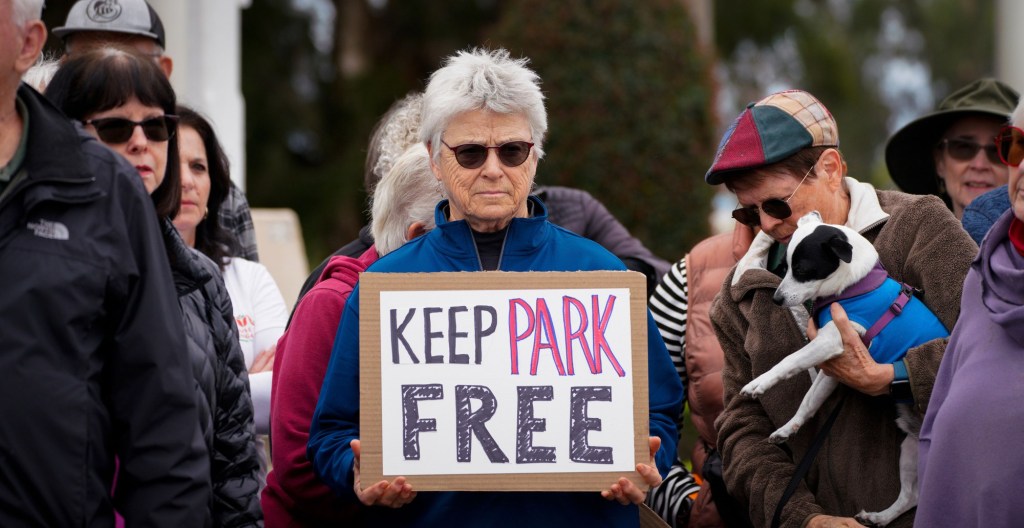
From Jan. 5, the first day the city was allowed to charge parking fees at beloved Balboa Park, it was obvious that Mayor Todd Gloria and the six City Council members who approved the decision — Joe LaCava, Sean Elo-Rivera, Kent Lee, Jennifer Campbell, Marni von Wilpert and Henry L. Foster III — had made an enormous mistake. Chaos, frustration and confusion were the norm among park visitors.
The next day, Elo-Rivera and Lee jointly blasted Gloria’s implementation of the fees as “haphazard.” They noted “that San Diegans can only qualify for the resident discount if they register their vehicles 48 hours before their first visit to Balboa Park” and needed “to purchase passes in advance of each subsequent visit.” Gloria fired back that the council had “shaped, amended and approved” the program — a fair point. But he also absurdly insisted that “the new system is functioning well.”
Literally no one outside of the Gloria administration believed that for a minute. News about park headaches kept piling up, especially the Jan. 22 warning from the Balboa Park Cultural Partnership that compared with January 2025, Balboa Park museums had seen a 20% to more than 50% decline in visitors, depending on the day and venue. Photos of mostly empty Balboa Park parking lots underscored the point that City Hall’s assumptions about how much revenue the new fees would bring in were addled.
All this made a compromise of some sort inevitable. But when it was unveiled Friday by Gloria and LaCava, the council president, it was weak tea. It made parking free for city residents in six large Balboa Park lots — but not the five lots closest to the park’s biggest attractions. Though it ended parking enforcement at 6 p.m. instead of 8 p.m., it kept in place the higher fees that locals who don’t live within the city limits must pay.
The deal also didn’t address the perverse fact that the city’s labyrinth methods for paying parking fees and getting resident discounts created a much worse “digital divide” than the divide at grocery stores that led the city last year to force grocers to offer paper alternatives to digital-only coupons. This should embarrass von Wilpert in particular, who patted herself on the back during the grocery debate for championing “low-income and senior populations that might not have access or have the understanding to utilize new technology.” But when that new technology generates revenue for the city, then it is just fine.
A compromise of any kind isn’t remotely good enough. We agree with Judy Gradwohl, president and CEO of the San Diego Natural History Museum: “Anything short of full repeal sends a clear and damaging message. It tells our community that the city’s revenue needs matter more than the long-term financial health and sustainability of the arts and cultural organizations that define Balboa Park. It tells families that their access to culture is negotiable. It tells the nonprofit sector that we are expected to absorb the consequences of municipal budget decisions,” she wrote in an essay posted on our website today.
If this makes city budget woes even worse, so be it. The mayor and council have voter-approved ways to reduce spending — outsourcing services and ending defined-benefit pensions for most new hires. That they never even considered these options before doing such damage to Balboa Park is a telling comment on who they see as their most important constituents.