
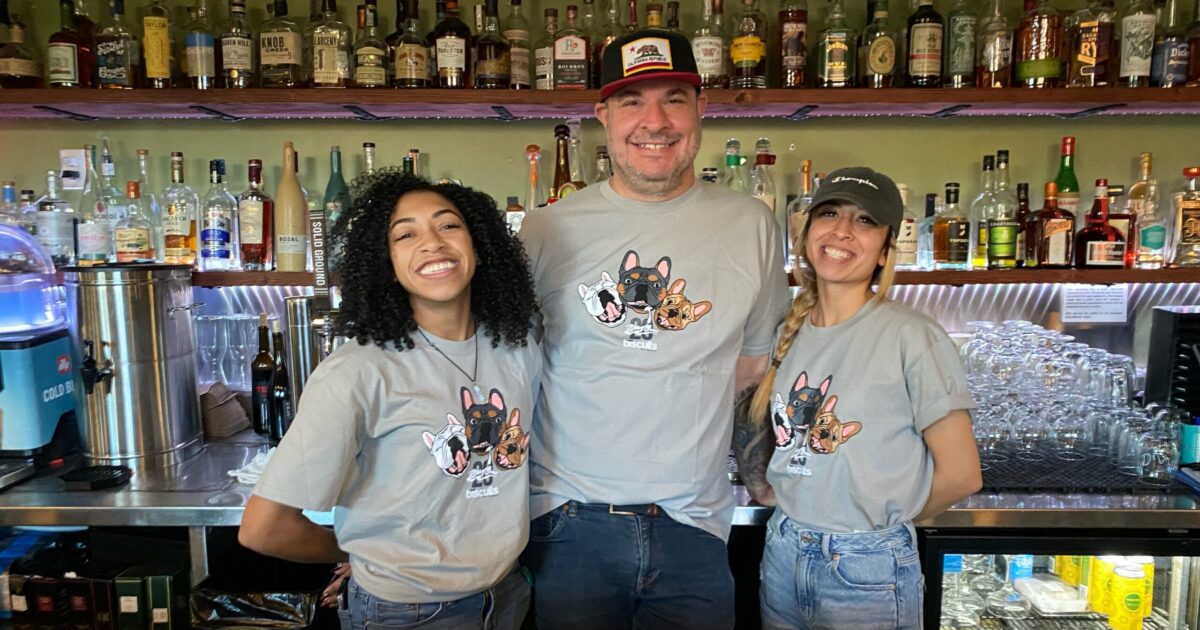
Jtown Pizza owner Jordan Trigg touched off a firestorm against San Jose’s historic building protections — and a push for reform — after calling out preservationist red tape leading to the closure of his restaurant last year.
His former employees say that’s not the whole story.
In statements to the media, Trigg said he was drowning in rising costs after pausing renovations on a newly purchased property he claims he later learned was historically designated. The situation cascaded dramatically — leaving Trigg and his wife and co-owner Rina to grapple with the loss of their businesses while piled in a mountain of debt and fighting to keep their home.
But multiple former employees argue the Triggs, who operated several businesses in San Jose under their company Dipsomania, were bound to fall behind financially regardless of the historic building issue due to regrettable business choices.
Ex-workers are now balancing their sympathy for the Triggs — and appreciation for Jtown’s livable wages and benefits before things turned sour — with the frustration over how they became collateral damage. The employees provided email and text records to San José Spotlight that paint a deeper picture of what led to the Japantown eatery’s September demise.
The former workers said it was clear something was wrong for more than two years prior to Jtown’s closure. Employees’ checks were continually bouncing. Pay days were in flux. When employees asked about their pay, they said Trigg gave them one date and then another. When employees started to eye the door, they said the Triggs personally asked them not to quit despite a lack of communication about financial problems.
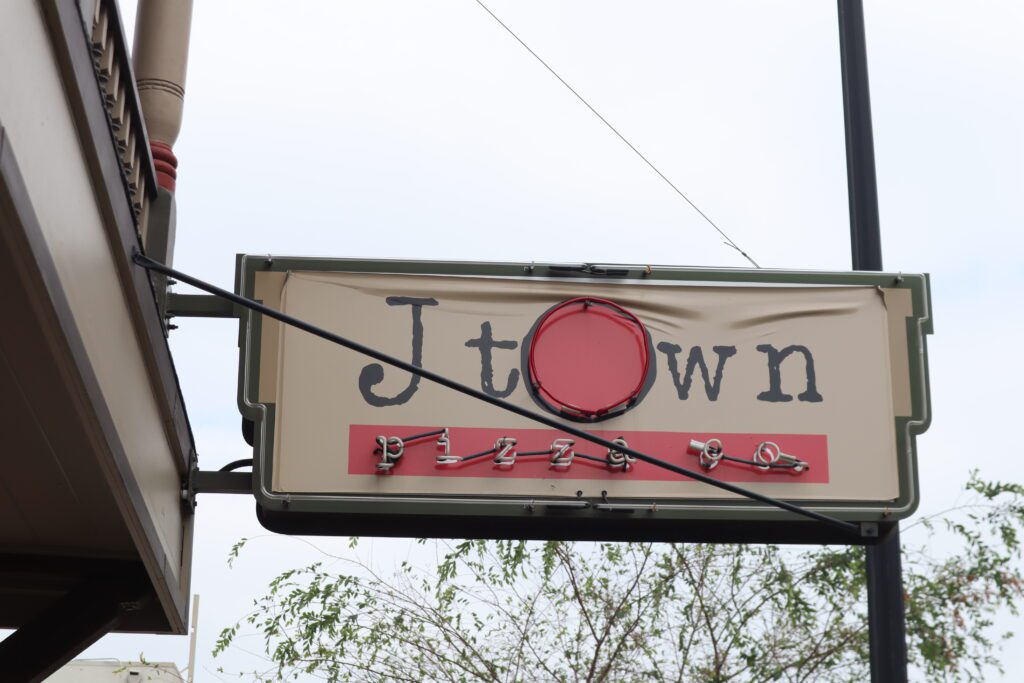 Jtown Pizza Co. in San Jose closed after six years due to financial problems. The restaurant was a fixture in the Japantown neighborhood. File photo.
Some workers had been with Jtown Pizza and the Triggs’ other restaurants for years. They stayed knowing it would be hard to match Jtown’s roughly $30 an hour wages with health insurance and matching 401k. Workers said they wanted to see the restaurant thrive — so they remained loyal.
But while workers’ checks were bouncing, large inventory orders like liquor continued, according to text records reviewed by this news outlet.
The restaurant finally went belly up, and the Triggs announced Jtown’s permanent closure Sept. 3 — despite telling employees on Sept. 1 the closure was temporary, workers said. The employees said they were hung out to dry with little notice, no time to land safely and no ability to pay rent or buy groceries with paychecks weeks behind.
Jordan Trigg declined to comment for this story.
“The main issue I had was not so much not getting my money, but being reassured that I would — and being continually lied to,” Jalen Angeles, a former Jtown cashier and line cook who is still looking for work, told San José Spotlight. “It’s hard to find restaurant jobs that pay livable wages like Jtown did. If you keep telling me I’m going to be okay — day by day — and you lie, it’s affecting me mentally, my livelihood, my whole life. You’re holding me hostage.”
The Triggs, meanwhile, reaped most of the public’s sympathy upon Jtown’s closure. Former District 3 Councilmember Raul Peralez set up a GoFundMe on the Triggs’ behalf. It’s since racked up nearly $100,000 in donations.
Yet workers said they faced backlash from the Triggs when they started their own online fundraiser for the restaurant’s general manager, Jason Greer. The 52-year-old, who had extensive experience in the dining industry, underwent cancer surgery the day the closure was announced, and only found out on the drive home from the hospital his coverage had lapsed.
This was a shock to Greer.
He knew his insurance would eventually end, but not so soon. Trigg eventually paid the balance of the bill after Greer pressed him to get it done, according to text messages this news outlet reviewed. Before surgery, Greer was informed by Trigg that his pay would be reduced and his hours couldn’t be guaranteed upon his return.
Greer declined to comment on his medical situation for this story, but corroborated information, as well as key details and incidents described by other Jtown Pizza workers.
“Jordan and Rina profited off the sympathy of the community,” Krystal Kimbrough, a former lead bartender responsible for ordering liquor and coordinating events, told San José Spotlight. “But when it came to us, no one said a thing. I think in a moment like that, someone should have questioned whether the employees — who believed in Jordan and Rina and worked their asses off to see them succeed — deserved better.”
Kimbrough and Angeles said the Triggs personally threatened them with a defamation lawsuit over the original language on the fundraising flyers to support Greer.
They claimed the Triggs told them the fundraiser description was slanderous because the original post said Greer would not have a job after surgery. Kimbrough ultimately agreed to minor word changes. Workers said some flyers posted in the restaurant had been removed.
Kimbrough and Angeles said the Triggs never circulated the fundraiser for Greer amid the outpouring of community support for Jtown.
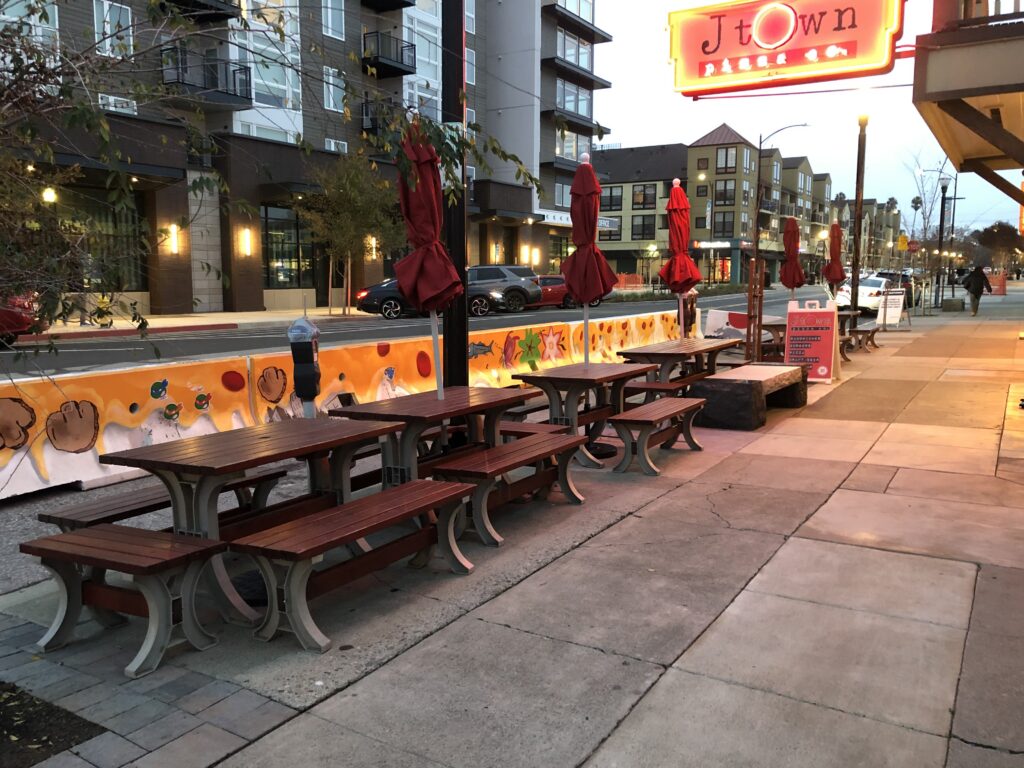 The closure of Jtown Pizza last year made waves when the owner blamed San Jose’s historic building red tape for its demise. Former workers say that’s not entirely true. Photo courtesy of Krystal Kimbrough.
Restaurant permit woes
The former workers said they felt compelled to speak out after seeing Trigg on the news after Jtown’s closure. While publicly acknowledging that bad decisions partly fueled his family’s woes, Trigg made waves with criticisms of San Jose historic building laws.
Trigg referenced his 2022 purchase of the Cielito Lindo building on East Taylor Street, which he and his wife hoped to turn into a new eatery. He said he was never notified of the building’s historic status during the real estate transaction before tearing out the building’s interior.
He said this tied up permits, hamstrung remodeling progress and cost his family tens of thousands of dollars a month while they couldn’t even lease it for rental income because of the idle interior construction work.
State law says alterations or new construction on any building has to comply with current code, according to a spokesperson for San Jose Planning, Building and Code Enforcement.
Greer, who has 20 years in the dining industry, said Trigg sought to fully remodel the Cielito Lindo building.
“When you’re doing a full remodel, it’s going to be a couple of years to get it up and running and every year you rack up carrying costs on top of construction costs — and in my experience it usually takes about five or seven years to recoup your money,” Greer told San José Spotlight. “Whether it was historical or not, there was just no way of getting around that.”
Greer agrees San Jose’s permitting system is unduly challenging.
“That’s why people in Santa Clara County have such a hard time opening restaurants that require a remodel,” Greer said. “It shouldn’t take years.”
San Jose planning officials maintain they’re not trying to be hostile to new restaurants.
“Our community faces real challenges and we care deeply about the people behind every project,” a department spokesperson told San José Spotlight. “We are committed to upholding building safety standards while working with property owners to help their projects move forward.”
While Trigg’s historical status claims are being challenged, they opened a window last year into a real issue for Japantown community members — from the Wesley United Methodist Church to the Japanese American Museum of San Jose — that a heavy-handed approach to historic restrictions has lined Japantown’s streets with vacant facades without a cost-effective path for commercial interests to repurpose them.
After Jtown’s closure, Greer and several industry veterans got to work trying to find new jobs for all the staff, according to Angeles and Kimbrough. They described Greer making calls while recovering from surgery at home. Former workers also started a broader online fundraiser to support the rest of the ex-employees, some of whom are still looking for jobs. Three former employees told San José Spotlight one ex-coworker has become homeless.
“To (the Triggs) — it was almost like we didn’t exist anymore,” Kimbrough said.
Contact Brandon Pho at [email protected] or @brandonphooo on X.