
 South entrance to Camp Callan. (Photo courtesy of the San Diego History Center)
In early 1941, the once-quiet Torrey Pines bluffs — a landscape of red-tailed hawks and the gliders of Charles Lindbergh’s soaring clubs — suddenly echoed with the rumble of construction.
 Target practice at Camp Callan. (Photo courtesy of the San Diego History Center)
In just a few short months, a sprawling wooden cantonment known locally as the “City of Wood” rose on the mesa above La Jolla. This was Camp Callan, a United States Army anti-aircraft and coast artillery replacement training center built to prepare troops for a war that increasingly felt inevitable.
 Men with contaminated gas at Camp Callan,1942-1946. (Photo courtesy of the San Diego History Center)
A Surreal Arrival
Officially opened on Jan. 15, 1941, Camp Callan was named in honor of Maj. General Robert Emmet Callan was a decorated Coast Artillery officer with service in the Spanish-American War and World War I.
 Troops in 1940 at Camp Callan. (Photo courtesy of the San Diego History Center)
Construction began in late 1940 on land leased by the city of San Diego for just $1 a year, a testament to the community’s support for the war effort.
 Camp Callan’s outdoor theater,1943. (Photo courtesy of the San Diego History Center)
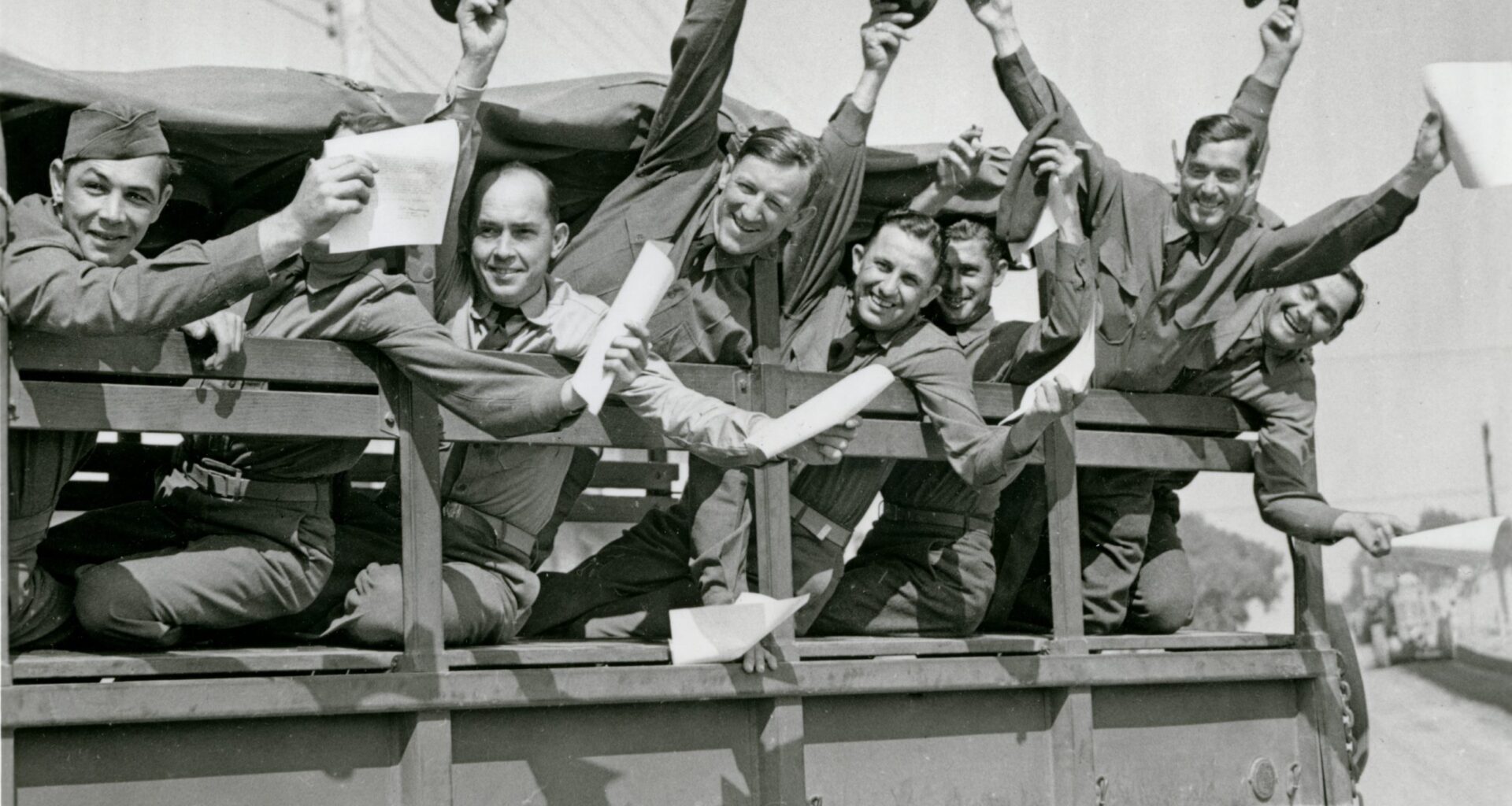
By March of that year, the first waves of trainees began arriving by train. Soldiers from across the United States disembarked on a nearby rail siding, stepping from snowy Midwest winters into California sunshine.
 1941 Camp Callan. (Photo courtesy of the San Diego History Center)
Local newspapers of the era reported the scene with a touch of genteel California charm: soldiers were welcomed with baskets of oranges from the Chamber of Commerce — fresh fruit in place of frozen fields.
 Troops training at Camp Callan. (Photo courtesy of the San Diego History Center)
One recruit, in a letter home, captured the tension and determination of those early days:
“We may be far from home, but every sunrise reminds us why we’re here. The guns may thunder, but I think of orange groves instead of battlefields.”
 Hand grenade drill in 1940 at Camp Callan. (Photo courtesy of the San Diego History Center)
Life on the Edge
Camp Callan rapidly became a city unto itself.
 Hospital tent at Camp Callan,1942-1945. (Photo courtesy of the San Diego History Center)
At its peak, the base sprawled across roughly 1,283 acres and included nearly 300 buildings — barracks, theaters, chapels, hospitals, and mess halls.
 Time out at Camp Callan. (Photo courtesy of the San Diego History Center)
 WWII training at Camp Callan in 1943. (Photo courtesy of the San Diego History Center)
Training was intense. Soldiers cycled through 13-week preparation programs, mastering heavy artillery and anti-aircraft weapons such as the 155mm guns first installed in early 1941.
 Camp Callan, obstacle course. (Photo courtesy of the San Diego History Center)
 Training was said to be intense. (Photo courtesy of the San Diego History Center)
The booming of live artillery became the new rhythm of Torrey Pines life, a sound that drew curious locals to the mesa and shaped the daily consciousness of La Jolla’s civilian population.
 View of soldiers with a cannon camouflaged at US Army Camp Callan in La Jolla in about 1940 (Photo courtesy of the San Diego History Center)
Weekends brought soldiers into town. Uniforms of olive drab filled the cafés around La Jolla, and local families opened their homes for Sunday dinners when trainees couldn’t travel home.
 Searchlights over Camp Callan. ( Photo courtesy of the San Diego History Center)
Many young men later recalled that the view of the Pacific sunset over the bluffs was the last image of home they carried with them into the Pacific campaign.
 WWII training at Camp Callan, 1943. (Photo courtesy of the San Diego History Center)
The Ghost Lumber Legacy
After World War II ended, the Army declared Camp Callan surplus on Nov. 1, 1945. The city of San Diego purchased roughly 500 wooden buildings for $200,000 and sold the materials at affordable prices to returning veterans and civilians struggling with a postwar lumber shortage.
 Pitching pup tents. (Photo courtesy of the San Diego History Center)
Thousands of homes, several churches, and utilities in postwar San Diego were constructed with this “ghost lumber.” Some older cottages and mid-century houses in the region still contain 2×4s and timbers stamped with military markings.
The Camp That Became Our Community
Today, few traces of Camp Callan remain, though its legacy is everywhere. The ground cleared for artillery emplacements now supports major landmarks: the University of California, San Diego; the Salk Institute for Biological Studies; and the Torrey Pines Golf Course, all of which sit on or near the former training fields.
The “City of Wood” may be long gone, but the story of its people — trainees, instructors, and La Jolla neighbors alike — remains etched into the bones of the community.
You can read more unique historical stories here.
Sources:
Historic California Posts: Camp Callan — military installation history
San Diego History Center photographic archives — original images and documents
U.S. National Archives — aerials and base imagery
Military Yearbook Project — buildings, training, and personnel context
READ NEXT